Get your free personalized podcast brief
We scan new podcasts and send you the top 5 insights daily.
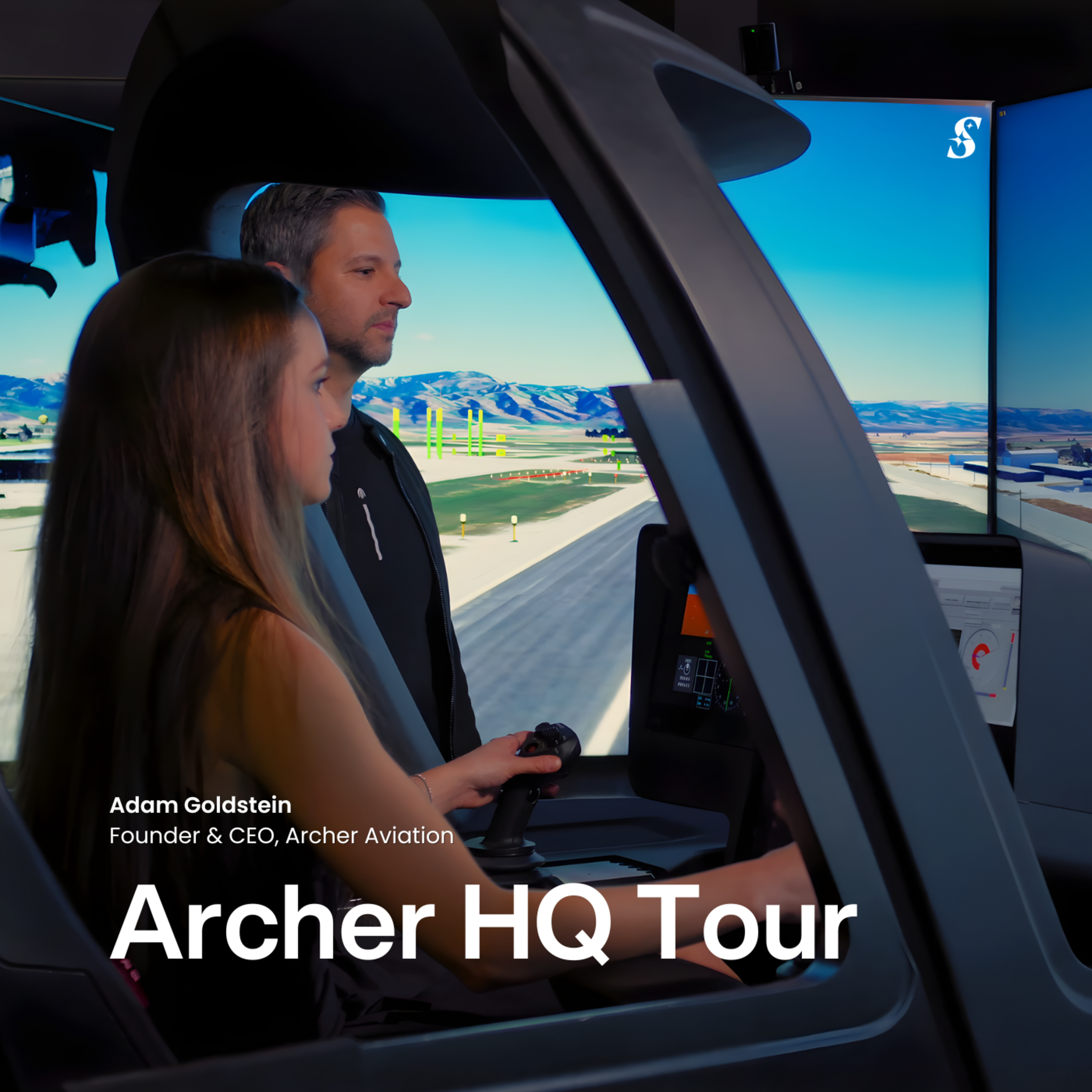
Archer's pre-Olympics pilot program in five cities is designed to desensitize the public to its aircraft. By making the sight of air taxis common and 'boring,' like Waymo cars, they can reduce public anxiety and regulatory pressure ahead of their high-stakes launch during the 2028 LA Olympics.
Related Insights
Instead of saturating a single major city, Archer plans to sell small batches of 20-50 aircraft across a thousand smaller markets. This 'breadth over depth' strategy avoids public backlash and regulatory bottlenecks, allowing them to build a massive business before tackling high-density urban air taxi services.
While its technology is advanced, Waymo's most significant competitive advantage is its head start in securing regulatory permits to operate and charge for rides. Competitors like Amazon's Zoox are far behind, not yet able to take paid passengers. This regulatory moat creates a powerful first-mover advantage in lucrative urban markets.

Before Joby acquired them, Uber Elevate tested their complex, multi-modal transport system (car-to-aircraft-to-car) using existing helicopters in Manhattan. This allowed them to solve logistical and user experience challenges, proving the service model's viability independently of the new aircraft technology.
By coining the term 'low altitude economy,' China is signaling a deliberate, top-down industrial strategy to own the market for autonomous flying vehicles (EVTOLs) and delivery drones. This isn't just about a single company; it's about creating and regulating a new economic sector to establish a global manufacturing and operational lead.

Creating a new hardware category in a regulated space like aviation requires more than capital; it demands proactive government engagement to write new laws. Archer initiated efforts to establish the regulatory framework for its eVTOL aircraft, demonstrating the necessity of shaping policy for market creation.
Elysian Aircraft's strategy targets regions like the U.S. and Nordic countries where building high-speed rail is infeasible. By leveraging hundreds of existing, underutilized airports, they can create new, efficient short-haul routes, representing a path of least resistance for new transport infrastructure.

To overcome public skepticism about safety, autonomous vehicle companies need a grand public demonstration. A livestreamed, overnight "robo-taxi" journey between cities, framed as a "self-driving hotel," could serve as a modern spectacle to prove the technology is safe and build consumer trust, much like elephants walking the Brooklyn Bridge did.

AV companies naturally start in dense, wealthy areas. Uber sees an opportunity to solve this inequality by leveraging its existing supply and demand data in underserved areas. This allows it to make AV operations economically viable in transportation deserts, accelerating equitable access to the technology.

Joby recognized that noise, not just cost, limits helicopter scalability. They invested early in the fundamental physics of acoustics to create a quiet aircraft. This 'second-order' innovation is key to integrating their service into communities and achieving widespread adoption where helicopters have failed.
CEO David Risher describes Lyft's autonomous vehicle strategy as "polyamorous." Instead of betting on one technology partner, they are integrating with multiple AV companies like Waymo, May Mobility, and Baidu. This approach positions Lyft as the essential network for any AV provider to access riders, regardless of who builds the best car.