Get your free personalized podcast brief
We scan new podcasts and send you the top 5 insights daily.
The decision to end production of iconic Tesla models is a strategic move to retool manufacturing capacity for Optimus humanoid robots. This action supports Musk's larger vision of a "real-world AI flywheel" integrating data and hardware from Tesla, SpaceX, and xAI.
Related Insights
Elon Musk's newly approved trillion-dollar pay package is less about the money and more about securing 25% voting control of Tesla. He views Tesla's future not in cars but in humanoid robots, and he sought this control to direct the development of this potentially world-changing technology.
The sequential mergers of X with xAI, then with SpaceX, and potentially Tesla, signal the formation of a single entity. This "Musk Industries" would leverage shared manufacturing learnings and AI development across cars, rockets, robots, and social networks, creating powerful synergies.
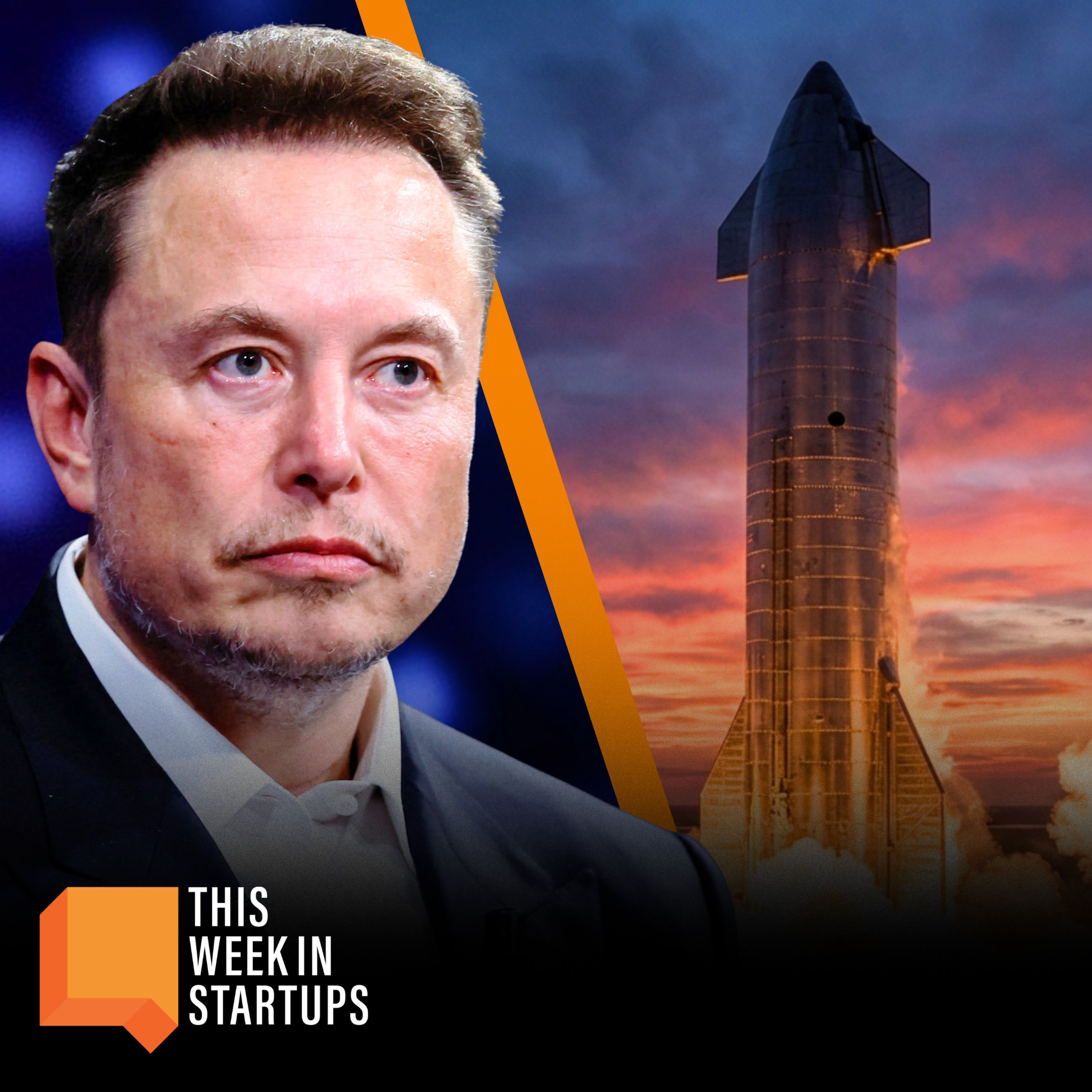
Elon Musk's Optimus project is predicted to become history's most successful product, overshadowing Tesla's automotive achievements. This suggests investors should evaluate Tesla as a robotics and AI company, not just a car manufacturer, for long-term growth.

Elon Musk is personally overseeing the AI5 chip, a custom processor that deletes legacy GPU components. He sees this chip as the critical technological leap needed to power both the Optimus robot army and the autonomous Cybercab fleet, unifying their core AI stack.
Tying Elon Musk's compensation to an astronomical $8.5 trillion market cap—a goal unreachable through car sales alone—is an explicit signal to investors. Tesla is no longer a car company; its future and valuation are now staked entirely on robotics and autonomous technology.

Whenever Tesla's core automotive business faces headwinds—like falling market share or intense competition—Elon Musk introduces a new, futuristic narrative, such as the Optimus robot. This strategy aims to reposition the company as an AI leader and distract investors from underwhelming auto industry fundamentals.

Tesla is discontinuing its high-end Model S and Model X lines, instead planning to offer their features as premium trim levels on core platforms like the Model Y. This shift rejects the auto industry's "a car for every category" model in favor of a simpler, more configurable product lineup.

Tesla's latest master plan signals a philosophical pivot from mere sustainability to 'sustainable abundance.' The new vision is to leverage AI, automation, and manufacturing scale to overcome fundamental societal constraints in energy, labor, and resources, rejecting a zero-sum view of growth.

Despite public demos of the Optimus robot appearing simplistic, Tesla's substantial supply chain commitments, like a $750 million order for actuators, indicate that mass production is much closer than perceived. This suggests a "shock and awe" product reveal is on the horizon.

Rapid advances in Tesla's Optimus robot suggest the company's ultimate focus is on humanoid robotics, not electric vehicles. This pivot could redefine Tesla's identity, making cars a footnote in its history, much like Sony's early products are forgotten in favor of its iconic consumer electronics.