Get your free personalized podcast brief
We scan new podcasts and send you the top 5 insights daily.
Before committing major resources, Dr. Glanville performed a critical experiment: testing Tim Freedy's blood against venoms he'd *never* encountered. When the blood reacted, it confirmed the existence of cross-reactive antibodies, validating the entire "universal antivenom" hypothesis from the outset and de-risking the project.
Related Insights
Instead of waiting for allergy patients to have symptoms on study days, Dr. Abelson’s team created a model to induce the allergic reaction in a controlled way. This 'Conjunctival Allergy Challenge' allowed for precise, predictable testing of new drugs, dramatically speeding up development.
Non-human primate models are poor predictors of human immunogenicity. The industry has shifted to human-relevant ex vivo assays using whole blood or PBMCs. These tests can assess risks like complement activation upfront, enabling proactive protein engineering to improve a drug's safety profile.

Contrary to the popular belief that antibody development is a bespoke craft, modern methods enable a reproducible, systematic engineering process. This allows for predictable creation of antibodies with specific properties, such as matching affinity for human and animal targets, a feat once considered a "flight of fancy."

Progress in drug development often hides inside failures. A therapy that fails in one clinical trial can provide critical scientific learnings. One company leveraged insights from a failed study to redesign a subsequent trial, which was successful and led to the drug's approval.

Dr. Glanville hypothesized that the "Achilles' heel" concept from universal virus vaccines—targeting conserved parts—could also apply to snake venom. This cross-pollination of ideas from virology to toxicology was the foundational insight for the entire project, proving that core biological principles can be transferred across disciplines.
Tim Freedy’s 18-year self-immunization project wasn't for fame; it was a deliberate effort to create a universal antivenom. His response to Dr. Glanville's call—"I've been waiting for this call for a long time"—revealed he was an active researcher seeking a collaborator, not a passive subject.
Dr. Radvanyi emphasizes that foundational discoveries in immunotherapy arose from basic immunology and serendipitous observations, like his own unexpected T-cell proliferation with an anti-CTLA-4 antibody. This highlights the risk of over-prioritizing translational research at the expense of fundamental, curiosity-driven science.

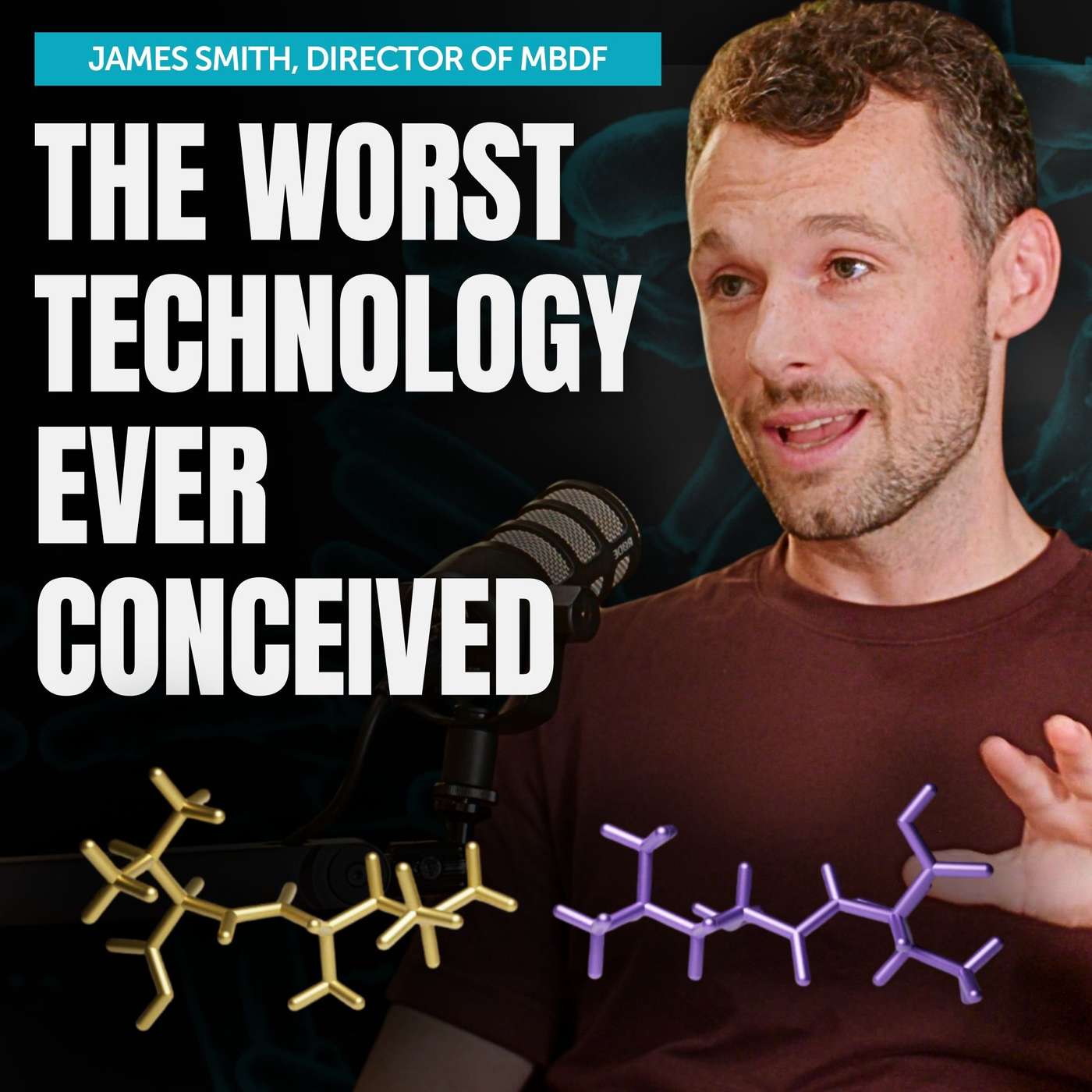
Researchers can avoid the immense risk of creating mirror life for study. Instead, they can develop mirror-image countermeasures (like mirror antibodies) and test them against normal bacteria. If effective, the 'normal' version of that countermeasure would work against mirror life, allowing for safe R&D.
True scientific advancement happens when researchers refuse to accept 'no' as an answer. When immunotherapy was dismissed for lung cancer, pioneers investigated why it worked in melanoma but not other cancers. This mindset—questioning failures and studying successes—is key to turning scientific impossibilities into standard treatments.

A significant, often overlooked, hurdle in drug development is that therapeutic antibodies bind differently to animal targets than human ones. This discrepancy can force excessively high doses in animal studies, leading to toxicity issues and causing promising drugs to fail before ever reaching human trials.