Get your free personalized podcast brief
We scan new podcasts and send you the top 5 insights daily.
The true paradigm shift with technologies like ChatGPT was the explosion in *generality*. AI moved from narrow, purpose-built tools (like a Go-playing machine) to systems that could perform a wide range of cognitive tasks. This generality, rather than just improved performance, is the key driver of its broad economic implications.

Related Insights
The biggest opportunity for AI isn't just automating existing human work, but tackling the vast number of valuable tasks that were never done because they were economically inviable. AI and agents thrive on low-cost, high-consistency tasks that were too tedious or expensive for humans, creating entirely new value.
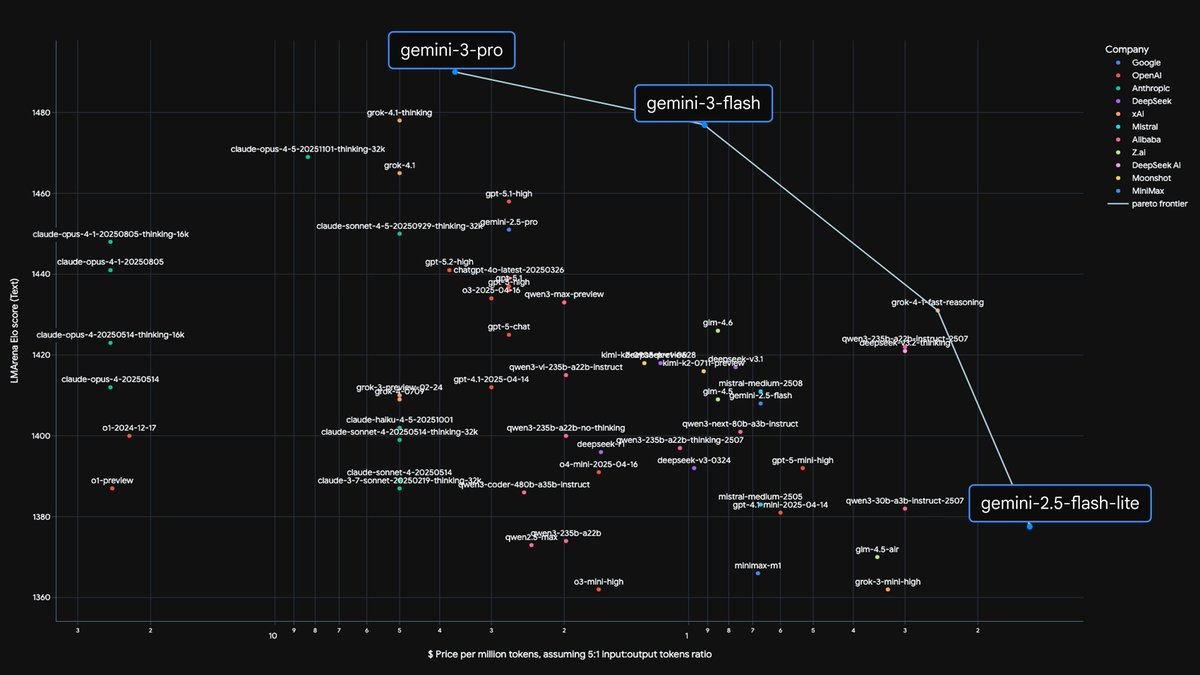
Conservative GDP growth forecasts for AI often fail because they analyze its capabilities at a single point in time. The most critical factor is AI's exponential improvement trajectory, which makes analyses based on year-old capabilities quickly obsolete and misleadingly pessimistic.

The surprisingly smooth, exponential trend in AI capabilities is viewed as more than just a technical machine learning phenomenon. It reflects broader economic dynamics, such as competition between firms, resource allocation, and investment cycles. This economic underpinning suggests the trend may be more robust and systematic than if it were based on isolated technical breakthroughs alone.

According to OpenAI co-founder Andrej Karpathy, the true impact of AI code generation is less about a linear speedup on existing tasks. Instead, it expands the scope of what's feasible, allowing engineers to attempt projects they would have previously deemed not worth the effort or beyond their skillset.

Unlike deterministic software, generative AI can reason and solve open-ended problems. This allows it to automate a vast range of tasks previously only solvable by human labor, targeting the enormous services and labor budget, not just the traditional IT budget.

AI reverses the long-standing trend of professional hyper-specialization. By providing instant access to specialist knowledge (e.g., coding in an unfamiliar language), AI tools empower individuals to operate as effective generalists. This allows small, agile teams to achieve more without hiring a dedicated expert for every function.

Just as neural networks replaced hand-crafted features, large generalist models are replacing narrow, task-specific ones. Jeff Dean notes the era of unified models is "really upon us." A single, large model that can generalize across domains like math and language is proving more powerful than bespoke solutions for each, a modern take on the "bitter lesson."
AI isn't just an incremental improvement; it's a reinvention of the computer. This new paradigm makes previously intractable problems—from curing cancer to eliminating fraud—solvable. This opens up an unprecedented wave of entrepreneurial opportunity to rebuild everything.

For decades, AI only offered incremental improvements (e.g., 20% better fraud detection), which benefited large incumbents. Generative AI is a step-change, enabling entirely new user behaviors like creativity and emotional connection, creating the "1000x better" disruption needed to build new, iconic companies.
Just as electricity's impact was muted until factory floors were redesigned, AI's productivity gains will be modest if we only use it to replace old tools (e.g., as a better Google). Significant economic impact will only occur when companies fundamentally restructure their operations and workflows to leverage AI's unique capabilities.