Get your free personalized podcast brief
We scan new podcasts and send you the top 5 insights daily.
The case of "David" reveals profound apathy can have a specific biological cause. Tiny strokes severed the link between motivation and action in his brain's "final common pathway," turning a highly-driven individual into someone utterly devoid of self-initiated action while leaving them feeling happy.

Related Insights
Cases like Phineas Gage, whose personality completely changed after a brain injury, demonstrate that altering the brain's physical structure fundamentally changes a person's identity. This proves that 'you' are your biology, not a separate entity controlling it.

The brain's mesolimbic circuit, linking the basal ganglia to frontal lobes, acts as a 'final common pathway' for motivation. It integrates diverse signals—from basic biological drives to complex cognitive goals—and translates them into the impetus to act. Damage here causes global apathy.
fMRI scans show apathetic individuals exhibit greater brain activity when weighing effort vs. reward. This paradox suggests their inaction stems from a higher physiological cost just to decide, not laziness. They burn more mental fuel simply contemplating an action.
The stroke that wiped out Dr. Bolte-Taylor's left hemisphere, the seat of ego and linear goals, was ultimately liberating. It freed her from the confines of societal expectations and the pressure of "climbing the Harvard ladder," revealing a more profound, connected existence.

Dopamine is often misunderstood as a 'pleasure molecule.' Its more crucial role is in motivation—the drive to seek a reward. Experiments show rats without dopamine receptors enjoy food but won't move to get it, starving to death. This seeking behavior is often triggered by the brain's craving to escape a dopamine deficit state.
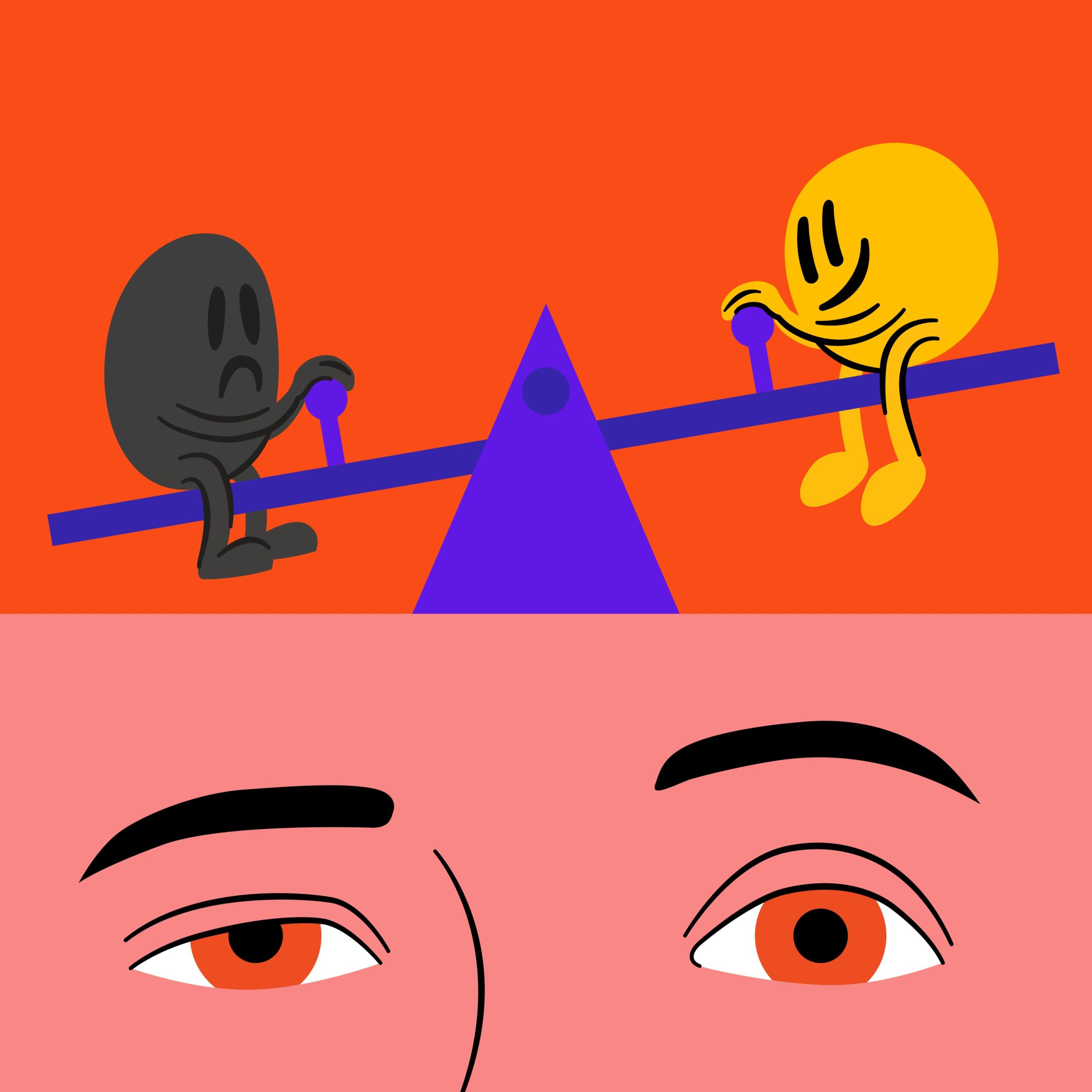
Counterintuitively, the absence of emotion leads not to pure rationality but to an inability to make decisions. Neuroscientist Antonio Damasio's research on patients with damaged emotional brain centers shows they can list pros and cons indefinitely but cannot make a final choice, revealing emotion is a necessary component of decision-making.

The case of a patient named Elliott showed that removing the brain's emotional integration center rendered him incapable of making simple decisions, despite retaining a high IQ. This proves emotion is a necessary component for decision computation, not an obstacle to logic.
The movement difficulty in Parkinson's is a computational problem, not just a motor one. The massive loss of dopamine neurons makes it impossible for the brain to compute the relative value of actions. The brain interprets this "flat value function" as having no incentive to expend energy, thus actively freezing movement.
Apathy can be domain-specific. A person might lack the drive for social activities while remaining highly curious and intellectually engaged. These different motivational signals are computed in separate brain regions before funneling into the final action pathway, allowing for such dissociations.
A Parkinson's patient's inability to move is not purely a motor control issue. In a life-or-death situation, the massive motivation signal can override physical slowness. This suggests the core problem is a deficit in the "motivation to act" circuit, not just the action itself.