Get your free personalized podcast brief
We scan new podcasts and send you the top 5 insights daily.
Kahneman's research reveals a critical asymmetry: we prefer a sure gain over a probable larger one, but we'll accept a probable larger loss to avoid a sure smaller one. This explains why investors often sell winning stocks too early ("locking in gains") and hold onto losing stocks for too long ("hoping to get back to even").

Related Insights
Top investors experience an "asymmetry of emotion." The pleasure of significant gains is muted—a feeling of satisfaction rather than euphoria. However, the pain of losing capital, particularly during irrational market events, is disproportionately intense, driven by the responsibility of managing other people's money.
Post-mortems of bad investments reveal the cause is never a calculation error but always a psychological bias or emotional trap. Sequoia catalogs ~40 of these, including failing to separate the emotional 'thrill of the chase' from the clinical, objective assessment required for sound decision-making.

Work by Kahneman and Tversky shows how human psychology deviates from rational choice theory. However, the deeper issue isn't our failure to adhere to the model, but that the model itself is a terrible guide for making meaningful decisions. The goal should not be to become a better calculator.

The fear of loss is stronger than the attraction to gain. This "loss aversion" explains why people hesitate to initiate positive gestures, like smiling at a stranger in an elevator. They are willing to sacrifice an almost certain positive reciprocal outcome (98% chance) to protect against a tiny risk of looking foolish (2% chance).
![Charlie Munger and The Psychology of Human Misjudgement [Outliers] thumbnail](https://megaphone.imgix.net/podcasts/ffb628d4-c418-11f0-acd7-b3217b3943c4/image/37067138e685dc4ea5d98531397f6711.png?ixlib=rails-4.3.1&max-w=3000&max-h=3000&fit=crop&auto=format,compress)
The common bias of loss aversion doesn't affect investors who have done exhaustive upfront work. Their conviction is based on a clear understanding of an asset's intrinsic value, allowing them to view price drops as opportunities rather than signals of a flawed decision.
The emotional drivers of FOMO (buying high) and panic (selling low) make the simplest investment advice nearly impossible to follow. A diversified, 'all-weather' portfolio protects against these predictable human errors better than high-risk concentrated bets.

Based on Daniel Kahneman's Prospect Theory, once investors feel they are losing money, their behavior inverts. Instead of cutting losses, they adopt a "double or nothing" mentality, chasing high-risk gambles to escape the psychological pain of loss.

We focus on how to win, but failure is inevitable. How you react to loss determines long-term success. Losing money triggers irrational behavior—chasing losses or getting emotional—that derails any sound strategy. Mastering the emotional response to downswings is the real key.

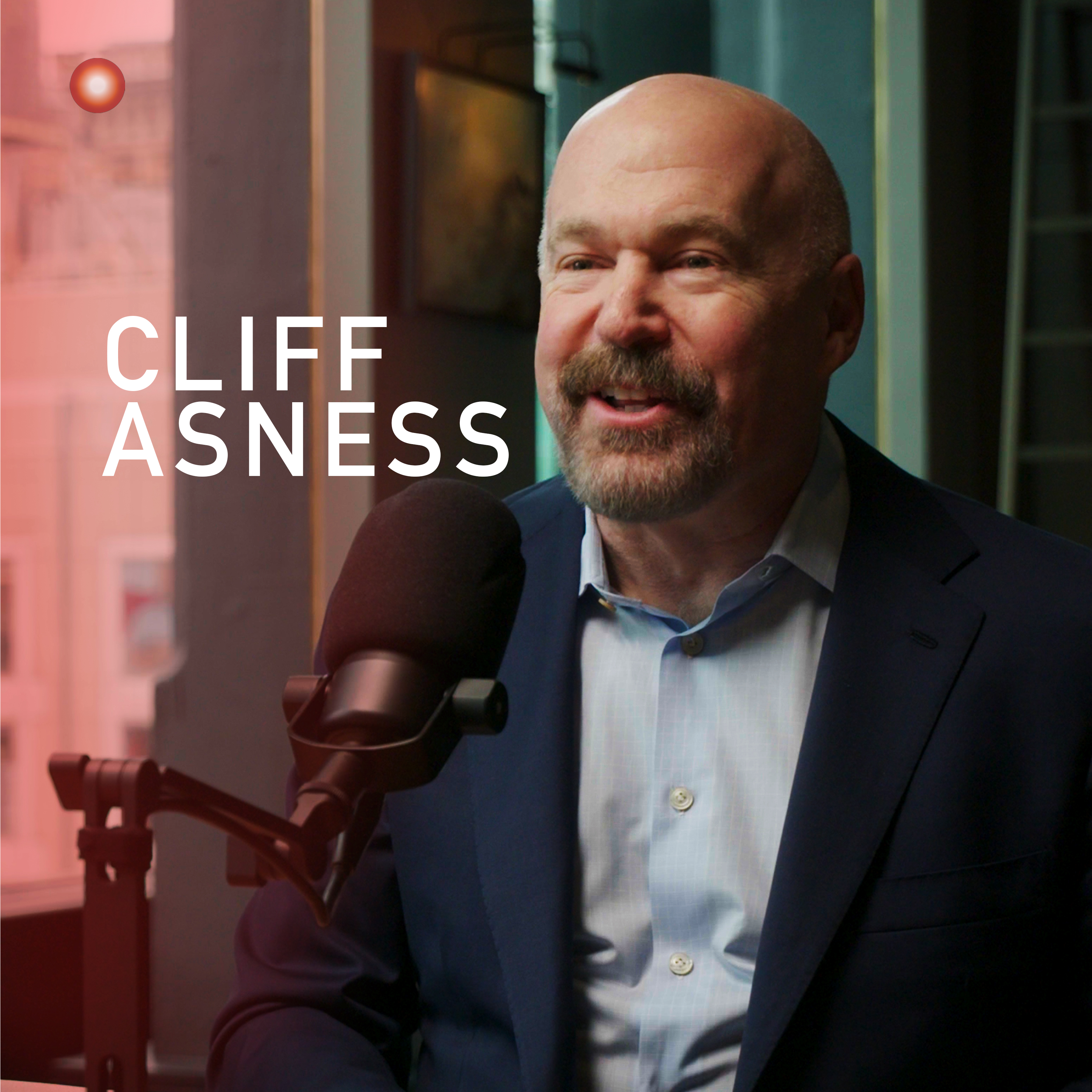
Despite rational strategies, top quant Cliff Asness confesses to feeling the emotional sting of losses far more intensely than the pleasure of gains, a classic example of prospect theory in action. This human element persists even at the highest levels of quantitative finance.
Humans are biased to overestimate downside and underestimate upside because our ancestors' survival depended on it. The cautious survived, passing on pessimistic genes. In the modern world, where most risks are not fatal, this cognitive bias prevents us from pursuing opportunities where the true upside is in the unknown.
