Get your free personalized podcast brief
We scan new podcasts and send you the top 5 insights daily.
Despite the goal of removing hardware, playing AR ping pong with only hand-tracking is inferior to VR with controllers. The lack of a physical controller means the user loses the weight, haptic feedback, and precision that makes the experience feel real, showing that 'less hardware' isn't always better for gaming.

Related Insights
To create a truly unique value proposition, the "Bored" team prioritized game mechanics that leveraged the combination of physical pieces and a digital surface. For example, one game uses the height (Z-axis) of stackable pieces, an interaction that cannot be replicated on a standard tablet.

Beyond hardware issues, VR's primary adoption barrier is its isolating, 'antisocial' nature. While gaming trends toward shared, social experiences, VR requires users to strap on hardware and disconnect from their physical surroundings, creating a fundamental conflict with modern user behavior.

The dual-stick controller design has been functionally stable for nearly three decades, suggesting it is a 'peak interface' for 3D navigation. This reliability and widespread familiarity are precisely what allowed for its adoption in high-stakes fields like remote surgery and military operations, as the interface itself was a solved problem.
A joystick has 'perceived affordance'—its physical form communicates how to use it. In contrast, a touchscreen is a 'flat piece of glass' with zero inherent usability. Its function is entirely defined by software, making it versatile but less intuitive and physically disconnected compared to tactile hardware controls.
Spiegel articulates a strong philosophical stance against Virtual Reality, arguing it isolates people from the real world. Snap's strategy is to invest exclusively in Augmented Reality technologies like Spectacles that aim to enhance in-person human connection rather than replace it with a virtual one.

Intuition Robotics' core bet is that the transfer from simulated to physical worlds is unlocked by a shared action interface. Since many real-world robots like drones and arms are already operated with game controllers, an agent trained in diverse gaming environments only needs to adapt to a new visual world, not an entirely new action space.

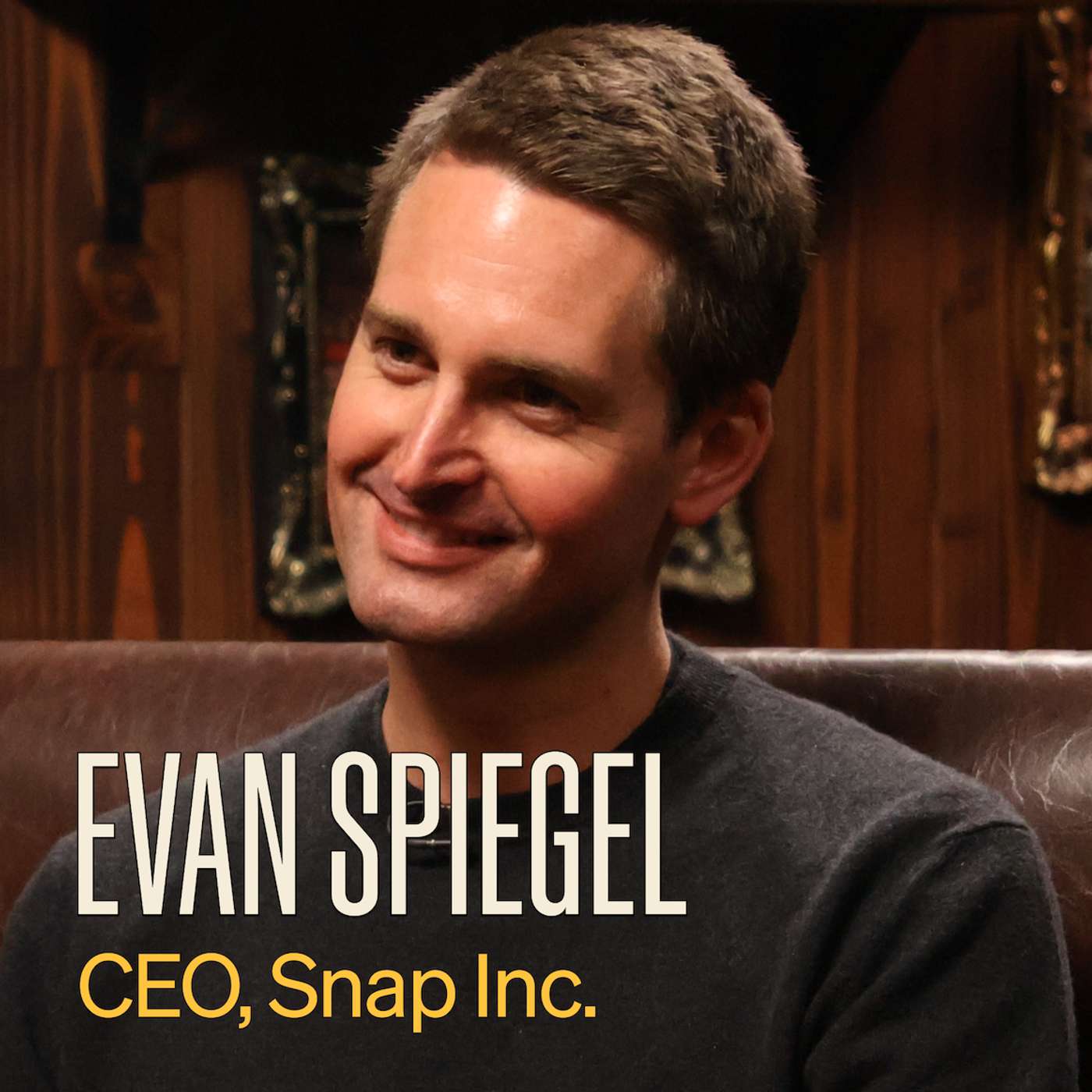
Snap CEO Evan Spiegel sees the winning AR form factor occupying a 'sweet spot': the wearability of normal glasses combined with the spatial computing power of a device like the Vision Pro. This positions Spectacles between today's simplistic 'AI glasses' and fully immersive, but isolating, VR headsets.
An experienced AR developer argues the most viable use cases for daily-wear glasses fall into two categories. 'Microinteractions' are 5-10 second tasks like checking a notification or navigation. 'Reference material' is pinning contextual info while working. This focused approach is more practical than attempting to replicate fully immersive spatial experiences.

Kevin Kelly's early bet on VR was wrong on timing because of unforeseen friction with biology and hardware. Issues like the physical weight of headsets and eye strain are harder to solve than software problems. This suggests robots and other physical technologies will take much longer to mature than purely digital ones like AI.

Perfecting Oculus's inside-out tracking was difficult not because of the core technology, but because of real-world variables. Things like glass reflections, moving curtains, ceiling fans, and people walking through the scene created countless edge cases that were easy to ignore in a lab but fatal in a customer's living room.
