Get your free personalized podcast brief
We scan new podcasts and send you the top 5 insights daily.
Europe has largely lost the race in foundational AI layers like chips and cloud solutions. This technological lag threatens key industries, which could lead to economic decline, unemployment, and political turmoil as Asian tech companies become more dominant.

Related Insights
The primary competitive arena for AI is no longer just about creating the best algorithm. It has evolved into a geopolitical contest for control over the entire technology stack, including the infrastructure, supply chains, standards, and energy systems required to deploy AI models at a national scale.

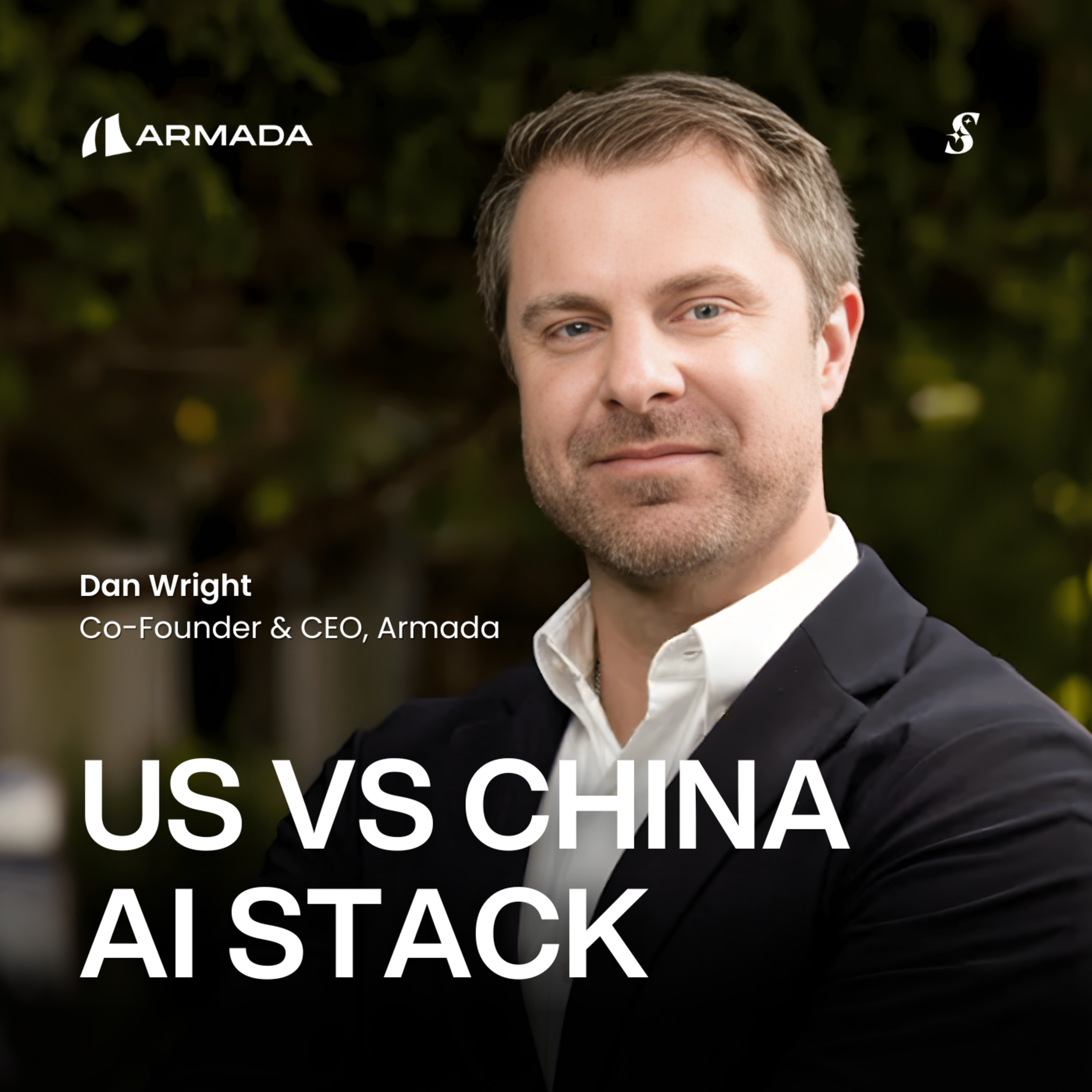
The competition in AI infrastructure is framed as a binary, geopolitical choice. The future will be dominated by either a US-led AI stack or a Chinese one. This perspective positions edge infrastructure companies as critical players in national security and technological dominance.
Relying solely on imported AI technology from superpowers like the US and China is a path to economic and political dependency. Governments must foster local AI innovation and infrastructure to maintain economic sovereignty and global competitiveness.

AI firms may be overly focused on alignment and technical risks while underestimating the geopolitical fragility of their supply chain. Their massive, growing dependence on energy and compute creates significant vulnerabilities to global political instability that are currently under-discussed.

While recognizing AI as a decisive geopolitical tool, Europe lacks a competitive, pan-European large language model (LLM) akin to OpenAI or Anthropic. This forces reliance on US technology, creating a strategic dependency in a critical area for future defense and sovereignty.

Despite its talent, Europe struggles to scale domestic tech companies, leaving it strategically vulnerable. It's forced to depend on US cloud providers it views with suspicion or Chinese alternatives it also distrusts, with no viable third option.

The foundation of the next technological era is physical infrastructure: data centers, power, and chips. If the US loses its lead in building this foundation through political headwinds or lack of investment, its technological supremacy will erode. The future of innovation depends on this domestic build-out.
Beyond financial metrics, the most significant 'tail risk' to the AI boom is the high concentration of advanced semiconductor manufacturing overseas, particularly in Taiwan. A geopolitical conflict could sever the supply of essential hardware, posing a much more fundamental threat to the industry's growth than market volatility or corporate overspending.

The EU's AI Act has been so restrictive that it has largely killed native AI development in Europe. The regulation is so punitive that even major American companies like Apple and Meta are choosing not to launch their leading-edge AI capabilities there, demonstrating the chilling effect of preemptive, overbearing regulation.
Europe is in a strategic trap: it wants to regulate AI for safety but lacks a domestic frontier AI industry to give it leverage. Over-regulation could cause US AI labs to either abandon the European market, using the freed-up compute to accelerate R&D, or serve Europe with weaker, compliant models.
