Get your free personalized podcast brief
We scan new podcasts and send you the top 5 insights daily.
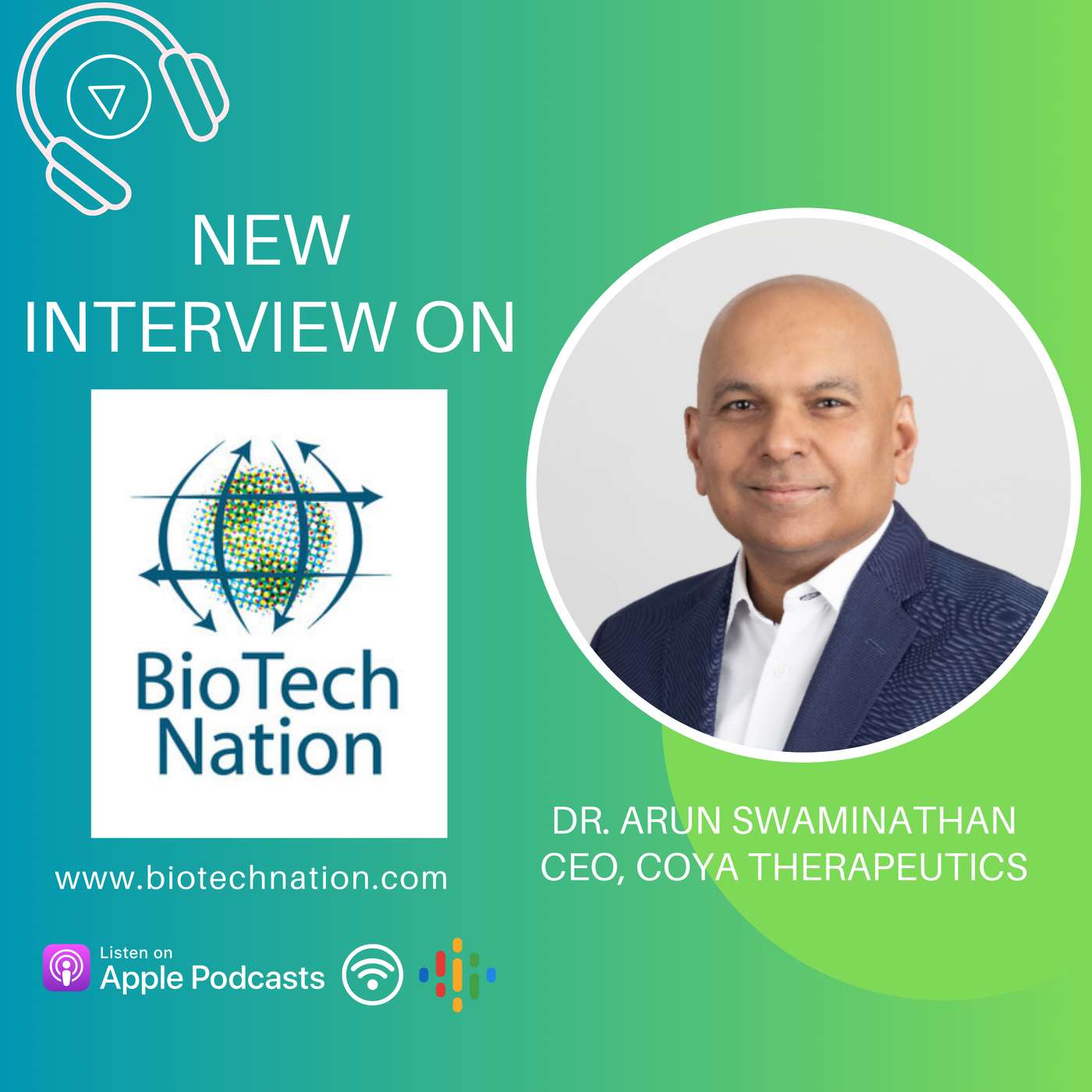
Coya Therapeutics' vision is to make diseases like ALS "livable" by completely stopping their progression. This ambitious goal stems from a small investigator-initiated trial where patients showed no disease progression over six months, a period where a significant decline is typically expected, reframing the therapeutic benchmark.

Related Insights
Despite the drug having a 90-minute half-life, patients maintained and even saw continued improvement eight months after stopping the 12-week treatment. This suggests the drug facilitates genuine neural repair and rewiring, rather than offering only temporary symptomatic relief that requires continuous dosing.
A new wave of therapies for Stargardt disease is moving beyond simply slowing progression. Approaches like optogenetics aim to restore vision even in advanced patients by creating new light-sensing capabilities in retinal cells, bypassing the photoreceptors already lost to the disease.

Coya's treatment is a combination therapy that addresses two problems simultaneously. One component increases the number of functional regulatory T-cells (Tregs) to control the immune system. The second component suppresses the underlying inflammation that would otherwise cause these newly boosted cells to become dysfunctional again, ensuring a more durable effect.
Instead of targeting individual gene mutations in diseases like ALS, condensate science focuses on shared cellular structures where genetic risks converge. This approach creates a broader therapeutic target, potentially treating more patients with diverse genetic profiles.

Coya Therapeutics is pursuing a novel therapeutic goal for ALS: making the condition "livable" by stopping its progression. Instead of aiming for a cure or reversing existing damage, their strategy focuses on preserving a patient's current motor function, which would represent a significant breakthrough in managing the neurodegenerative disease.
Despite significant progress in managing symptoms for autoimmune conditions, very few treatments fundamentally alter the disease's course. The major unmet needs and investment opportunities lie in therapies that can induce remission or target common underlying pathologies like fibrosis, moving beyond mere symptom relief.

Diverging from typical approaches that focus on damaged neurons, Neuvivo's drug addresses ALS as an immune system disorder. By supplying a molecule the immune system is missing, it helps regulate the system, allowing the body to recover from the attacks that cause neurodegeneration.
After Novo Nordisk's GLP-1 trial in Alzheimer's failed to show clinical benefit despite a 10% biomarker improvement, Coya is pursuing a combination therapy. They theorize that adding low-dose IL-2 can synergistically boost biomarkers to the 25-30% range, a level they believe is necessary to achieve clinically meaningful effects.
Coya's therapeutic approach is not limited to ALS. The company views the underlying mechanism—dysfunctional regulatory T-cells driving neuroinflammation—as a common pathway in other conditions like frontotemporal dementia, Alzheimer's, and Parkinson's. This positions their drug as a platform technology, creating a broader pipeline and de-risking the company from reliance on a single indication.
While T-regs are most commonly associated with autoimmune conditions, Coya focuses on neurodegeneration. This strategy is based on their founder's research showing T-reg dysfunction is a major driver of diseases like ALS and FTD, applying a known biological mechanism to a novel, high-unmet-need therapeutic area.