Get your free personalized podcast brief
We scan new podcasts and send you the top 5 insights daily.
Jayshree Ullal never planned to be a CEO, finding joy in working directly with engineers to build products for customers. This deep focus on product and team, rather than on title or corporate ladder, ultimately led her to the executive role when she sought a more impactful environment after her time at Cisco.

Related Insights
The key 'twist' that attracted CEO Jayshree Ullal to Arista was its unique software. Instead of multiple operating systems for different products, Arista built one state-driven OS. This architecture allows individual processes to fail and recover without crashing the system, a critical feature for mission-critical customers.

Career paths are not always linear climbs. Arista CEO Jayshree Ullal identifies as an "accidental executive" who was more passionate about product and technology than a C-suite title at Cisco. This mindset led her to leave a secure corporate path to found Arista, driven by a desire to be an entrepreneur and work with people she enjoyed.
Contrary to the common ambition of top executives, Snowflake's sales and marketing leaders found fulfillment by mastering their specific domains. They had no desire to become CEO, allowing them to shed their egos and focus purely on the craft of their functions, a rare and refreshing mindset in Silicon Valley.

Consumer tech often succeeds on product alone. Enterprise tech, however, requires a complex business motion involving sales and partnerships. This is where professional executives often outperform founders who may love building products but dislike the business development required for success.

The journey from individual contributor to VP of Product at Descript wasn't about formal promotions. Instead, it was a gradual process of adding so much value in product discussions that she was invited into progressively more strategic meetings. When you're consistently indispensable in "the room," you eventually belong there permanently.
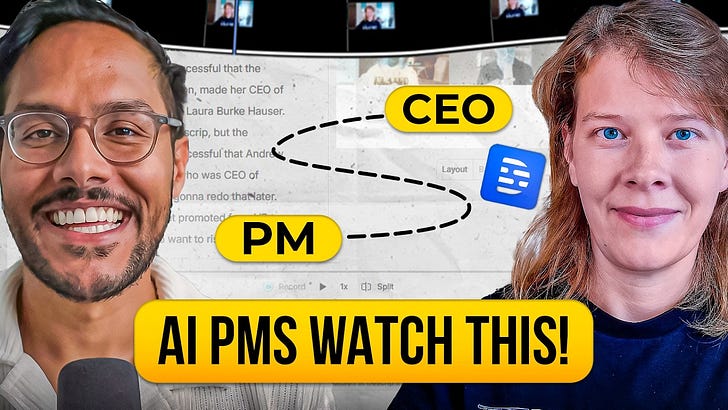
Effective leadership in a fast-moving space requires abandoning the traditional org chart. The CEO must engage directly with those closest to the work—engineers writing code and salespeople talking to customers—to access unfiltered "ground truth" and make better decisions, a lesson learned from Elon Musk's hands-on approach.
To prevent management from becoming a detached layer, Arista ensures its leaders are "coach players." This means even senior executives, like the CTO and founder, still contribute by coding. This "leading by example" approach proves to employees that management is connected to the core work, reinforcing a strong, authentic engineering culture.
By acting as a forward-deployed engineer in the early days, the CTO gained deep customer and sales motion insights. This direct market experience was crucial for his successful transition into the CEO role.

The pivot from a pure technology role (like CTO) to product leadership is driven by a passion shift. It's moving from being obsessed with technical optimization (e.g., reducing server costs) to being obsessed with customer problems. The reward becomes seeing a customer's delight in a solved problem, which fuels a desire to focus entirely on that part of the business.

An engineering background provides strong first-principles thinking for a CEO. However, to effectively scale a company, engineer founders must elevate their identity to become a specialist in all business functions—sales, policy, recruiting—not just product.
