Get your free personalized podcast brief
We scan new podcasts and send you the top 5 insights daily.
The biggest near-term automation threat isn't from super-intelligent AI, but from mediocre "boring bots." This "so-so automation" is just good enough to displace human workers but fails to generate the significant economic gains seen in past technological revolutions, creating a net drag on the economy.

Related Insights
The immediate threat of AI isn't mass layoffs, but rather its impact on future hiring. During the next economic upswing, companies may opt to invest in AI-driven restructuring and reorganization instead of rehiring laid-off white-collar professionals, permanently reducing job opportunities.

Drawing on Cory Doctorow's insight, the immediate risk for workers isn't being replaced by a competent AI, but by an incompetent one. AI only needs to be good enough to convince a manager to fire a human, leading to a lose-lose situation of job loss and declining work quality.
Historically, humans moved from manual to cognitive labor as technology automated physical tasks. Emad Mostaque argues AI now automates cognitive work, creating an "intelligence inversion." There's no obvious higher-value domain left for human labor to escape to, unlike previous technological shifts.

Contrary to the consensus view of explosive AI-driven growth, AI could be a headwind for near-term GDP. While past technologies changed the structure of jobs, AI has the potential to eliminate entire categories of economic activity, which could reduce overall economic output, not just displace labor.

The true disruption from AI is not a single bot replacing a single worker. It's the immense leverage granted to individuals who can deploy thousands of autonomous AI agents. This creates a massive multiplication of productivity and economic power for a select few, fundamentally altering labor market dynamics from one-to-one replacement to one-to-many amplification.
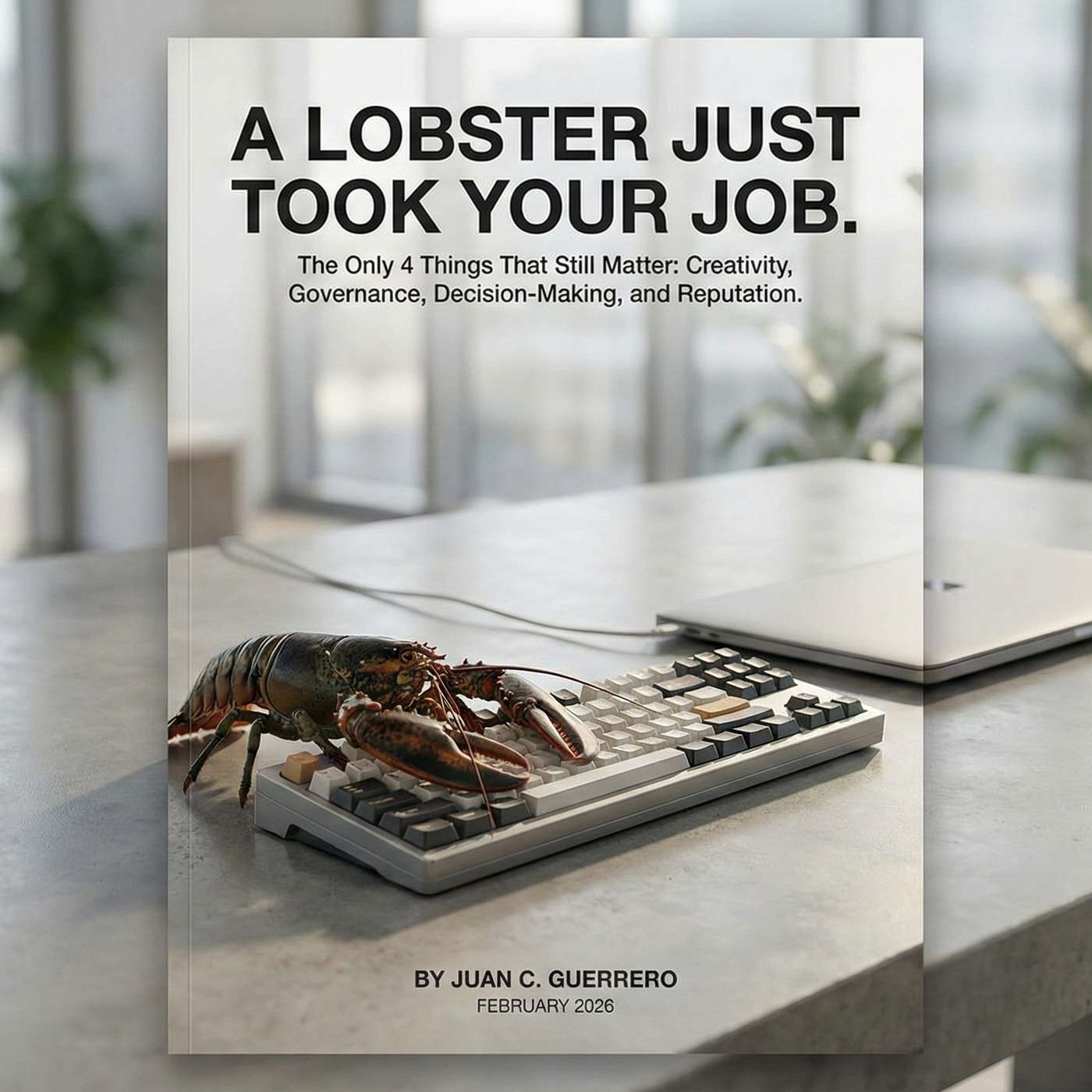
AI's impact on labor will likely follow a deceptive curve: an initial boost in productivity as it augments human workers, followed by a crash as it masters their domains and replaces them entirely. This creates a false sense of security, delaying necessary policy responses.

While AI may not cause mass unemployment, its greatest danger lies in automating the routine entry-level tasks that new workers rely on to build skills. This could disrupt traditional career ladders and create a long-term talent development crisis for organizations.

The US economy is currently experiencing near-zero job growth despite typical 2% productivity gains. A significant increase in productivity driven by AI, without a corresponding surge in economic output, could paradoxically lead to outright job losses. This creates a scenario where positive productivity news could have negative employment consequences.

Historically, technological advancements primarily displaced blue-collar workers first. The current AI revolution is unique because its most immediate and realized disruptions are targeting white-collar, knowledge-based roles, breaking a long-standing pattern of technological impact on the labor market.

The true threshold for AI becoming a disruptive, "non-normal" technology is when it can perform the new jobs that emerge from increased productivity. This breaks the historical cycle of human job reallocation, representing a fundamental economic shift distinct from past technological waves.
