Get your free personalized podcast brief
We scan new podcasts and send you the top 5 insights daily.
Many small businesses assume they are too insignificant to be targeted by cybercriminals. This "normalcy bias" creates a dangerous false sense of security. In reality, smaller companies are attractive targets precisely because they often lack robust controls and are constantly being impersonated online.

Related Insights
Organizations often place excessive faith in firewalls and perimeter security, assuming their internal environment is safe. This overlooks the fact that once a breach occurs, sensitive data is exposed. The critical question isn't just preventing entry, but protecting data once an attacker is already inside the "secure" environment.

AI tools for text, image, and video generation allow scammers to create high-quality, scalable impersonation campaigns at near-zero cost. This threat, once reserved for major global brands, now affects companies of all sizes, as the barrier to entry for criminals has vanished.

Historically, many organizations only implement robust cybersecurity after being attacked, despite knowing the risks. AI-powered offense dramatically raises the stakes by increasing the speed and scale of threats, making this reactive posture untenable and potentially catastrophic.

SiteAdvisor's core insight was that security products focused on technical vulnerabilities, while new threats like phishing exploited human psychology. This mismatch created a market opportunity for a new protection category based on identifying social engineering attacks.

The most immediate cybersecurity threat from advanced AI isn't a sophisticated system breach. Instead, it's the ability to use AI to massively scale "old school" fraud like impersonation and phishing attacks, tricking individual people at an unprecedented rate and volume.

Enterprises face millions of potential vulnerabilities, making prioritization impossible. The key is to ignore the noise and focus only on the small fraction that are actually exploitable by hackers. This shifts remediation efforts from theoretical weaknesses to real-world business risk.

While sophisticated AI attacks are emerging, the vast majority of breaches will continue to exploit poor security fundamentals. Companies that haven't mastered basics like rotating static credentials are far more vulnerable. Focusing on core identity hygiene is the best way to future-proof against any attack, AI-driven or not.
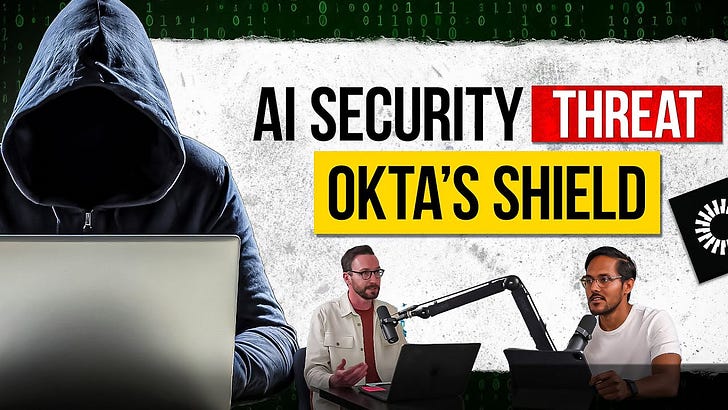
The decision to invest in formal security measures like anti-phishing training should be based on team size and industry risk, not revenue milestones. The attack surface grows with each new employee, making a headcount of 15-20 a practical trigger point to implement such policies.

While large firms use AI for defense, the same tools lower the cost and barrier to entry for attackers. This creates an explosion in the volume of cyber threats, making small and mid-sized businesses, which can't afford elite AI security, the most vulnerable targets.
The rise of AI dramatically increases the 'quantity and quality' of cyberattacks, allowing bad actors to automate attacks at scale. This elevates security from a compliance issue to an existential risk for startups, who often lack dedicated teams to combat these advanced, persistent threats. A severe hack is now a company-killing event.