Get your free personalized podcast brief
We scan new podcasts and send you the top 5 insights daily.
OpenAI's repeated "code reds" generated negative press. A more effective internal communications strategy is to frame these intense, single-focus periods as a "lock-in." This term signals urgency and unity internally without creating external perceptions of panic or crisis, making it a powerful tool for leaders.

Related Insights
When faced with intense public scrutiny unrelated to the product, Astronomer's leadership focused all discussions on employee support and customer assurance. This internal focus prevented any employee or customer churn, demonstrating that the core business can remain stable by ignoring external noise.

OpenAI's leaked "Code Red" memo is a lesson in leadership communication. Negative framing invites media scrutiny and hurts morale. A better approach is to use positive, action-oriented language like "lock in" or "we're taking that hill" to rally the team without signaling panic externally.

Facing intense pressure from Google's Gemini and Anthropic's Claude, OpenAI initiated a "Code Red," halting side projects to refocus exclusively on improving the core ChatGPT experience. This demonstrates how external threats can be a powerful management tool to eliminate distractions and rally a company around its primary mission.
Calling a "code red" is a strategic leadership move used to shock the system. Beyond solving an urgent issue, it serves as a loyalty test to identify the most committed team members, build collective confidence through rapid problem-solving, and rally everyone against competitive threats.
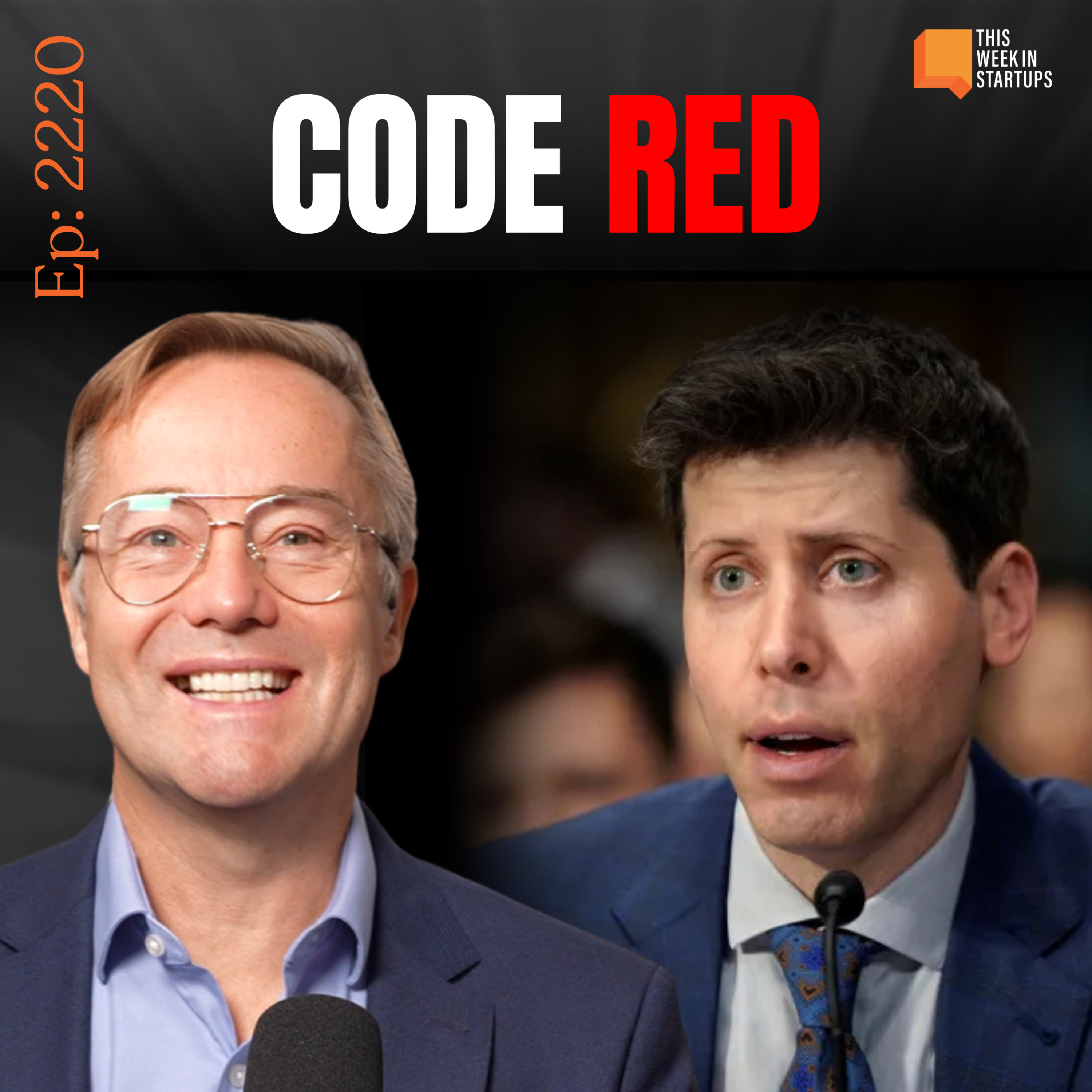
CEO Sam Altman reveals "code reds" are a deliberate, frequent strategy, not panic. OpenAI treats competitive threats like pandemics, believing intense, early action is far more effective than delayed responses, even if the threat doesn't fully materialize. This reframes a crisis as a calculated, proactive maneuver.

Leaders can reduce team anxiety and prevent misinterpretation by explicitly categorizing input. 'Do' is a direct order (used rarely), 'Try' is an experiment, and 'Consider' is a low-stakes suggestion (used 80-85% of the time). This ensures a leader's random thoughts aren't treated as gospel.
CEO declarations of "war mode" are often ineffective rhetoric. True urgency is felt in "hyperaggressive mode," a rare and unnatural state where the entire management team exhibits palpable tension and increased velocity. It's not about talk; it's a smellable, tangible increase in execution speed across all functions.

The company culture is driven by a weekly mantra: "What is the one thing that you will put unreasonable effort to this week to contribute towards our most important goal?" This framing forces extreme focus and intensity, elevating execution beyond simply working hard on high-priority objectives.

By changing the lexicon from an adversarial "versus" to a complementary "generation and capture," Ally's marketing team created a shared language. This simple reframe aligns disparate functions toward a common goal, dissolving internal friction and fostering collaboration.
When handling an outage or escalation, the biggest threat to customer trust isn't the problem, but a chaotic internal response. Instill a "clarity over chaos" rule by designating one leader, one channel, and one message. A calm, owned response builds more credibility than a hundred smooth weeks.