Get your free personalized podcast brief
We scan new podcasts and send you the top 5 insights daily.
In an environment of speculative AI deals, IRON's CEO Daniel Roberts emphasized that their $9.7B partnership with Microsoft is based on "binding contractual deal announcements" and "real revenue." This highlights a desire for credibility and differentiation from the "press release economy" where commitments can be less concrete.

Related Insights
While some competitors prioritize winning over ROI, Nadella cautions that "at some point that party ends." In major platform shifts like AI, a long-term orientation is crucial. He cites Microsoft's massive OpenAI investment, committed *before* ChatGPT's success, as proof of a long-term strategy paying off.
To counter concerns about financing its massive infrastructure needs, OpenAI CEO Sam Altman revealed staggering projections: a $20B+ annualized revenue run rate by year-end 2025 and $1.4 trillion in commitments over eight years. This frames their spending as a calculated, revenue-backed investment, not speculative spending.
Despite public drama, OpenAI's restructuring settled based on each party's leverage. Microsoft got a 10x return, the foundation was massively capitalized, and employees gained liquidity. This pragmatic outcome, which clears the path for an IPO, proves that calculated deal-making ultimately prevails over controversy.
The partnership where OpenAI becomes an equity holder in Thrive Holdings suggests a new go-to-market model. Instead of tech firms pushing general AI 'outside-in,' this 'inside-out' approach embeds AI development within established industry operators to build, test, and improve domain-specific models with real-world feedback loops.
Satya Nadella suggests a fundamental shift in enterprise software monetization. As autonomous AI agents become prevalent, the value unit will move from the human user ("per seat") to the AI itself. "Agents are the new seats," signaling a future where companies pay for automated tasks and outcomes, not just software access for employees.

Companies like Amazon are seeing massive market cap increases (e.g., $150B) from announcing large deals with OpenAI ($38B). This highlights a "press release economy" where the announcement itself creates immense value, even if the underlying financial commitments are not fully binding or guaranteed.
Nvidia's earnings call revealed its multi-billion dollar investment opportunities in OpenAI and Anthropic are non-binding letters of intent. This suggests the supposed "round-tripping" of capital in the AI ecosystem is built on optional, handshake-like deals, not guaranteed commitments, adding a layer of hidden risk.
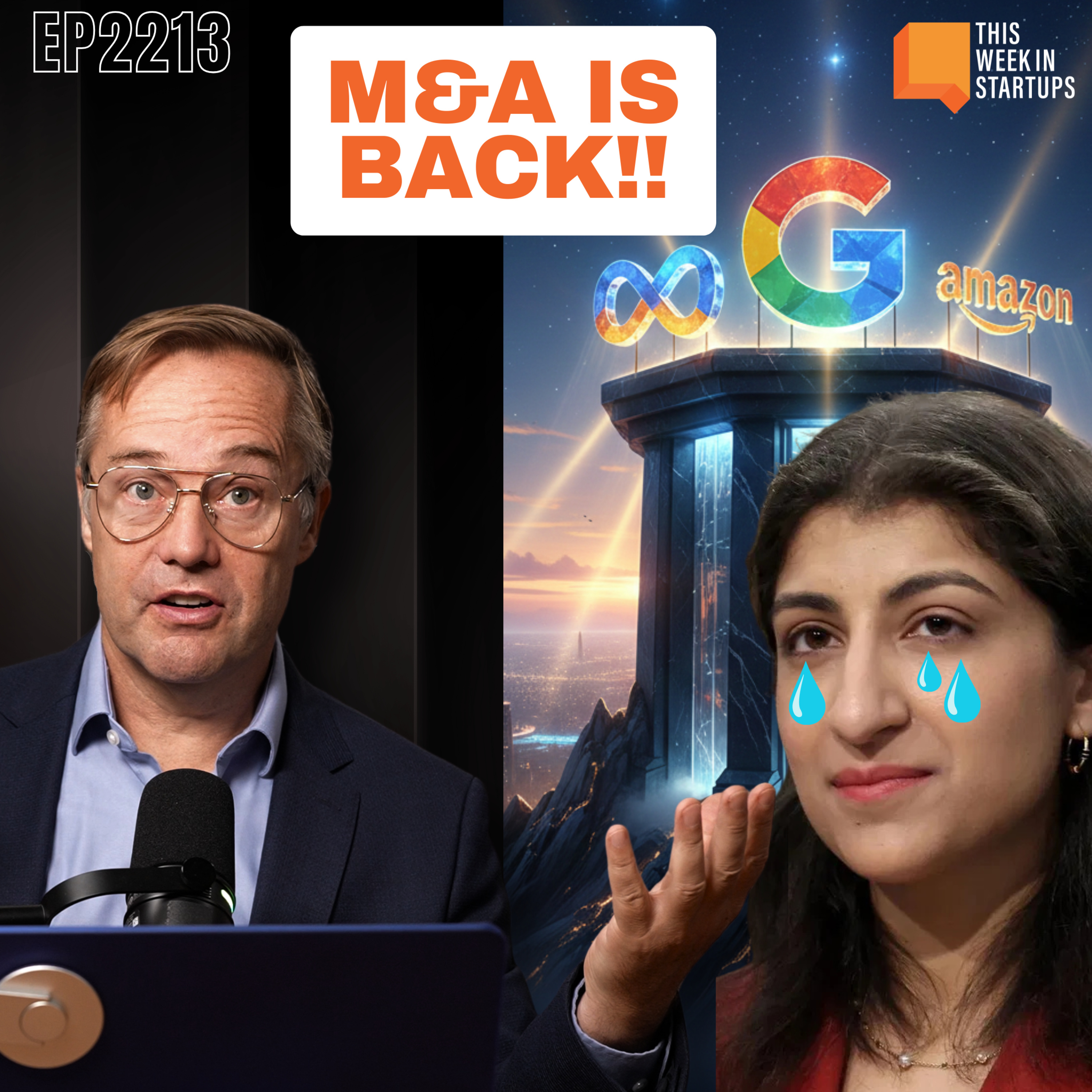
Satya Nadella reveals that the initial billion-dollar investment in OpenAI was not an easy sell. He had to convince a skeptical board, including a hesitant Bill Gates, about the unconventional structure and uncertain outcome. This highlights that even visionary bets require navigating significant internal debate and political capital.
Silver Lake cofounder Glenn Hutchins contrasts today's AI build-out with the speculative telecom boom. Unlike fiber optic networks built on hope, today's massive data centers are financed against long-term, pre-sold contracts with creditworthy counterparties like Microsoft. This "built-to-suit" model provides a stable commercial foundation.
Beyond the equity stake and Azure revenue, Satya Nadella highlights a core strategic benefit: royalty-free access to OpenAI's IP. For Microsoft, this is equivalent to having a "frontier model for free" to deeply integrate across its entire product suite, providing a massive competitive advantage without incremental licensing costs.