Get your free personalized podcast brief
We scan new podcasts and send you the top 5 insights daily.
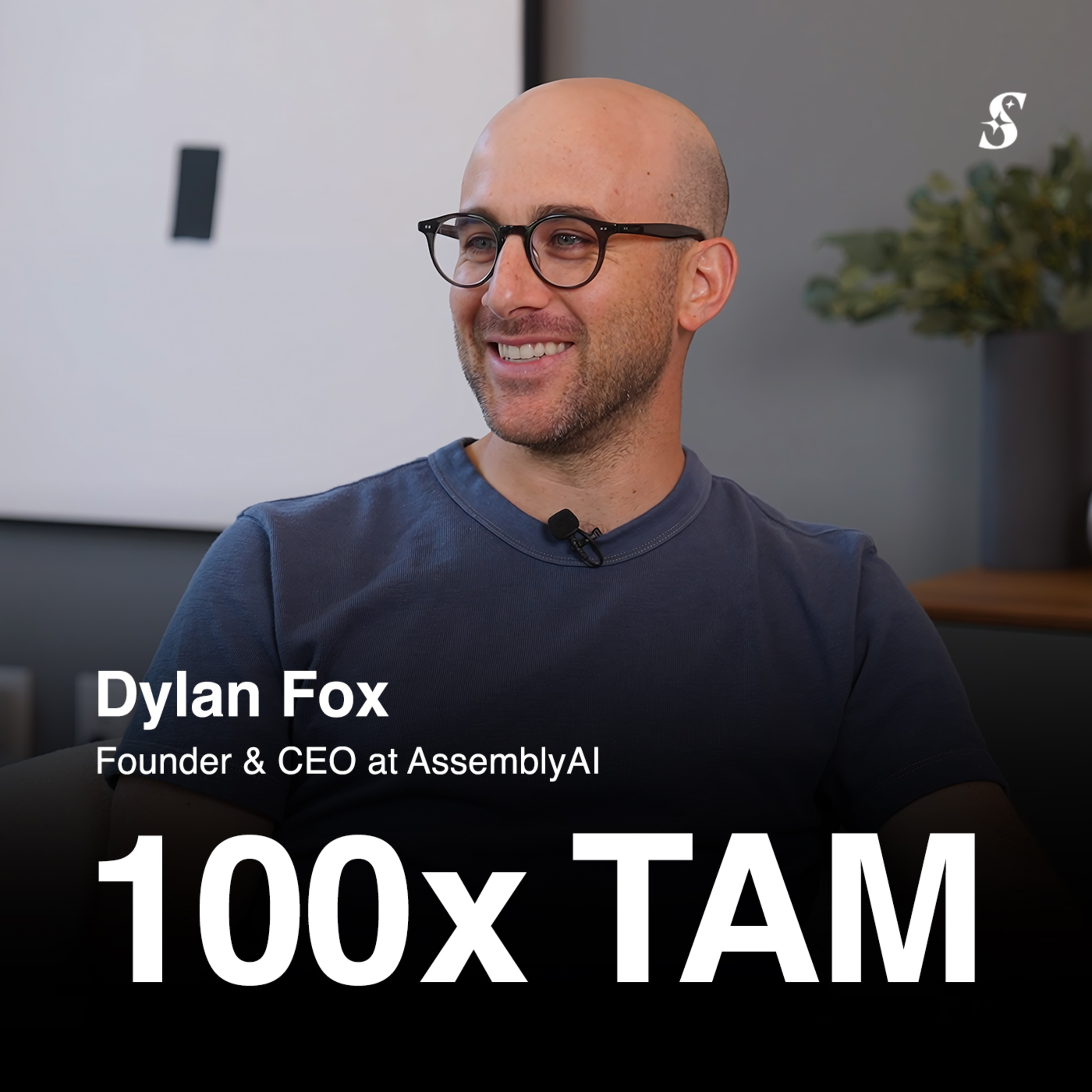
At truly AI-native companies, AI is not just for engineering. AssemblyAI's CEO built a personal agent named "Dylan Claw" that accesses his meeting notes and transcripts to automatically create and revise slide decks. This deep, personalized integration allows for extreme operational leverage and speed.
Related Insights
True AI-native organizations are not defined by using tools like ChatGPT. They are systems where humans manage AI agents that read from and write to a central knowledge base, creating a flywheel of speed and customer signal that builds a competitive moat.

Robin Vince, CEO of America's oldest bank, leverages a proprietary multi-agent AI platform named Eliza for his day-to-day work. Before client meetings, he prompts the AI to synthesize call reports, news, and past interactions to generate key talking points, showcasing executive-level AI adoption in legacy finance.

AI is becoming a personal C-suite tool. Vasant Narasimhan uses an AI agent trained on Novartis's historical R&D decisions. This allows him to query past contexts and biases when facing a new decision, leading to more informed, data-driven leadership rather than relying solely on memory.

CEO Brad Jacobs uses AI to automatically take notes and generate summaries from important meetings across his company. This technology provides him with near-instantaneous, unfiltered insights into operations and challenges that previously would have taken months to surface through the corporate hierarchy.

An executive created a custom AI agent to handle repetitive tasks like meeting prep, calendar triage, and email. This "chief of staff" provides analysis, suggests delegations, and even offers blunt feedback, demonstrating how AI can be personalized to augment executive functions.

Use AI agent platforms to build a digital chief of staff that manages priorities, filters messages, and tracks projects. This automates the administrative and strategic legwork traditionally handled by a human assistant, freeing up executive time for high-value decisions.
CEO Carla Vernón personally uses AI to streamline her executive workflow. For her bi-weekly meetings with the board chair, AI prepares a summary of recent performance, the future outlook, and key discussion themes. This allows her to focus on strategic conversation rather than report generation, demonstrating leadership by example.
To manage the information deluge, product leaders can build personal AI agents for daily briefings. The speaker uses four: one for his schedule, one for market trends, one for the competitive landscape (including new entrants), and one for industry news. This automates synthesis and sharpens daily focus for better decision-making.

The paradigm for using software is shifting from providing explicit instructions to defining high-level objectives. AI agents act like a team of digital employees, empowering every user to operate like an executive who decides *what* to do, while the AI figures out *how* to do it, increasing individual leverage.

Unable to secure budget for a human chief of staff, Webflow's CPO built her own using AI agents. This system automates complex, recurring tasks like podcast research and data prep, demonstrating how executives can use AI to gain significant personal leverage without increasing headcount.
