Get your free personalized podcast brief
We scan new podcasts and send you the top 5 insights daily.
AI is becoming a personal C-suite tool. Vasant Narasimhan uses an AI agent trained on Novartis's historical R&D decisions. This allows him to query past contexts and biases when facing a new decision, leading to more informed, data-driven leadership rather than relying solely on memory.

Related Insights
Leaders are often trapped "inside the box" of their own assumptions when making critical decisions. By providing AI with context and assigning it an expert role (e.g., "world-class chief product officer"), you can prompt it to ask probing questions that reveal your biases and lead to more objective, defensible outcomes.

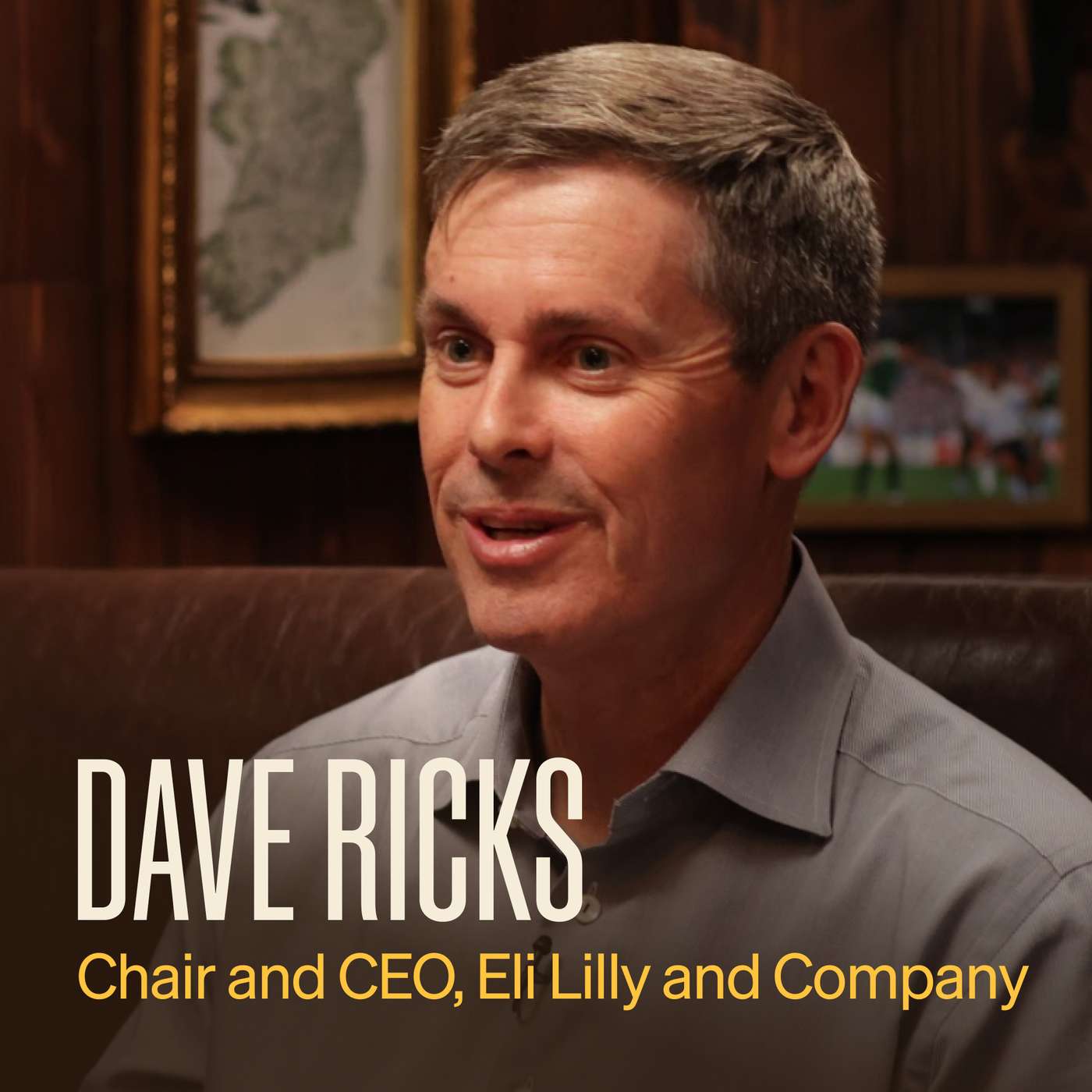
The CEO uses AI tools like Claude and XAI during every meeting to ask science questions, enabling continuous, mastery-based learning on complex topics outside his formal training. This serves as a personal autodidact tool.
A powerful, practical application of AI for leaders is to treat it as a multidisciplinary advisor or "Co-CEO." This framing allows for high-level collaboration on strategic planning, tapping into AI's expertise across finance, legal, HR, and operations.

An organization's progress in AI adoption is directly proportional to its CEO's personal engagement with the technology. Companies with CEOs who actively experiment with tools like ChatGPT, rather than merely delegating, foster a culture that enables much faster and deeper transformation.

By building a custom GPT with deep company context, a CEO can compress hundreds of hours of research, analysis, and document creation into a 10-15 hour collaborative session, generating 95% of the final strategic output.
Brian Armstrong uses an AI connected to all company data (Slack, G-Docs) as a C-suite coach. He asks it questions like "What should I be aware of?" or "What did I change my mind on most?" to surface hidden issues and get objective feedback, treating the AI as a mentor.

A key value of AI agents is rediscovering "lost" institutional knowledge. By analyzing historical experimental data, agents can prevent redundant work. For example, an agent found a previous study on mouse models that saved a company eight months and significant cost, surfacing data from an acquired company where the original scientists were gone.

A leader's most valuable use of AI isn't for automation, but as a constant 'thought partner.' By articulating complex business, legal, or financial decisions to an AI and asking it to pose clarifying questions, leaders can refine their own thinking and arrive at more informed conclusions, much like talking a problem out loud.

The ultimate value of AI will be its ability to act as a long-term corporate memory. By feeding it historical data—ICPs, past experiments, key decisions, and customer feedback—companies can create a queryable "brain" that dramatically accelerates onboarding and institutional knowledge transfer.

Novartis's CEO views AI not as a single breakthrough technology but as an enabler that creates small efficiencies across the entire R&D value chain. The real impact comes from compounding these small gains to shorten drug development timelines by years and improve overall success rates.