Get your free personalized podcast brief
We scan new podcasts and send you the top 5 insights daily.
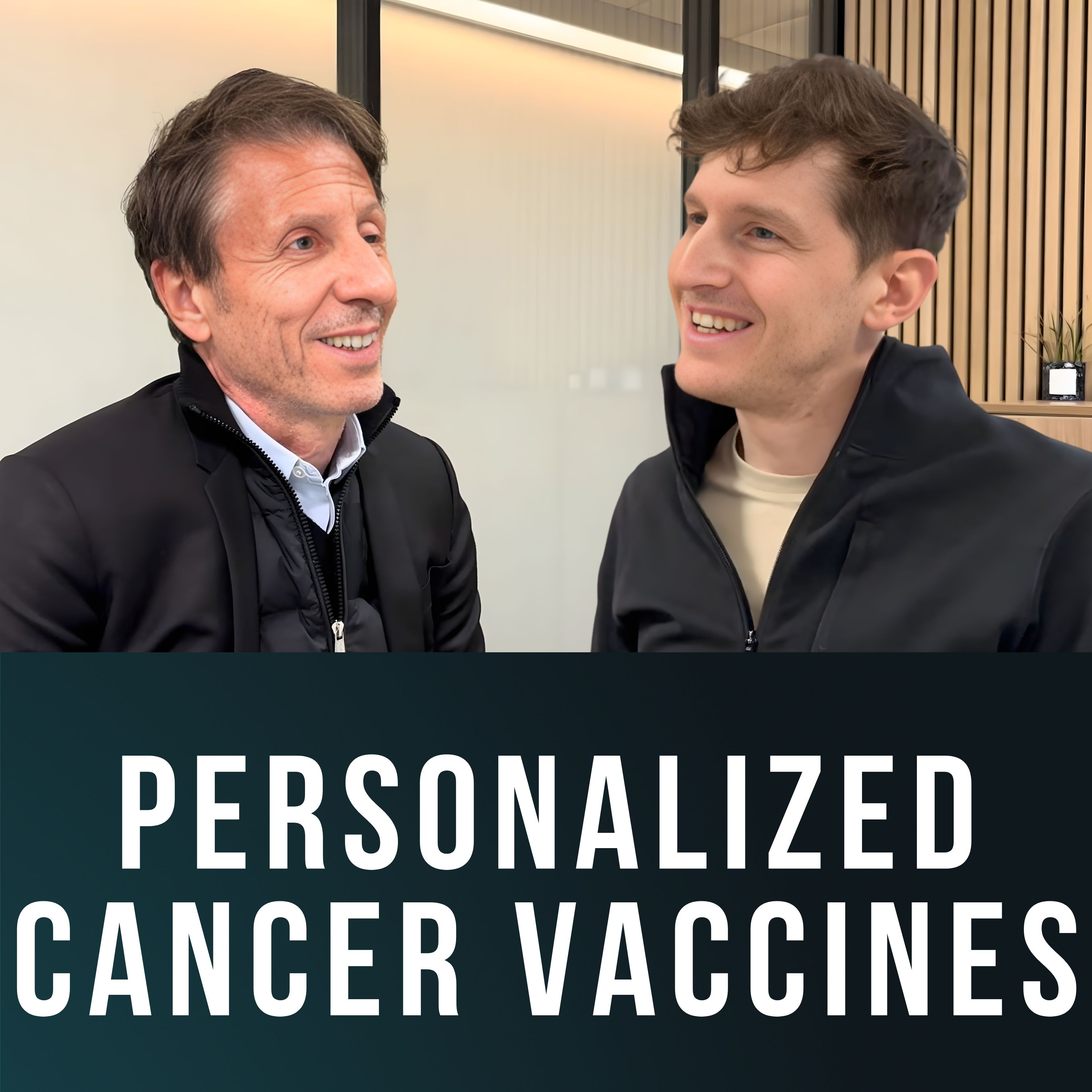
The Keynote 942 study didn't just show clinical improvement; it demonstrated that the neoantigen vaccine expanded specific T-cell clones associated with positive patient response. This confirms the therapy's intended biological mechanism of action, a critical step for validating this new class of cancer treatment.

Related Insights
By treating patients before their tumors are surgically removed, Infinitopes can analyze the resected tissue. This provides direct evidence of CD8 T cell infiltration in response to the vaccine—a powerful, mechanistic proof-point that is impossible for competitors testing in later-stage patients.

The drug exhibits a multimodal mechanism. It not only reverses chemoresistance and halts tumor growth but also 'turns cold tumors hot' by forcing cancer cells to display markers that make them visible to the immune system. This dual action of direct attack and immune activation creates a powerful synergistic effect.

T-cell receptor (TCR) therapies offer a significant advantage over monoclonal antibodies by targeting intracellular proteins. They recognize peptides presented on the cell surface, effectively unlocking 90% of the proteome and requiring far fewer target molecules (5-10 copies vs. 1000+) to kill a cancer cell.

Even though companies like Moderna (mRNA) and Transgene (viral vector) use different platforms, positive results from any of them help validate the entire individualized neoantigen approach for investors and clinicians. The massive unmet medical need ensures the market is large enough to support multiple successful players.
Unlike CAR-T therapies that rely on a limited number of engineered cells, T-cell engagers activate the body's entire T-cell repertoire. This vast pool of effector cells makes exhaustion a negligible issue, as only a small fraction is engaged at any time, ensuring a sustained attack on cancer cells.

Successful immunotherapies like anti-PD-1 work by shifting the battlefield's arithmetic. They enhance the efficiency of each T-cell, allowing one cell to destroy five or ten cancer cells instead of three. This turns the fight into a 'numbers game' that the immune system can finally win.

Despite its small size and inability to immediately change clinical practice, the Keynote 942 trial's strength was in generating a powerful, unambiguous signal of efficacy. This approach proved highly effective at catalyzing broader interest and investment in personalized neoantigen vaccines across the entire field of oncology.
While immunotherapy was a massive leap forward, Dr. Saav Solanki states the next innovation frontier is combining it with newer modalities. Antibody-drug conjugates (ADCs) and T-cell engagers are being used to recruit the immune system into the tumor microenvironment, helping patients who don't respond to current immunotherapies.
A powerful analogy for combination immunotherapy: PD-1 checkpoint inhibitors act like releasing the brake on the immune system, reactivating existing but exhausted T-cells. In contrast, a cancer vaccine like NUS209 is the accelerator, creating entirely new T-cells and reactivities that can target the tumor, providing a synergistic effect.
Unconventionally, Infinitopes' first-in-human trial targets neoadjuvant patients (newly diagnosed, pre-surgery). This provides cleaner efficacy signals compared to trials in heavily pre-treated patients and enables unique analysis of resected tumors to prove the vaccine's mechanism, a key differentiator from competitors.