Get your free personalized podcast brief
We scan new podcasts and send you the top 5 insights daily.
Unlike CAR-T therapies that rely on a limited number of engineered cells, T-cell engagers activate the body's entire T-cell repertoire. This vast pool of effector cells makes exhaustion a negligible issue, as only a small fraction is engaged at any time, ensuring a sustained attack on cancer cells.

Related Insights
Dr. Patrick Baeuerle argues the biggest challenge for cell engagers and CAR-T therapies is not killing power but the tumor's ability to down-regulate or lose the target antigen. This heterogeneity is a fundamental escape mechanism that future multi-targeting strategies must address to prevent relapse.
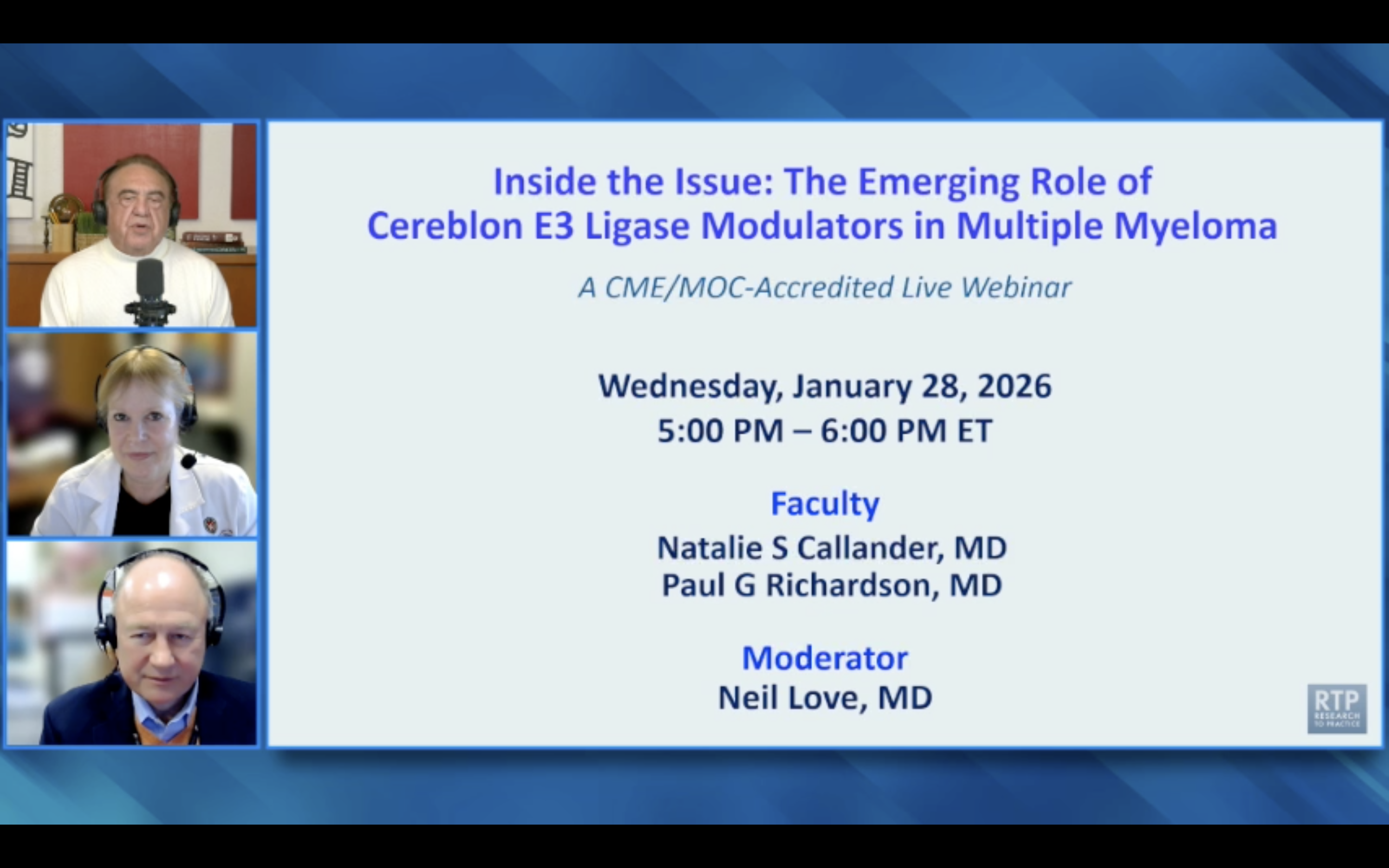
CELMoDs are being actively trialed as a maintenance therapy after CAR T-cell treatment. The strategy is to leverage the CELMoDs' ability to enhance T-cell function and upregulate effector T-cells to boost the activity and persistence of the CAR-T product, potentially leading to more durable responses and preventing relapse.
An investigational in vivo CAR-T therapy uses viral particles infused directly into the patient to convert their T-cells into CAR-T cells. This approach eliminates the complex steps of apheresis, lymphodepletion, and ex vivo manufacturing, effectively creating an off-the-shelf product that becomes an autologous treatment inside the body.
T-cell receptor (TCR) therapies offer a significant advantage over monoclonal antibodies by targeting intracellular proteins. They recognize peptides presented on the cell surface, effectively unlocking 90% of the proteome and requiring far fewer target molecules (5-10 copies vs. 1000+) to kill a cancer cell.

A therapeutic approach called "T-cell engagers" or "BiTEs" uses engineered antibodies with two different heads. One side binds to a cancer cell, while the other binds to a nearby T-cell. This effectively brings the killer cell and the target together, leveraging the body's existing immune cells without genetic modification.

Successful immunotherapies like anti-PD-1 work by shifting the battlefield's arithmetic. They enhance the efficiency of each T-cell, allowing one cell to destroy five or ten cancer cells instead of three. This turns the fight into a 'numbers game' that the immune system can finally win.

Unlike older IMiDs where T-cell effects are secondary, CELMoDs have a powerful, independent pro-T-cell mechanism. This dual action is so significant that in the future, CELMoDs will be prescribed not just for their direct anti-myeloma effects, but specifically to enhance the efficacy of T-cell therapies like CAR-T and bispecific antibodies.
To combat immunosuppressive "cold" tumors, new trispecific antibodies are emerging. Unlike standard T-cell engagers that only provide the primary CD3 activation signal, these drugs also deliver the crucial co-stimulatory signal (e.g., via CD28), ensuring full T-cell activation in microenvironments where this second signal is naturally absent.

The success of CAR-T therapy hinges on the quality of the patient's own lymphocytes. Procuring T-cells earlier in the disease course, before they become exhausted from numerous prior therapies, results in a higher proportion of naive T-cells, leading to better CAR-T cell manufacturing and clinical outcomes.

Bi-specific T-cell engagers (BiTEs) are highly immunogenic because the mechanism activating T-cells to kill cancer also primes them to mount an immune response against the drug itself. This 'collateral effect' is an inherent design challenge for this drug class.
