Get your free personalized podcast brief
We scan new podcasts and send you the top 5 insights daily.
AI tools like Perplexity Computer can generate fully functional websites in minutes to serve a single, temporary purpose, like sharing design mockups. This "disposable web" concept treats code as a transient communication tool to accomplish a specific task, after which it can be discarded without maintenance.

Related Insights
AI agents built for coding are being used for general knowledge work like creating slide decks or analyzing health data. These agents autonomously write scripts to crawl websites, bypass bot protection, and analyze information, making them a superpower for any computer-based professional, not just developers.

Modern AI coding agents allow non-technical and technical users alike to rapidly translate business problems into functional software. This shift means the primary question is no longer 'What tool can I use?' but 'Can I build a custom solution for this right now?' This dramatically shortens the cycle from idea to execution for everyone.

AI coding agents enable "vibe coding," where non-engineers like designers can build functional prototypes without deep technical expertise. This accelerates iteration by allowing designers to translate ideas directly into interactive surfaces for testing.

A repeatable workflow exists for non-technical builders: research ideas with Perplexity, formalize a Product Requirements Document with Claude, generate a frontend prototype with Magic Patterns, and then deploy the code in Replit with a Supabase backend.

Claude Code can take a high-level goal, ask clarifying questions, and then independently work for over an hour to generate code and deploy a working website. This signals a shift from AI as a simple tool to AI as an autonomous agent capable of complex, multi-step projects.

AI is moving beyond text generation. Using Claude's 'Artifact Builder' skill, it can create and deploy functional web applications directly in the chat window. A user can prompt it to build a tool, like a UTM link generator, and receive a usable app, not just code snippets.

A free trial for an AI agent hosting service revealed an unexpected user behavior: spinning up powerful AI agents for specific, time-bound tasks (like a coding project or planning a trip) and then letting them self-destruct. This concept of temporary agents opens up new possibilities beyond persistent personal assistants.

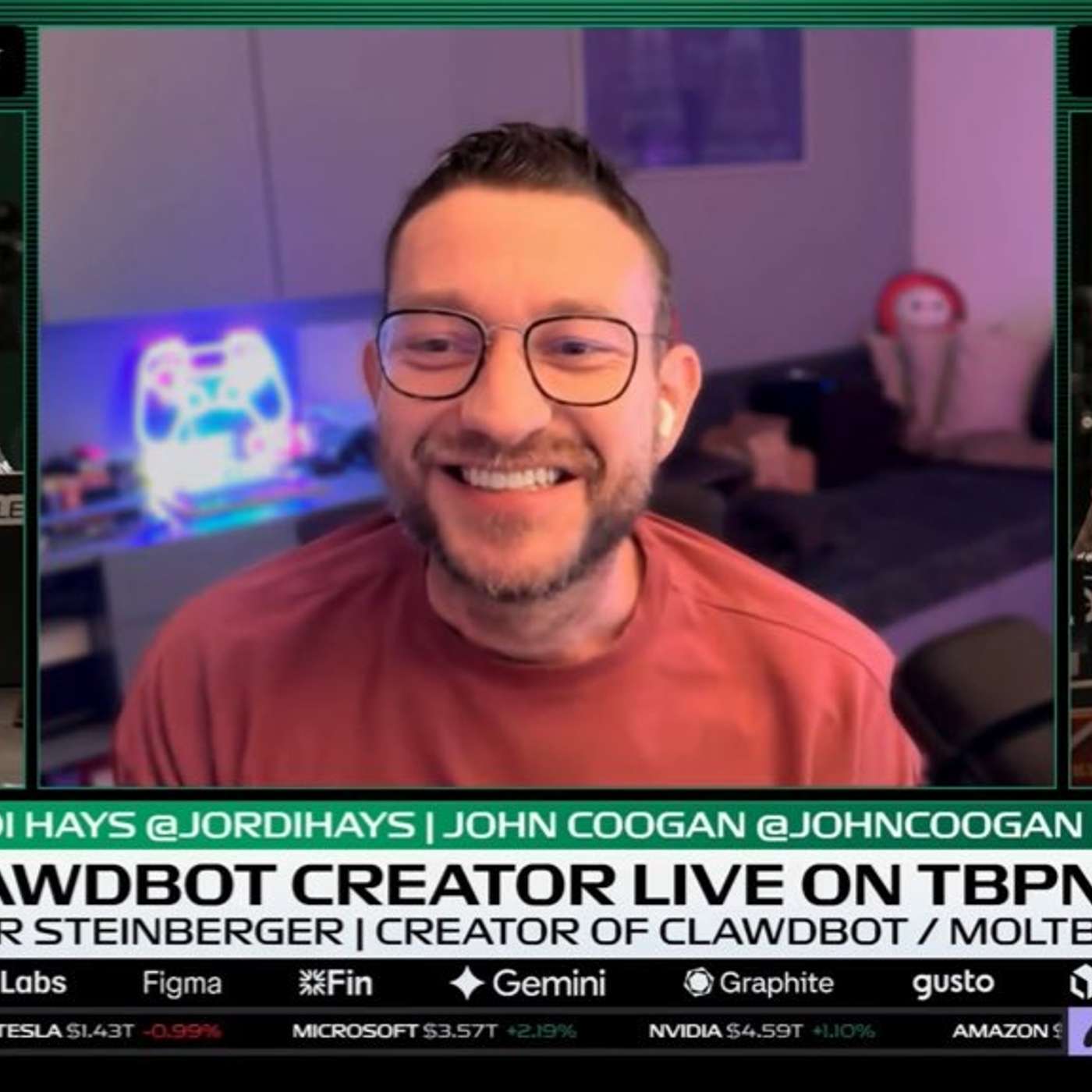
A design agency professional with no coding experience used the Moltbot agent to build 25 internal web services simply by describing the problems. This signals a paradigm shift where non-technical users can create their own hyper-personalized software, bypassing traditional development cycles and SaaS subscriptions.
Traditionally, building software required deep knowledge of many complex layers and team handoffs. AI agents change this paradigm. A creator can now provide a vague idea and receive a 60-70% complete, working artifact, dramatically shortening the iteration cycle from months to minutes and bypassing initial complexities.

The barrier to software creation has collapsed. An individual can now use an AI-powered builder like Lovable to create a functional MVP in minutes—a task that previously would have required a team, months of work, and tens of thousands of dollars.