Get your free personalized podcast brief
We scan new podcasts and send you the top 5 insights daily.
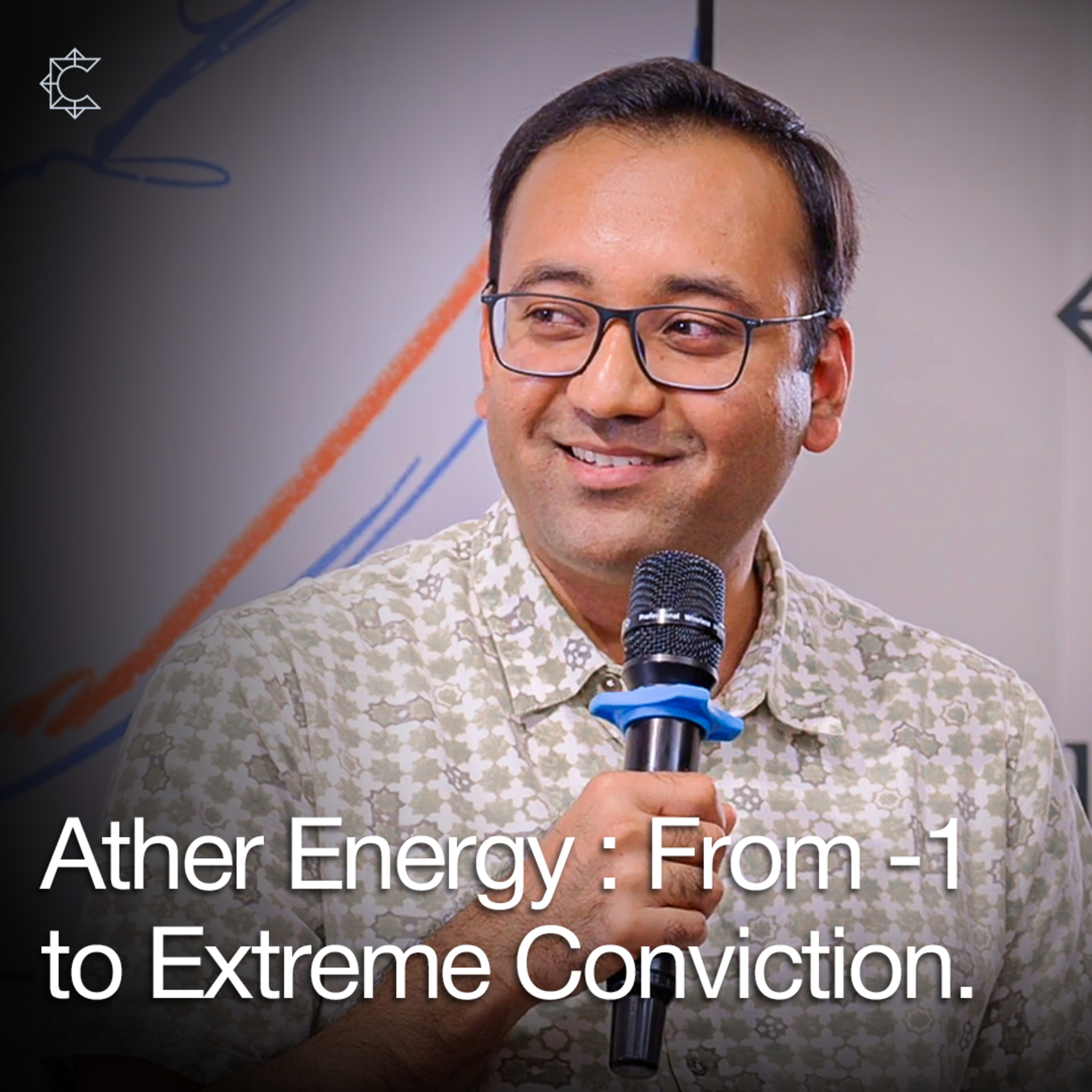
Profound's founder describes a distinct mental shift. Before validating an idea, the mode is "blue ocean thinking." But once high conviction is achieved, the mindset must change to a relentless, "in the trenches" execution mode focused on rapid reps and customer feedback.

Related Insights
The most effective operating philosophy for an early-stage company is brutally simple. It dictates that all time and energy should be spent on only two activities: understanding what customers are trying to achieve (demand) and selling a solution that helps them, while ignoring all other distractions.

Founders who've already built a product haven't missed the 'validation' window. The focus simply shifts from 'is there a problem?' to de-risking subsequent assumptions: Is the solution worthwhile? Will people pay enough? Can customers be acquired profitably? This process is ongoing, even at scale.

Founders often try to convince themselves they have PMF. The actual moment of achieving it feels like a sudden, unmistakable change—a switch, not a spectrum—making it clear that all previous feelings were just wishful thinking.

A founder must simultaneously project unwavering confidence to rally teams and investors, while privately remaining open to any evidence that they are completely wrong. This conflicting mindset is essential for navigating the uncertainty of building a startup.

Before officially starting, founders are in a '-1 to 0' phase. Instead of rushing, they should take months or even a year to find a core purpose they can commit to for a decade. This deep conviction provides immense peace, prevents reactive pivots, and sets a stable foundation for the long term.
Successful founders passionately defend their vision while simultaneously processing tough questions without defensiveness. This balance allows them to navigate the 'idea maze' effectively, learning and adapting as they go.

Activities like discovery interviews and seeking design partners often feel productive and validating. However, they are frequently designed to make founders feel comfortable and avoid the difficulty of real selling and deep immersion. True progress comes from uncomfortable, direct actions, not feel-good processes.
Founders without product-market fit constantly optimize small things, believing better execution is the key. In contrast, with PMF, solid execution yields disproportionate results. Sales calls close without "Jedi mind tricks" because customers want the product.

Founders from backgrounds like consulting or top universities often have a cognitive bias that "things will just work out." In startups, the default outcome is failure. This mindset must be replaced by recognizing that only intense, consistent execution of uncomfortable tasks can alter this trajectory.
The most successful founders rarely get the solution right on their first attempt. Their strength lies in persistence combined with adaptability. They treat their initial ideas as hypotheses, take in new data, and are willing to change their approach repeatedly to find what works.
