Get your free personalized podcast brief
We scan new podcasts and send you the top 5 insights daily.
A standalone Command-Line Interface (CLI) is useful but relies on an AI agent's ability to discover it. Pairing the CLI with a registered 'agent skill' for frameworks like OpenClaw or Hermes makes it directly and reliably callable, which is essential for robust automation.

Related Insights
The new paradigm for building powerful tools is to design them for AI models. Instead of complex GUIs, developers should create simple, well-documented command-line interfaces (CLIs). Agents can easily understand and chain these CLIs together, exponentially increasing their capabilities far more effectively than trying to navigate a human-centric UI.

The enthusiastic reception for Google's Workspace CLI reveals a counter-intuitive trend: old-school Command-Line Interfaces are becoming the preferred way for AI agents to interact with software. Unlike humans, agents don't need GUIs and benefit from the CLI's deterministic, low-friction nature, avoiding the 'abstraction tax' of newer API layers.

Agentic frameworks like OpenClaw are pioneering a new software paradigm where 'skills' act as lightweight replacements for entire applications. These skills are essentially instruction manuals or recipes in simple markdown files, combining natural language prompts with calls to deterministic code ('tools'), condensing complex functionality into a tiny, efficient format.
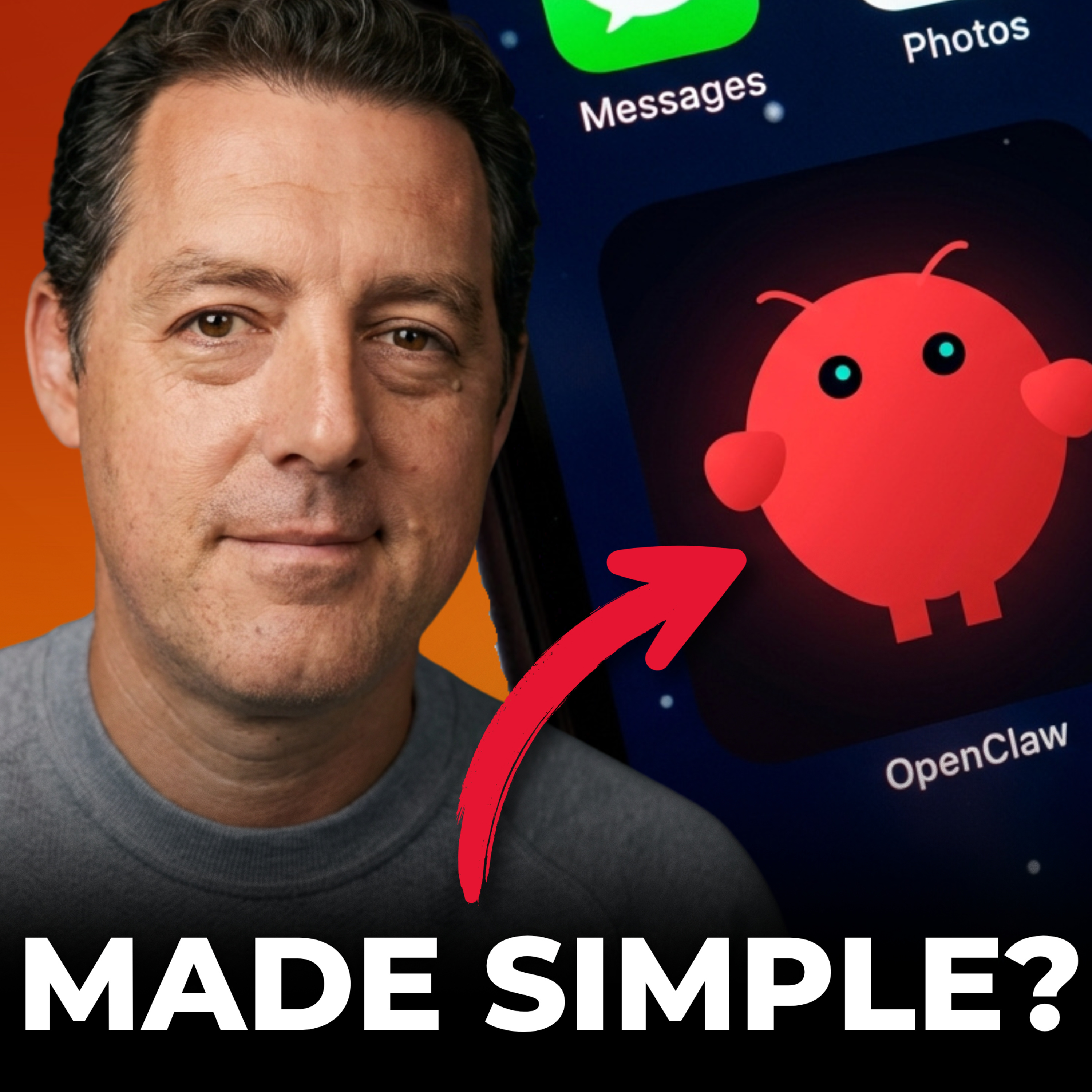
Structure your AI automations architecturally. Create specialized sub-agents, each with a discrete 'skill' (e.g., scraping Twitter). Your main OpenClaw agent then acts as an orchestrator, calling these skilled sub-agents as needed. This frees up the main agent and creates a modular, powerful system.

While GUIs were built for humans, the terminal is more "empathetic to the machine." Coding agents are more effective using CLIs because it provides a direct, scriptable, and universal way to interact with a system's tools, leveraging vast amounts of pre-trained shell command data.
The traditional SaaS onboarding model of dashboards and manual configuration is becoming obsolete. By exposing a product via a CLI to a user's primary AI agent, the agent can leverage its existing context about the user to perform setup and configuration automatically, creating a superior user experience.

Instead of designing tools for human usability, the creator built command-line interfaces (CLIs) that align with how AI models process information. This "agentic-driven" approach allows an AI to easily understand and scale its capabilities across numerous small, single-purpose programs on a user's machine.
When selecting new software, the primary evaluation criteria should be its potential for integration with AI agents. Look first for a Command Line Interface (CLI), then a platform connection like an MCP, and finally, a robust API. This prioritizes automation capability over user-facing features.
The founder of Memelord, a non-coder, published a functional skill for the OpenClaw agent framework by simply asking the agent how to do it. The agent wrote and published the skill itself, demonstrating a new paradigm where anyone can create and distribute software tools without writing code.

Build a high-level "Orchestrator Skill" that acts like a user interface within the terminal. It can analyze a project's state, present the user with a menu of logical next steps, and then call other specialized skills to execute the chosen task, removing the friction of knowing what to ask next.
