Get your free personalized podcast brief
We scan new podcasts and send you the top 5 insights daily.
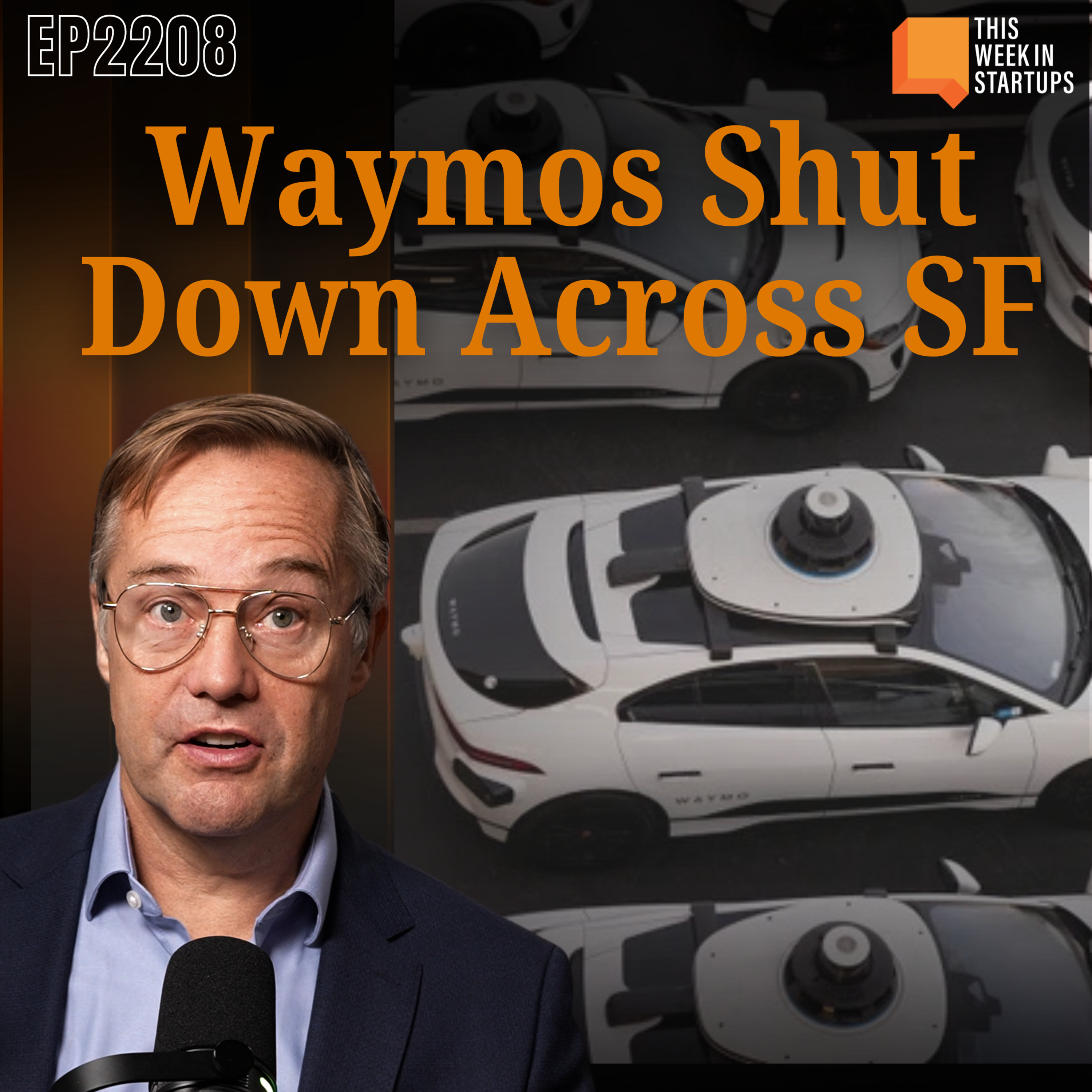
Waymo vehicles froze during a San Francisco power outage because traffic lights went dark, causing gridlock. This highlights the vulnerability of current AV systems to real-world infrastructure failures and the critical need for protocols to handle such "edge cases."
Related Insights
During a San Francisco power outage, Waymo's map-based cars failed while Teslas were reportedly unaffected. This suggests that end-to-end AI systems are less brittle and better at handling novel "edge cases" than more rigid, heuristic-based autonomous driving models.
After proving its robo-taxis are 90% safer than human drivers, Waymo is now making them more "confidently assertive" to better navigate real-world traffic. This counter-intuitive shift from passive safety to calculated aggression is a necessary step to improve efficiency and reduce delays, highlighting the trade-offs required for autonomous vehicle integration.

By integrating Starlink satellite connectivity directly into its cars, Tesla can solve for internet outages that cripple competitors. This creates a powerful moat, ensuring its fleet remains operational and potentially creating a new licensable mesh network for other vehicles.
The seamless experience of an autonomous vehicle hides a complex backend. A subsidiary company, FlexDrive, manages a fleet for services like cleaning, charging, maintenance, and teleoperation. This "fleet management" layer represents a significant, often overlooked, part of the AV value chain and business model.

Early self-driving cars were too cautious, becoming hazards on the road. By strictly adhering to the speed limit or being too polite at intersections, they disrupted traffic flow. Waymo learned its cars must drive assertively, even "aggressively," to safely integrate with human drivers.
Despite rapid software advances like deep learning, the deployment of self-driving cars was a 20-year process because it had to integrate with the mature automotive industry's supply chains, infrastructure, and business models. This serves as a reminder that AI's real-world impact is often constrained by the readiness of the sectors it aims to disrupt.

The public holds new technologies to a much higher safety standard than human performance. Waymo could deploy cars that are statistically safer than human drivers, but society would not accept them killing tens of thousands of people annually, even if it's an improvement. This demonstrates the need for near-perfection in high-stakes tech launches.
With Waymo's data showing a dramatic potential to reduce traffic deaths, the primary barrier to adoption is shifting from technology to politics. A neurosurgeon argues that moneyed interests and city councils are creating regulatory capture, blocking a proven public health intervention and framing a safety story as a risk story.

The primary constraint on the AI boom is not chips or capital, but aging physical infrastructure. In Santa Clara, NVIDIA's hometown, fully constructed data centers are sitting empty for years simply because the local utility cannot supply enough electricity. This highlights how the pace of AI development is ultimately tethered to the physical world's limitations.
The lack of widespread outrage after a Waymo vehicle killed a beloved cat in tech-skeptical San Francisco is a telling sign. It suggests society is crossing an acceptance threshold for autonomous technology, implicitly acknowledging that while imperfect, the path to fewer accidents overall involves tolerating isolated, non-human incidents.