Get your free personalized podcast brief
We scan new podcasts and send you the top 5 insights daily.
The traditional product management skillset is no longer sufficient for executive leadership. Aspiring CPOs must develop deep expertise in either the commercial aspects of the business (GTM, revenue) or the technical underpinnings of the product to provide differentiated value at the C-suite level.

Related Insights
The ideal founder archetype starts with deep technical expertise and product sense. They then develop exceptional business and commercial acumen over time, a rarer and more powerful combination than a non-technical founder learning the product.
![David George - Building a16z Growth, Investing Across the AI Stack, and Why Markets Misprice Growth - [Invest Like the Best, EP.450] thumbnail](https://megaphone.imgix.net/podcasts/8da7dbd8-ceeb-11f0-941c-ef83bcdd4c9f/image/d44107bc94719f78fbe91befb141073e.jpg?ixlib=rails-4.3.1&max-w=3000&max-h=3000&fit=crop&auto=format,compress)
Beyond vision and roadmaps, a CPO’s fundamental role is to act as a steward of the company's R&D investment. The primary measure of success is the ability to ensure that every dollar spent on development translates into tangible, measurable enterprise value for the business.
To be truly successful, a product leader cannot just focus on features and users. They must operate as the head of their product's business, with a deep understanding of P&Ls, revenue drivers, and capital allocation. Without this business acumen, they risk fundamentally undercutting their product's potential impact and success.

The core job of a Product Manager is not writing specs or talking to press; it's a leadership role. Success means getting a product to market that wins. This requires influencing engineering, marketing, and sales without any formal authority, making it the ultimate training ground for real leadership.

The "ICCPO" (Individual Contributor Chief Product Officer) model requires leaders to use AI tools to self-serve answers directly from company data. This shifts the executive role from pure delegation to hands-on experimentation, modeling a culture of self-sufficiency and inspiring the team to adopt new tools.
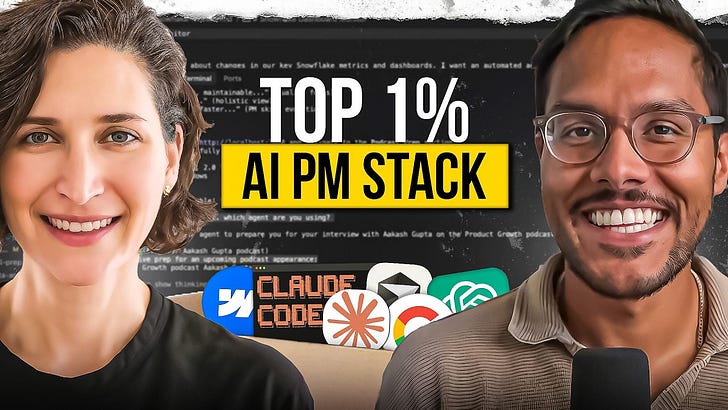
AI tools reduce the communication overhead and lengthy handoffs that traditionally separated product and engineering. By streamlining the path from idea to code, AI makes the combined Chief Product and Technology Officer (CPTO) role more viable, enabling a single leader to manage both functions effectively.

At the VP or C-level, a leader's primary role shifts from managing their function to driving overall business success. Their focus becomes more external—customers, market, revenue—and their success is measured by their end-to-end impact on the company, not just their team's performance.
The pivot from a pure technology role (like CTO) to product leadership is driven by a passion shift. It's moving from being obsessed with technical optimization (e.g., reducing server costs) to being obsessed with customer problems. The reward becomes seeing a customer's delight in a solved problem, which fuels a desire to focus entirely on that part of the business.
AI's rise means traditional product roles are merging. Instead of identifying as a PM or designer, focus on your core skills (e.g., visual aesthetics, systems thinking) and use AI to fill gaps. This 'builder' mindset, focused on creating end-to-end, is key for future relevance.

As AI automates synthesis and creation, the product manager's core value shifts from managing the development process to deeply contextualizing all available information (market, customer, strategy) to define the *right* product direction.