Get your free personalized podcast brief
We scan new podcasts and send you the top 5 insights daily.
To become an FDE, you must provide evidence you can do the job. A 30-day plan involves building a complete AI agent for a real workflow, focusing week-by-week on core looping, error recovery, performance measurement, and finally, being able to defend its business and technical value.

Related Insights
To find talent capable of managing an AI stack, traditional interviews are insufficient. A better test is to provide candidates with platform credits (e.g., Replit) and challenge them to build a functional agent that automates a real business task, proving their practical skills.

A practical framework for developing agentic AI is to first map the human workflow. Break down the task into discrete steps, identify which ones can be automated, ensure the necessary data is available, and then build the underlying tools and code blocks. Don't start with the technology; start with the human process.

Treating AI evaluation like a final exam is a mistake. For critical enterprise systems, evaluations should be embedded at every step of an agent's workflow (e.g., after planning, before action). This is akin to unit testing in classic software development and is essential for building trustworthy, production-ready agents.
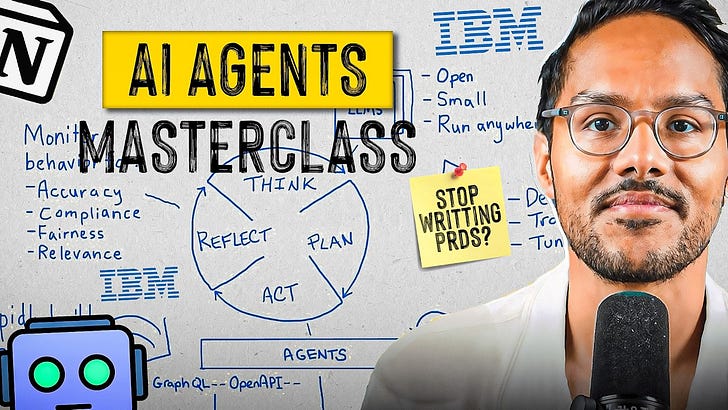
Building reliable AI agents requires a developer mindset shift. The most critical task is not writing the agent's code but creating robust evaluations ('evals') that define and verify the desired business outcome. This makes a test-driven development approach non-negotiable for enterprise AI.

Dreamer's hiring process now evaluates an engineer's ability to work with and through AI coding agents. Beyond a basic coding screen, the main interview involves a project built using tools like Codex, testing the candidate's skill in prompting, reviewing, and orchestrating AI to be productive.

Instead of immediately building an AI agent, founders should first manually perform the target workflow as a service. This process allows them to deeply understand the pain points, map edge cases, and acquire initial clients. Only after mastering the job manually should they incrementally add vertical agents to automate specific steps.
Building a functional AI agent is just the starting point. The real work lies in developing a set of evaluations ("evals") to test if the agent consistently behaves as expected. Without quantifying failures and successes against a standard, you're just guessing, not iteratively improving the agent's performance.

Instead of passively learning about AI, executives should actively deploy a simple agentic product. This hands-on experience of training and QA provides far more valuable, practical knowledge than any course or subscription, putting you ahead of 90% of peers.
To get the best results from an AI agent, provide it with a mechanism to verify its own output. For coding, this means letting it run tests or see a rendered webpage. This feedback loop is crucial, like allowing a painter to see their canvas instead of working blindfolded.
Official process documents are misleading. A crucial FDE task is observing employees to understand the complex, exception-filled reality of how work gets done. This undocumented knowledge, often in one person's head, is essential for building effective AI systems that don't break on edge cases.