Get your free personalized podcast brief
We scan new podcasts and send you the top 5 insights daily.
The Insurrection Act is a potent tool for executive power because it is a specific exception to the Posse Comitatus Act, which normally prohibits using the military for civilian law enforcement. Invoking it allows a president to deploy troops in American cities to perform police functions.

Related Insights
Despite growing talk of "national divorce," the idea of a state peacefully seceding is highly unrealistic. The federal government would almost certainly not allow it and would likely resort to military intervention to maintain the union, rendering the scenario a fantasy.

The Trump administration's strategy for control isn't writing new authoritarian laws, but aggressively using latent executive authority that past administrations ignored. This demonstrates how a democracy's own structures can be turned against it without passing a single new piece of legislation, as seen with the FCC.

The US executive branch increasingly initiates military action by citing inherent commander-in-chief powers, sidestepping the constitutional requirement for Congress to declare war. This shift, exemplified by the Venezuela operation, marks a 'third founding' of the American republic where historical checks and balances on war-making are now considered quaint.
The Posse Comitatus Act restricts direct military training of civilian law enforcement. However, federal agencies like ICE are not governed by this act, creating a gray area for unprecedented military involvement in domestic security without needing formal declarations like the Insurrection Act.

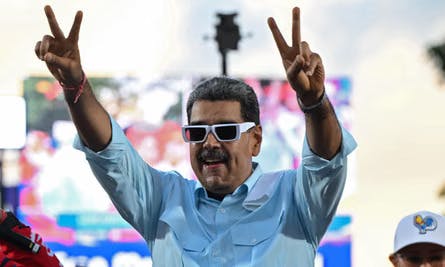
The US has established a precedent of using military force to apprehend fugitives abroad based on domestic legal actions, as seen with Noriega in 1989 and Maduro now. This practice blurs the line between law enforcement and an act of war, creating a thin legal justification for military intervention without traditional congressional or international approval.
Emergency measures, like the Patriot Act after 9/11, rarely expire. Instead, they create a permanent bureaucratic and technological infrastructure for surveillance and control. This 'emergency-to-infrastructure' pipeline normalizes expanded government power, which is then increasingly aimed at ordinary citizens long after the initial crisis has passed.

The Trump administration uses ICE not just for immigration enforcement, but to create a de facto national police force. By framing immigration as a ubiquitous issue, they justify a federal presence anywhere, effectively turning the entire country into a "border zone" where exceptional laws can apply.

The current deployment of agencies like ICE and CBP in domestic roles creates a new, quasi-military federal entity. This is distinct in American history and occupies a middle ground between traditional law enforcement and the uniformed military, altering civil-military relations.
A president can legally initiate military actions like a blockade without congressional approval by first designating the target regime as a 'Foreign Terrorist Organization.' This provides a separate legal playbook and set of executive powers, circumventing the formal declaration of war process.

Trump's efforts are not just breaking norms but constitute an attempt at a full-blown "political revolution." The goal is to gain direct political control over institutions like the FBI and DOJ, weaponize them against political opponents, and eliminate the checks and balances that constrain presidential power.