Get your free personalized podcast brief
We scan new podcasts and send you the top 5 insights daily.
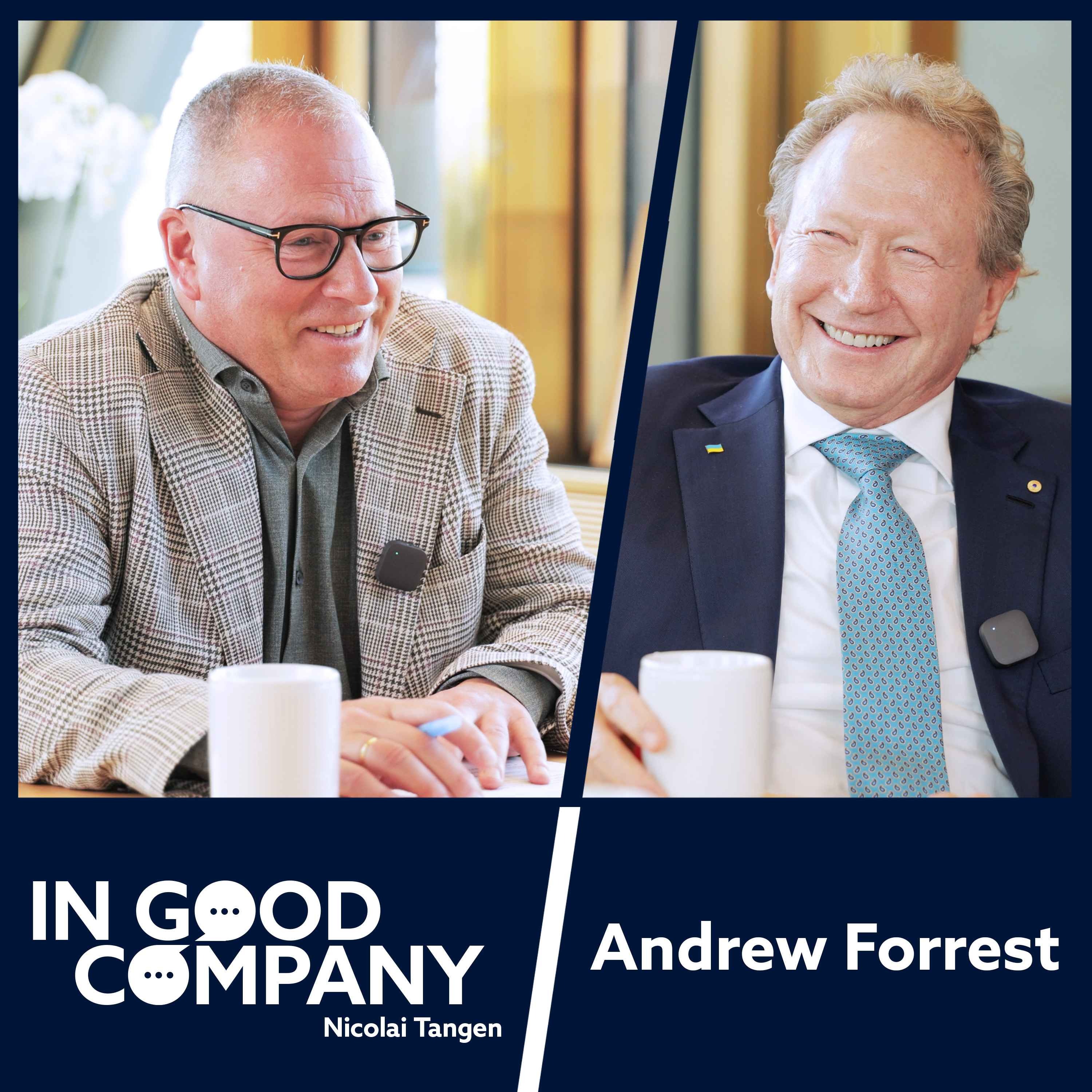
Andrew Forrest argues that competitors will follow his green transition for economic reasons, not environmental ones. By eliminating a billion liters of diesel annually, Fortescue will save a billion dollars, creating a cost advantage that will force the rest of the industry to adapt to remain competitive.
Related Insights
After a hiking accident left him in a wheelchair, Andrew Forrest pursued a PhD in marine ecology. His research on climate change's impact on oceans directly motivated him to transform his heavy-industry mining company, Fortescue, into a green energy leader, committing to zero fossil fuels by 2030.
To counter political backlash against ESG, Mars' CEO reframes sustainability as a fundamental business imperative. For a food company reliant on agriculture, climate change directly threatens crop viability and affordability. This makes environmental action a matter of operational resilience and risk management, completely separate from political debate.
Holcim's sustainability strategy isn't just PR. By reformulating products to use cheaper, CO2-friendly raw materials and alternative fuels, the company creates significant cost advantages. This makes their eco-friendly products a source of profitable growth, not just an added expense, challenging the 'green premium' concept.

Base's core thesis is that the shift to solar and battery storage is inevitable not because of ESG trends, but because it represents the lowest marginal cost to add power to the grid. This economic argument is more fundamental and compelling than climate narratives alone.

Mothership Materials isn't positioned as a 'climate company' but as a 'future of manufacturing company.' The strategic framing emphasizes that their solution is cleaner, more efficient, faster, more agile, and ultimately more profitable than the status quo. This attracts industrial partners and capital focused on economic advantage, not just sustainability.

The model of pressuring tech companies to go green doesn't apply to major industrial emitters like oil and steel. For them, the cost of eliminating emissions can be several times their annual profit, a cost no shareholder base would voluntarily accept.

The economic model for renewable energy is the inverse of fossil fuels. While building wind or solar farms requires significant initial capital investment, their ongoing operational costs are minimal. This suggests that as Europe advances its green transition, its long-term energy cost competitiveness will dramatically improve.

The political challenge of climate action has fundamentally changed. Renewables like solar and wind are no longer expensive sacrifices but the cheapest energy sources available. This aligns short-term economic incentives with long-term environmental goals, making the transition politically and financially viable.

Holcim gets paid to accept waste materials, which it then processes into an energy source. This replaces fossil fuels, simultaneously reducing costs and CO2 emissions, demonstrating how sustainability can be a primary driver of profitable growth.
The founder believes the key to replacing fossil fuels is acknowledging their incredible convenience and cost-effectiveness. The winning renewable solution must be fundamentally better on those metrics, not just an alternative that relies on incentives.
