Get your free personalized podcast brief
We scan new podcasts and send you the top 5 insights daily.
Founders often define "integration" as connecting software via APIs. However, true integration means embedding a product seamlessly into the clinician's and patient's existing daily workflow. Any deviation, no matter how small, creates friction that kills adoption rates among busy healthcare professionals.

Related Insights
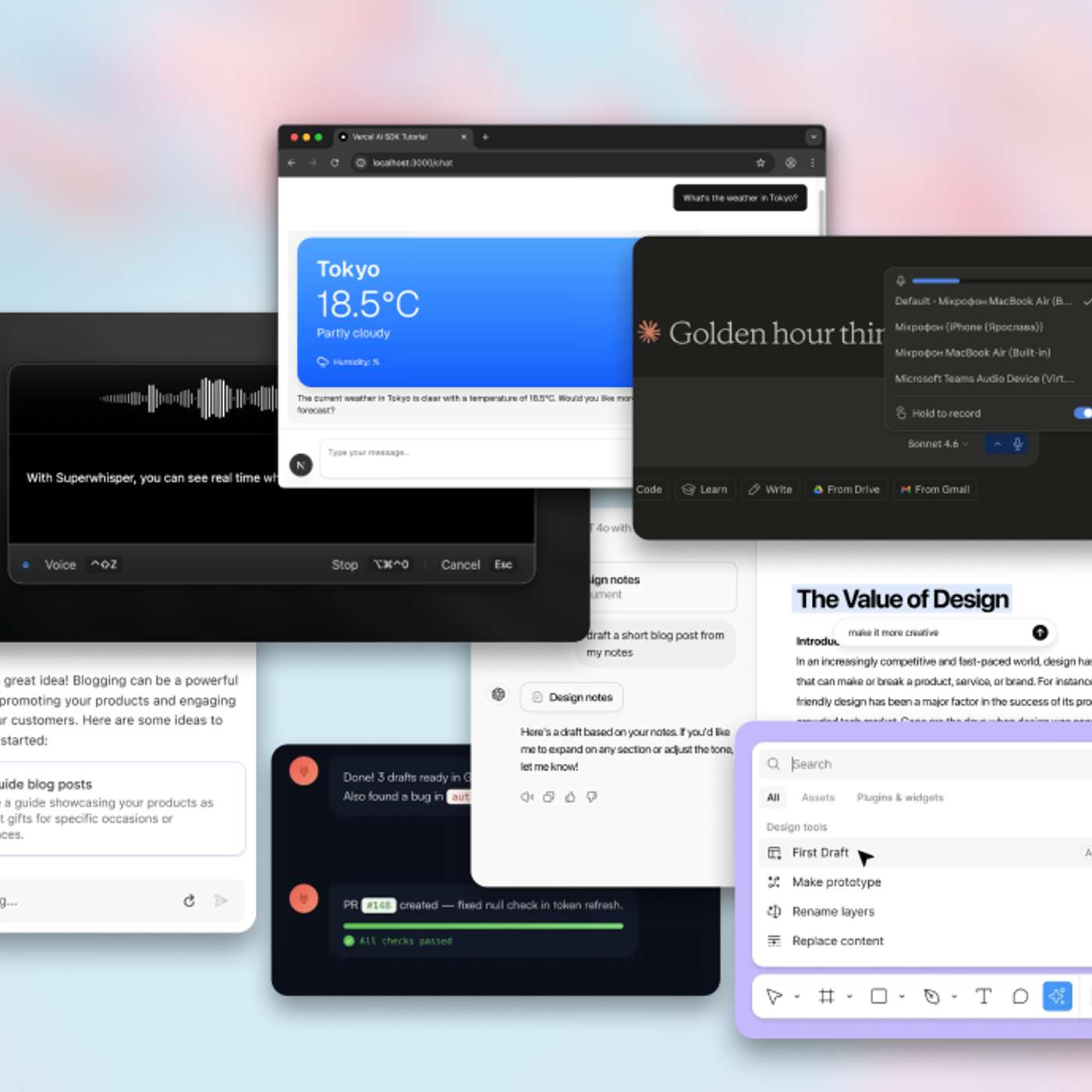
Users rarely seek out separate AI functionality. Adoption becomes natural when AI assistance appears contextually within existing workflows, addressing friction points directly where the user is already working. This embedded approach is far more effective than adding AI as a separate, layered-on tool.
Many industrial tech solutions fail because they are designed as standalone engineering fixes. True success requires embedding the technology into daily operations, like shift meetings and handovers, making it a time-saver for workers rather than an additional analytical burden to drive behavioral change.

Product stickiness in health systems is achieved through deep workflow integration. By embedding a solution into the daily processes of every stakeholder—from medical assistants to billing coordinators—it becomes entrenched and difficult to replace, mirroring the zero-churn model of EMR giant Epic.
The primary barrier to widespread AI adoption is not the power of the models, but the difficulty of embedding them into users' existing habits. Meeting users where they already are—like their email inbox—is more effective than forcing them to adopt new applications or behaviors.

Healthcare technology often just replicates old, inefficient paper-based workflows onto a screen. True progress requires re-engineering the entire patient experience and clinical process, not just creating digital versions of outdated forms and calling it innovation.

To get mainstream users to adopt AI, you can't ask them to learn a new workflow. The key is to integrate AI capabilities directly into the tools and processes they already use. AI should augment their current job, not feel like a separate, new task they have to perform.
Many telehealth startups fail by viewing their service as a video call, ignoring the complex workflows of therapists and health systems. TheraNow succeeded by deeply integrating into these existing processes, making its technology an enhancement, not an extra burden, which drove adoption.
For critical care AI tools, the key to adoption is not just accuracy but seamless integration. A "zero-click" approach that automatically processes scans and delivers results without adding steps to a clinician's workflow is paramount for buy-in.
The massive abandonment rate of health apps stems from a core design flaw: they are built to achieve company objectives (e.g., increase diagnosis) rather than integrating into patients' and doctors' existing workflows and behaviors, making them burdensome to use.
A "bolt-on" AI strategy will fail. Successful integration isn't about adding an AI feature; it's about fundamentally re-evaluating and rebuilding the entire product experience and its economics around new AI capabilities, creating entirely new user interactions.