Get your free personalized podcast brief
We scan new podcasts and send you the top 5 insights daily.
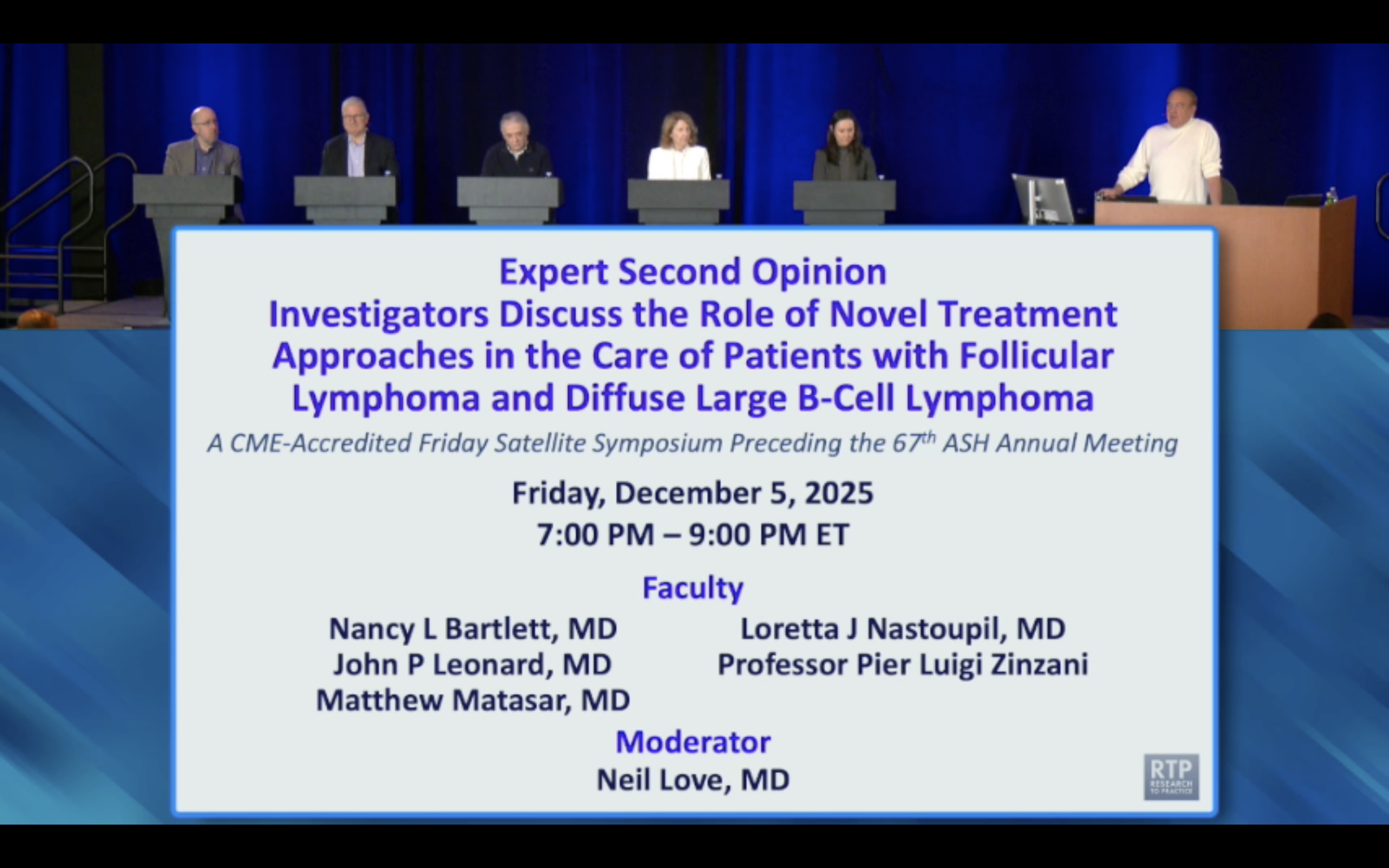
The ECHELON-3 trial showed that brentuximab vedotin plus R-squared is effective in relapsed/refractory DLBCL, even in patients with negligible CD30 expression. This suggests the drug's benefit may stem from immune synergy or other mechanisms, not just direct CD30 targeting.
Related Insights
Real-world data suggests that using one antibody-drug conjugate (ADC) immediately after another is often ineffective. A potential strategy to overcome this resistance is to administer a different class of chemotherapy before starting the second ADC.
The traditional "germinal center" (GC) classification for DLBCL is overly simplistic. Molecular analysis reveals distinct subtypes within GC, such as "dark zone" and "light zone" signatures, which have different prognoses and responses to targeted therapies like polatuzumab.
In follicular lymphoma, the treatment goal is durable remission with manageable toxicity, not necessarily a cure. Therefore, clinicians frequently prefer using a bispecific antibody first, reserving the more complex and toxic CAR-T cell therapy for transformed disease or after a bispecific fails.
Unlike some targeted therapies that lead to antigen loss, treatment with the CD19-directed antibody tafasitamab does not appear to eliminate CD19 expression on lymphoma cells. This is a critical finding, as it preserves the target for subsequent potent therapies like CD19-directed CAR T-cells.
Not all CD20-targeting bispecifics can be combined with rituximab. Mosunetuzumab binds the same epitope, causing competition. However, glofitamab and epcoritamab bind different epitopes, allowing for logical and potentially synergistic combinations with rituximab-based regimens.
Unlike rare biomarkers that necessitate a 'test-and-wait' approach, IB6 is expressed in over 80-90% of NSCLC tumors. This ubiquity could make pre-screening unnecessary for drugs like Sigvotatug Vedotin, allowing clinicians to initiate targeted therapy much faster and for a broader patient population.
To combat immunosuppressive "cold" tumors, new trispecific antibodies are emerging. Unlike standard T-cell engagers that only provide the primary CD3 activation signal, these drugs also deliver the crucial co-stimulatory signal (e.g., via CD28), ensuring full T-cell activation in microenvironments where this second signal is naturally absent.

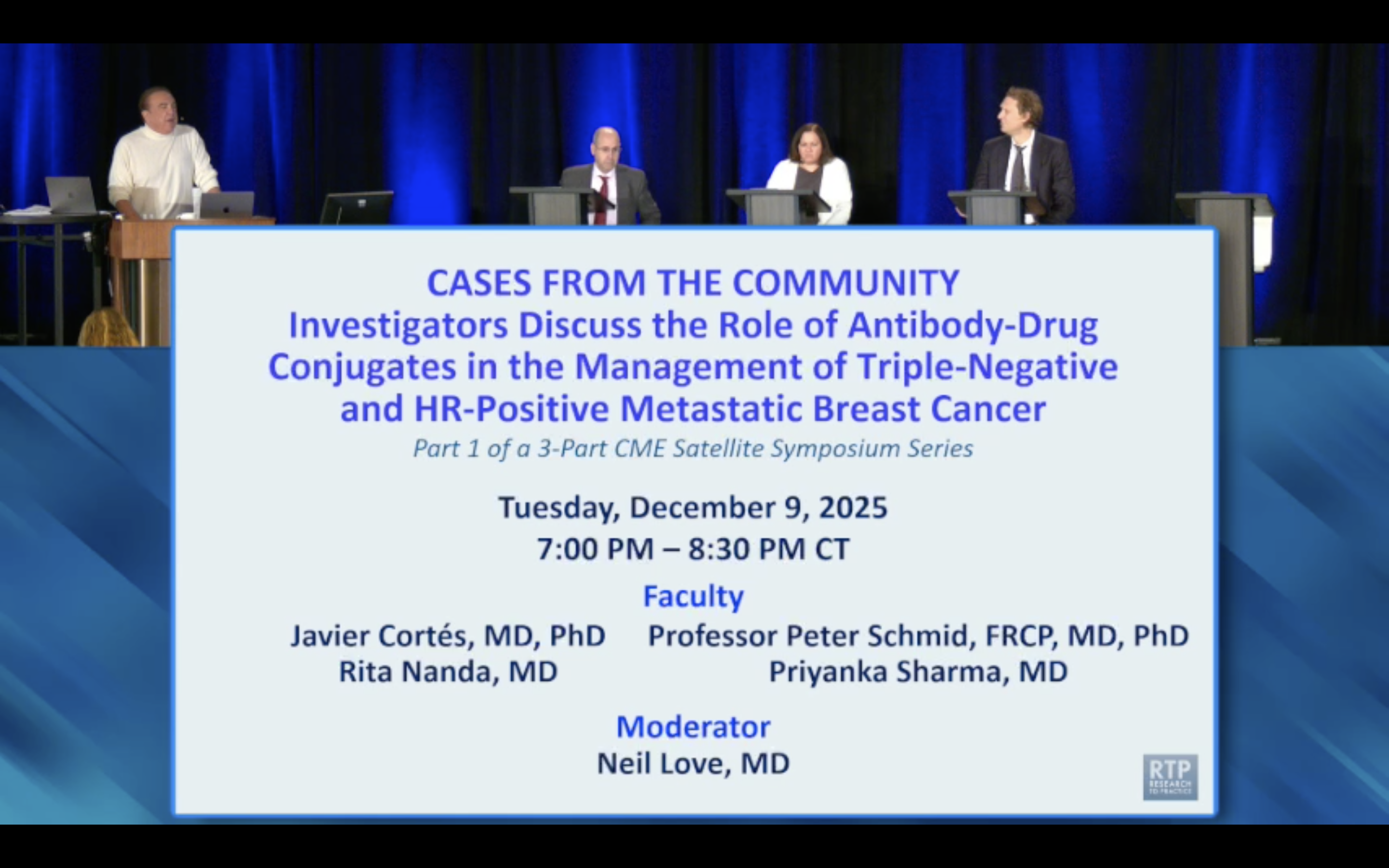
Unlike older antibody-drug conjugates (ADCs), newer agents are designed so their chemotherapy payload can diffuse out of the target cell and kill nearby tumor cells that may not even express the target antigen. This "bystander effect" significantly enhances their anti-tumor activity.
The ongoing Phase III trial for Sigvotatug Vedotin compares it against docetaxel, the current standard for second-line NSCLC. Docetaxel is known for modest efficacy and significant side effects, creating a major opportunity for the new drug to demonstrate superiority and rapidly become the new clinical standard.
Clinical trial data shows that despite specific toxicities, antibody-drug conjugates (ADCs) can be better tolerated overall than standard chemotherapy. For example, trials for both sacituzumab govitecan and dato-DXd reported fewer patients discontinuing treatment in the ADC arm compared to the chemotherapy arm.