Get your free personalized podcast brief
We scan new podcasts and send you the top 5 insights daily.
Insurance is a primary operating cost for robotaxis, currently estimated at 30 cents per mile. The key to achieving target profit margins of 30% or more lies in using accumulated safety data to prove superior safety to human drivers, thereby driving down insurance premiums and unlocking financial viability for the industry.

Related Insights
As autonomous vehicles drop the per-mile cost of ride-sharing to under $1, it will become cheaper than owning a car. This price drop will induce massive demand, shifting most transportation to these networks and creating a market exponentially larger than the current industry.
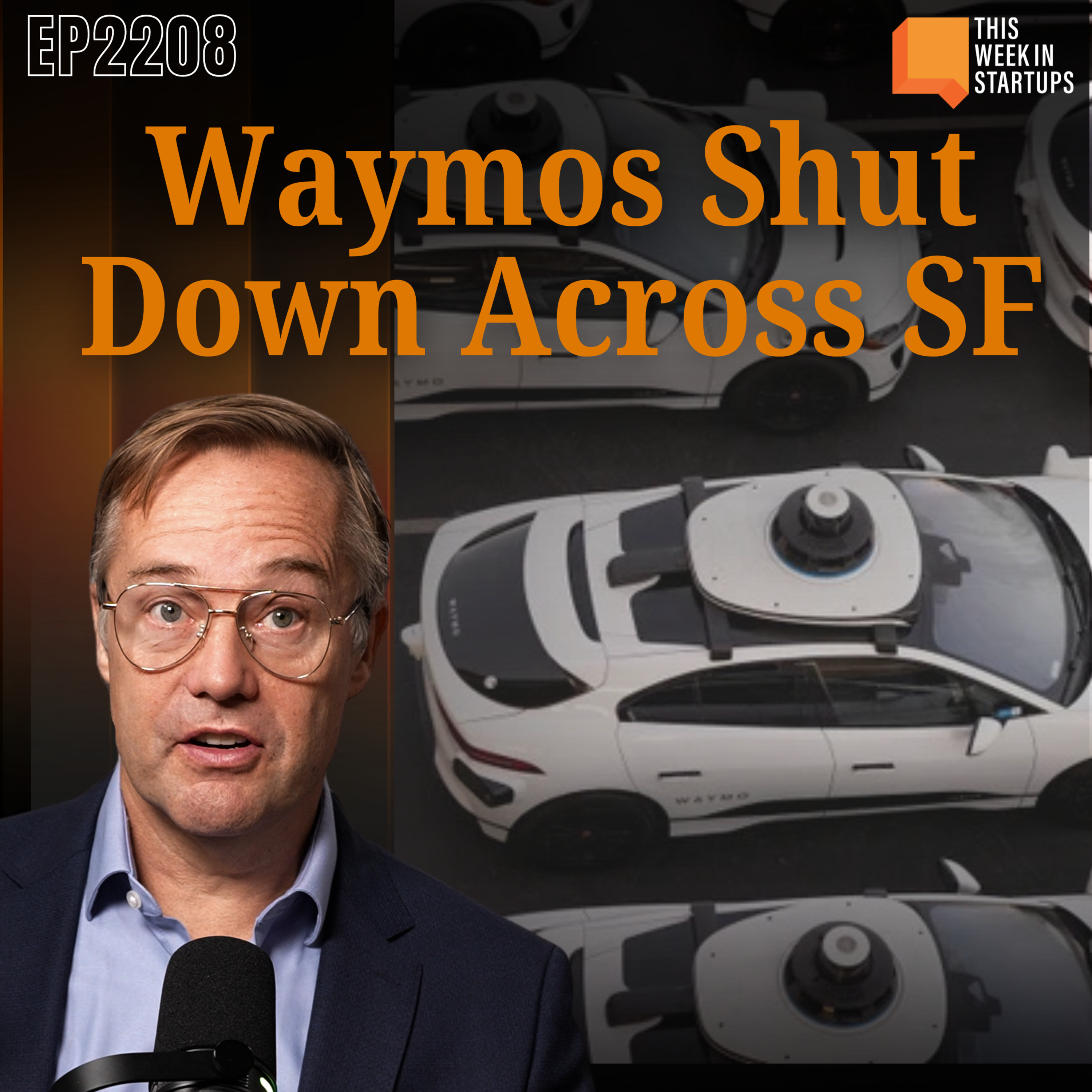
Tesla's camera-only system gives it a significant cost advantage over Waymo's LiDAR-equipped vehicles. However, current data shows a Waymo vehicle crashes every 400,000 miles, while Tesla's crashes every 50,000. Tesla's ability to scale hinges entirely on proving its cheaper technology can become as safe.

After proving its robo-taxis are 90% safer than human drivers, Waymo is now making them more "confidently assertive" to better navigate real-world traffic. This counter-intuitive shift from passive safety to calculated aggression is a necessary step to improve efficiency and reduce delays, highlighting the trade-offs required for autonomous vehicle integration.

As the operational cost of autonomous vehicles plummets, the business model will shift from fare-based revenue to advertising. By leveraging user data and AI like Grok, the car becomes a platform for hyper-targeted ads and commerce recommendations. This could eventually make rides free for consumers willing to engage with advertisers.

The key to mass robo-taxi adoption is economics, not just technology. Baidu's CFO identifies 60-80 cents per mile as the critical price point where using a robo-taxi becomes cheaper than personal car ownership in the U.S. The entire industry is racing to drive costs below this threshold to alter consumer behavior.

The debate over robo-taxi safety is flawed when comparing broad categories. While Waymo is ~5x safer than the average human driver, hyper-segmenting the data reveals specific human cohorts (e.g., a 60-year-old married woman in Massachusetts on a Tuesday) who still outperform the AI, highlighting the need for nuanced data analysis in AI performance claims.

The current rideshare market represents less than 1% of total vehicle miles. Autonomous vehicles will cause market expansion by at least an order of magnitude by eventually offering a service that is meaningfully cheaper than driving a personal car, shifting consumer behavior on a mass scale.

ARK Invest projects an $8-10 trillion market for autonomous ride-hailing, dwarfing the current ~$60B market of Uber and Lyft. This isn't just about replacing drivers; it's about a 4x cost reduction per mile (from ~$1.10 to $0.25). This dramatic price drop will absorb the entire transportation market, not just the existing ride-hailing segment.

The transition from selling cars to operating a RoboTaxi network transforms Tesla's business model. A car sold for a one-time $4,000 profit could generate $200,000 in profit over a five-year period as an autonomous taxi. This 100x increase in lifetime value per unit represents a massive financial unlock for the company.
Instead of competing in the high-risk race to build autonomous vehicles, Uber is creating the ecosystem around them. By offering services like insurance, data, and fleet support to all AV companies, Uber positions itself to profit regardless of which car manufacturer wins.
