Get your free personalized podcast brief
We scan new podcasts and send you the top 5 insights daily.
Amazon's internal use of an AI tool to help write its mandatory six-page product documents subverts the exercise's core purpose. The process was designed to force deep, rigorous thought through the 'pain' of writing. Using AI as a shortcut risks leading to shallower strategic thinking.

Related Insights
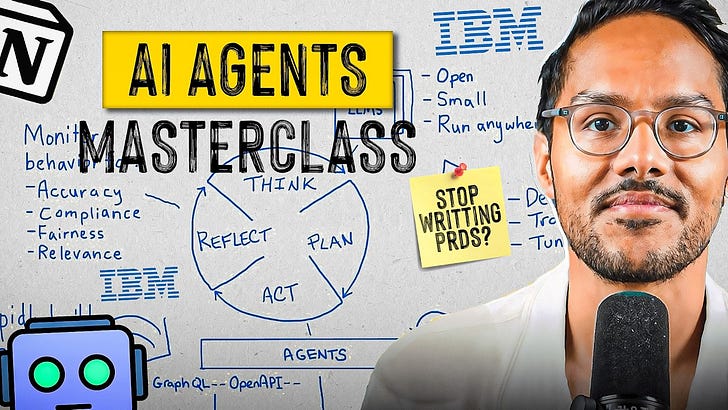
While AI tools once gave creators an edge, they now risk producing democratized, undifferentiated output. IBM's AI VP, who grew to 200k followers, now uses AI less. The new edge is spending more time on unique human thinking and using AI only for initial ideation, not final writing.
Using AI to generate content without adding human context simply transfers the intellectual effort to the recipient. This creates rework, confusion, and can damage professional relationships, explaining the low ROI seen in many AI initiatives.

Product managers should leverage AI to get 80% of the way on tasks like competitive analysis, but must apply their own intellect for the final 20%. Fully abdicating responsibility to AI can lead to factual errors and hallucinations that, if used to build a product, result in costly rework and strategic missteps.

Users who treat AI as a collaborator—debating with it, challenging its outputs, and engaging in back-and-forth dialogue—see superior outcomes. This mindset shift produces not just efficiency gains, but also higher quality, more innovative results compared to simply delegating discrete tasks to the AI.
A powerful workflow is to explicitly instruct your AI to act as a collaborative thinking partner—asking questions and organizing thoughts—while strictly forbidding it from creating final artifacts. This separates the crucial thinking phase from the generative phase, leading to better outcomes.

The true danger of LLMs in the workplace isn't just sloppy output, but the erosion of deep thinking. The arduous process of writing forces structured, first-principles reasoning. By making it easy to generate plausible text from bullet points, LLMs allow users to bypass this critical thinking process, leading to shallower insights.

A critique from a SaaS entrepreneur outside the AI hype bubble suggests that current tools often just accelerate the creation of corporate fluff, like generating a 50-slide deck for a five-minute meeting. This raises questions about whether AI is creating true productivity gains or just more unnecessary work.

Historically, well-structured writing served as a reliable signal that the author had invested time in research and deep thinking. Economist Bernd Hobart notes that because AI can generate coherent text without underlying comprehension, this signal is lost. This forces us to find new, more reliable ways to assess a person's actual knowledge and wisdom.

While AI can accelerate tasks like writing, the real learning happens during the creative process itself. By outsourcing the 'doing' to AI, we risk losing the ability to think critically and synthesize information. Research shows our brains are physically remapping, reducing our ability to think on our feet.

Professionals are using AI to write detailed reports, while their managers use AI to summarize them. This creates a feedback loop where AI generates content for other AIs to consume, with humans acting merely as conduits. This "AI slop" replaces deep thought with inefficient, automated communication.