Get your free personalized podcast brief
We scan new podcasts and send you the top 5 insights daily.
YC startup Tasklit uses AI to create integrations on the fly, unlike traditional platforms like Zapier that rely on pre-built, hand-coded connectors. This approach allows them to connect not just to public SaaS tools but also to bespoke internal APIs, a key differentiator.

Related Insights
Traditional API integration requires strict adherence to a predefined contract. The new AI paradigm flips this: developers can describe their desired data format in a manifest file, and the AI handles the translation, dramatically lowering integration barriers and complexity.

Unlike tools like Zapier where users manually construct logic, advanced AI agent platforms allow users to simply state their goal in natural language. The agent then autonomously determines the steps, writes necessary code, and executes the task, abstracting away the workflow.

The future of integration isn't about pre-building every connection. AI agents will perform "integration on demand," stitching systems together at runtime to answer a specific user query. This transforms a slow, expensive IT function into a fluid, dynamic part of everyday work.

Historically, a deep library of integrations (like MuleSoft's or Rippling's) created a powerful defensive moat. Now, AI coding agents like Devin can replicate hundreds of integrations in a month at a very low cost, making this form of defensibility obsolete.

IT automation platform Console launched "Assistant," an AI agent that builds new software integrations on demand for customers. The agent reads the target service's API documentation and writes the connector code, automating a core part of its own product development.

Modern AI tools can solve complex business problems requiring coordination across distinct computer systems like Stripe, Ghost, and Postmark. By programmatically using various APIs, the AI can coalesce different data views to execute an integrated solution without explicit instruction for each step.

A key capability of advanced AI agents is their ability to read API documentation and write the necessary code ("skills") to integrate with new services on the fly. This turns every tool with an API into a potential native integration, dramatically expanding the agent's capabilities without manual developer work.
Creating a basic AI coding tool is easy. The defensible moat comes from building a vertically integrated platform with its own backend infrastructure like databases, user management, and integrations. This is extremely difficult for competitors to replicate, especially if they rely on third-party services like Superbase.

Instead of integrating with existing SaaS tools, AI agents can be instructed on a high-level goal (e.g., 'track my relationships'). The agent can then determine the need for a CRM, write the code for it, and deploy it itself.
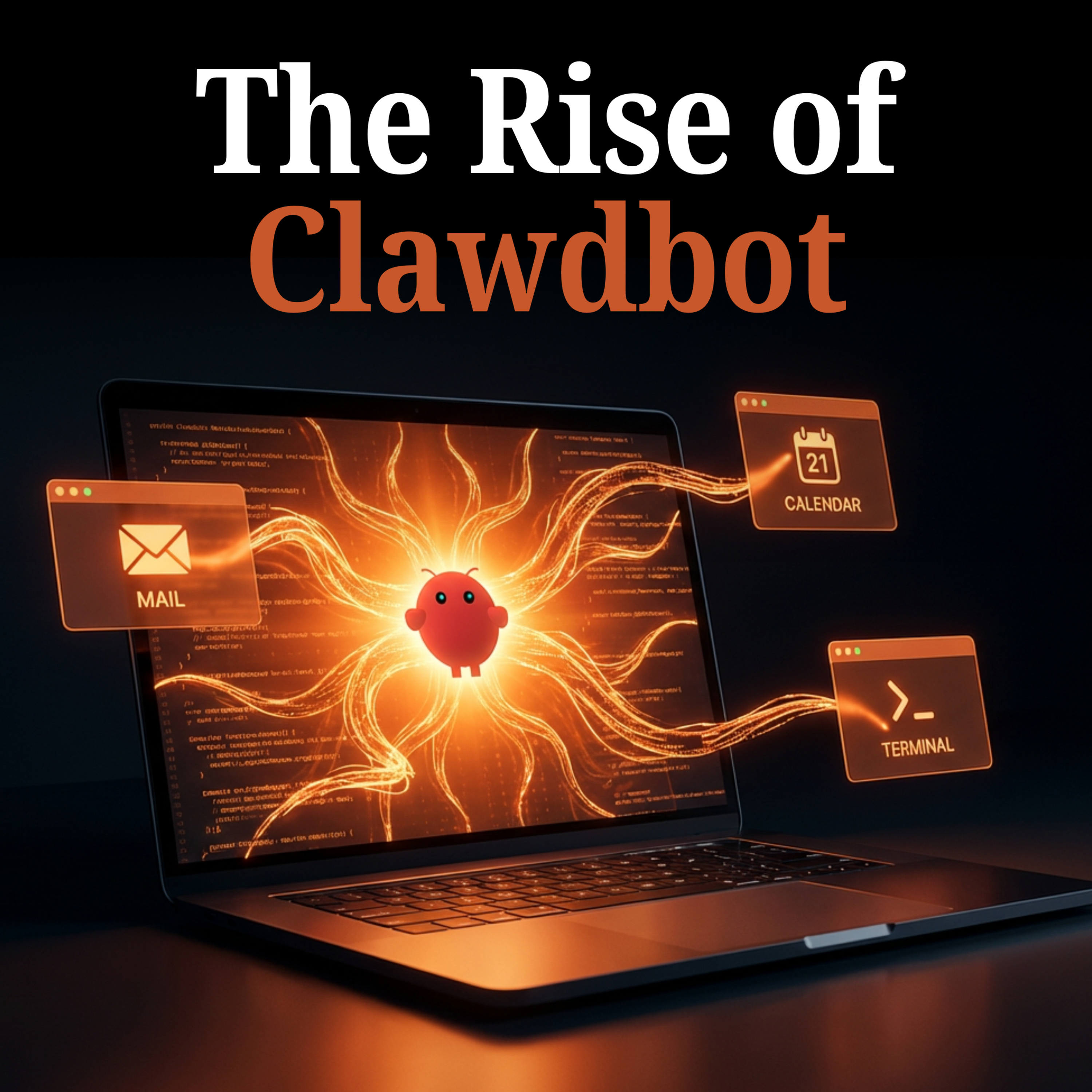
Node-based workflow builders (like N8N or Zapier) require manual system design. The future is AI agents that, given access to tools and skills, can dynamically orchestrate the same complex workflows. The focus shifts from engineering a system to empowering a smart agent.
