Get your free personalized podcast brief
We scan new podcasts and send you the top 5 insights daily.
The primary bottleneck in applied AI is not model capability but human integration. There is a massive "capacity overhang" where models are far more powerful than how we currently apply them in daily workflows. The focus should be on better application, not just better models.

Related Insights
Turing's CEO argues that frontier models are already capable of much more than enterprises are demanding. The bottleneck isn't the AI's ability, but the "first mile and last mile schlep" of integration. Massive productivity gains are possible even without further model improvements.

There is a massive gap between what AI models *can* do and how they are *currently* used. This 'capability overhang' exists because unlocking their full potential requires unglamorous 'ugly plumbing' and 'grunty product building.' The real opportunity for founders is in this grind, not just in model innovation.
Sam Altman argues there is a massive "capability overhang" where models are far more powerful than current tools allow users to leverage. He believes the biggest gains will come from improving user interfaces and workflows, not just from increasing raw AI intelligence.
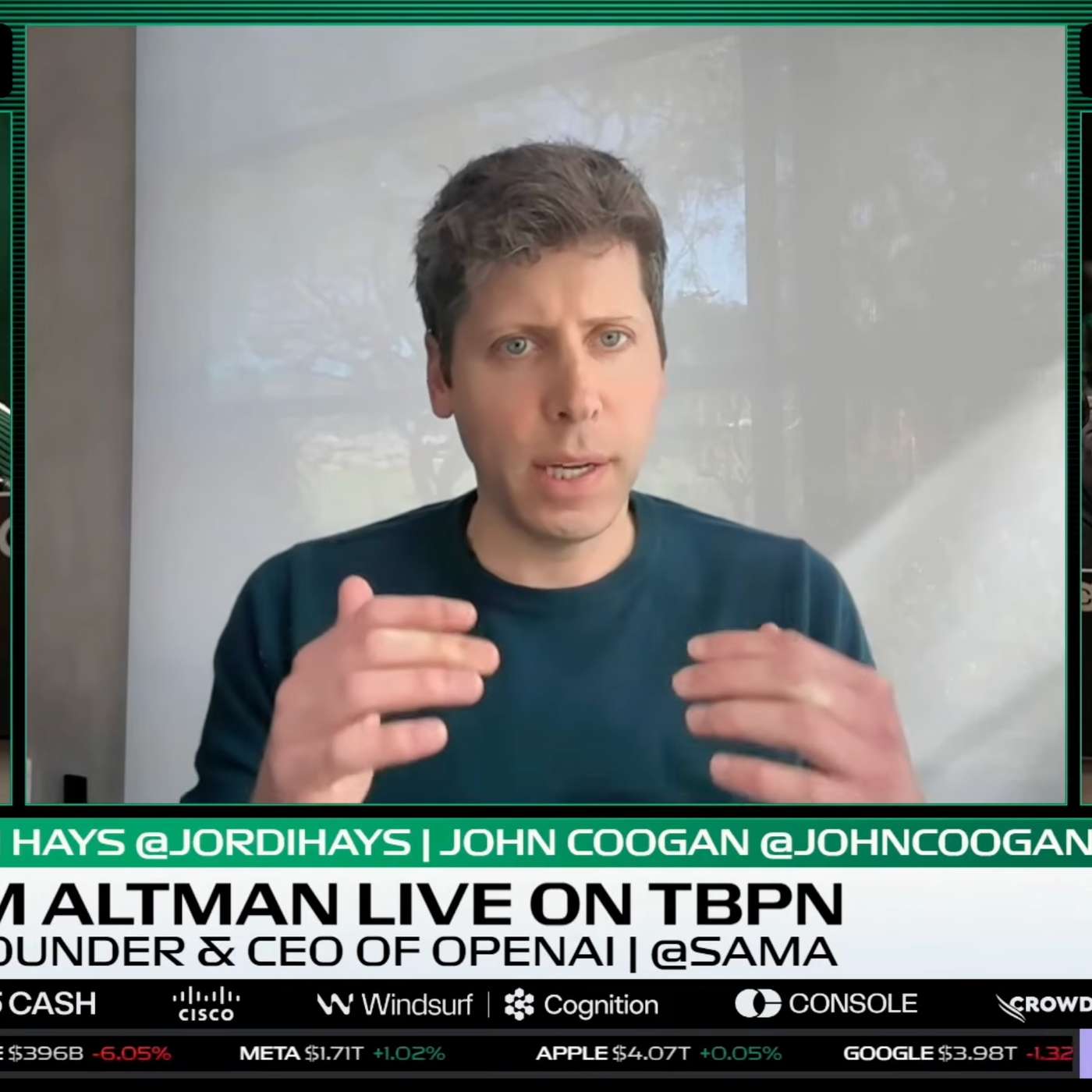
The primary barrier to widespread AI adoption is not the power of the models, but the difficulty of embedding them into users' existing habits. Meeting users where they already are—like their email inbox—is more effective than forcing them to adopt new applications or behaviors.

Despite models demonstrating PhD-level capabilities, most people only use them for basic tasks. The biggest hurdle for AI companies is not making models smarter, but bridging this usability gap by making advanced power easily accessible to the average person, likely through better interfaces and agents.

The main barrier to AI's impact is not its technical flaws but the fact that most organizations don't understand what it can actually do. Advanced features like 'deep research' and reasoning models remain unused by over 95% of professionals, leaving immense potential and competitive advantage untapped.

The perceived limits of today's AI are not inherent to the models themselves but to our failure to build the right "agentic scaffold" around them. There's a "model capability overhang" where much more potential can be unlocked with better prompting, context engineering, and tool integrations.
AI models are more powerful than their current applications suggest. This 'capability overhang' exists because enterprises often deploy smaller, more efficient models that are 'good enough' and struggle with the impedance mismatch of integrating AI into legacy processes and data silos.

OpenAI's CEO believes a significant gap exists between what current AI models can do and how people actually use them. He calls this "overhang," suggesting most users still query powerful models with simple tasks, leaving immense economic value untapped because human workflows adapt slowly.

AI's success hinges on its application and the competencies built around it. Simply deploying AI tools without a strategy is like handing out magic markers and expecting art—most will go unused or be misused. The failure point is human strategy, not the tool itself.
