Get your free personalized podcast brief
We scan new podcasts and send you the top 5 insights daily.
Using a non-intrusive hardware device like the Limitless pendant for live transcription allows for frictionless capture of ideas during informal conversations (e.g., at a coffee shop), which is superior to fumbling with a phone or desktop app that can disrupt the creative flow.
Related Insights
Advanced multimodal AI can analyze a photo of a messy, handwritten whiteboard session and produce a structured, coherent summary. It can even identify missing points and provide new insights, transforming unstructured creative output into actionable plans.

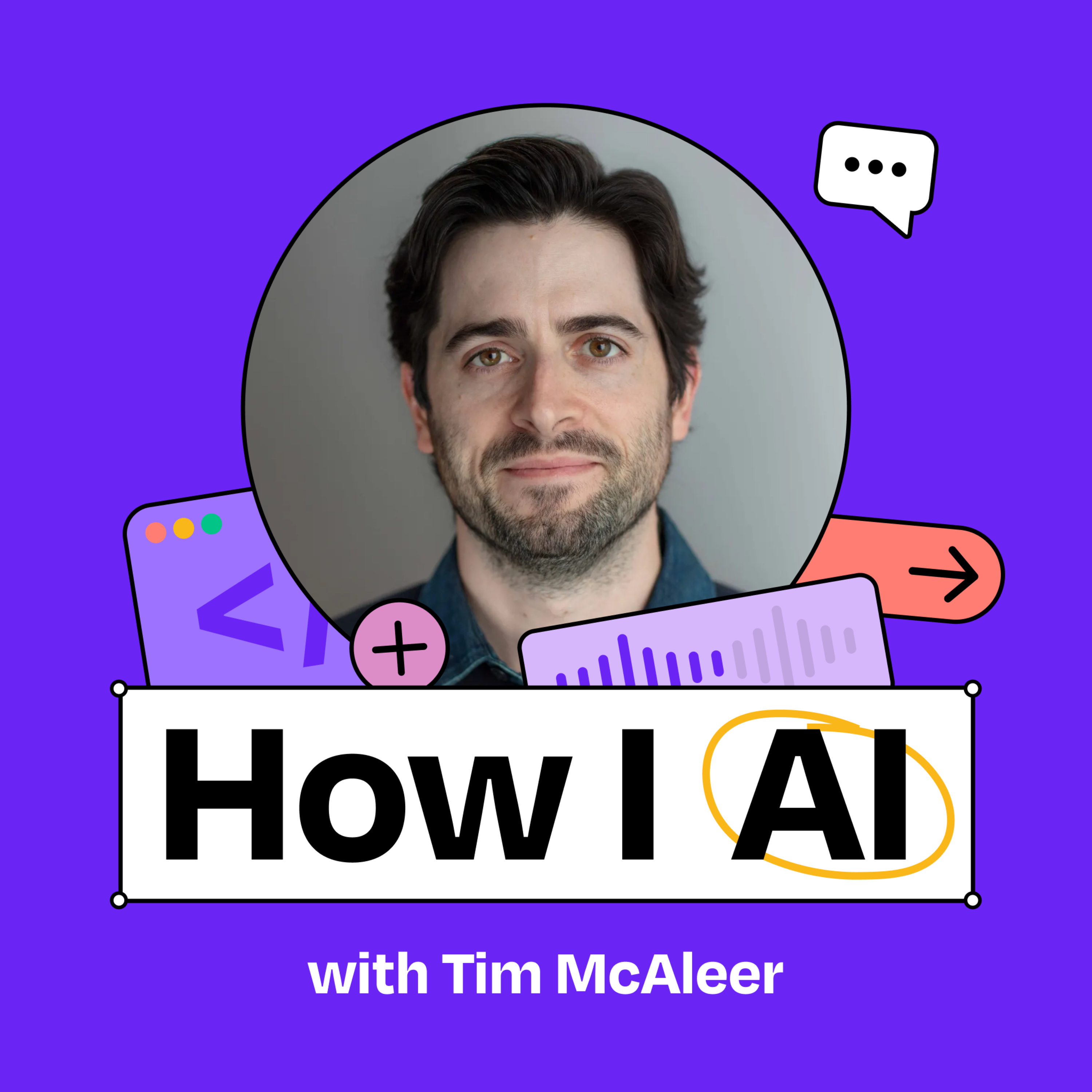
Tim McLear used AI coding assistants to build custom apps for niche workflows, like partial document transcription and field research photo logging. He emphasizes that "no one was going to make me this app." The ability for non-specialists to quickly create such hyper-specific internal tools is a key, empowering benefit of AI-assisted development.
To validate his fitness tracker idea, developer Terry Lynn first used the Apple Watch's voice memo app to record workouts. He then wrote a simple Python script to process the audio files with GPT-4 and output the structured data into a spreadsheet. This ultra-lean MVP tested the core concept without the overhead of app development.
While most focus on human-to-computer interactions, Crisp.ai's founder argues that significant unsolved challenges and opportunities exist in using AI to improve human-to-human communication. This includes real-time enhancements like making a speaker's audio sound studio-quality with a single click, which directly boosts conversation productivity.
True creative mastery emerges from an unpredictable human process. AI can generate options quickly but bypasses this journey, losing the potential for inexplicable, last-minute genius that defines truly great work. It optimizes for speed at the cost of brilliance.

Instead of visually-obstructive headsets or glasses, the most practical and widely adopted form of AR will be audio-based. The evolution of Apple's AirPods, integrated seamlessly with an iPhone's camera and AI, will provide contextual information without the social and physical friction of wearing a device on your face.

The high-volume feedback during a mastermind "hot seat" can be overwhelming. A simple solution is to record the audio, run it through an AI transcription service, and generate a structured document. This creates an actionable summary, ensuring valuable insights are captured and not lost after the event.

The future of AI isn't just in the cloud. Personal devices, like Apple's future Macs, will run sophisticated LLMs locally. This enables hyper-personalized, private AI that can index and interact with your local files, photos, and emails without sending sensitive data to third-party servers, fundamentally changing the user experience.
Tools like Descript excel by integrating AI into every step of the user's core workflow—from transcription and filler word removal to clip generation. This "baked-in" approach is more powerful than simply adding a standalone "AI" button, as it fundamentally enhances the entire job-to-be-done.
Despite the focus on text interfaces, voice is the most effective entry point for AI into the enterprise. Because every company already has voice-based workflows (phone calls), AI voice agents can be inserted seamlessly to automate tasks. This use case is scaling faster than passive "scribe" tools.
