Get your free personalized podcast brief
We scan new podcasts and send you the top 5 insights daily.
The decades-long strategy of outsourcing manufacturing has ended. Acknowledging the fragility it created, revealed by the COVID-19 pandemic, the U.S. is now prioritizing supply chain resiliency and national security. This shift is creating the most significant business opportunities for the coming decades, especially in energy, infrastructure, and domestic production.

Related Insights
Contrary to the decade-long trend of outsourcing to CDMOs, major pharmaceutical companies are now vertically re-integrating their supply chains. Driven by supply chain vulnerabilities, they now view manufacturing not as a cost center but as a strategic advantage, creating opportunities for technology enablers rather than just capacity providers.

Great power competition, regional wars, and fading alliances like NATO are ending the era of globalized supply chains. The future belongs to resilient networks built exclusively among trusted, allied nations, requiring a fundamental business realignment.

A U.S. national security document's phrase, "the future belongs to makers," signals a significant policy shift. Credit and tax incentives will likely be redirected from financial engineering (e.g., leveraged buyouts in private equity) to tangible industrial production in order to build resilient, non-Chinese supply chains.

Blindly outsourcing manufacturing based on "comparative advantage" erodes a nation's knowledge base and creates supply chain choke points. When geopolitical rivals control critical resources like rare earth metals, the economic advantage of globalization transforms into a severe national security risk.

To be safe in a military sense, the U.S. must regain independence in its hardware supply chain. Key components for drones and robots, like magnets and actuators, have been outsourced. Re-industrializing and re-learning how to make things at scale is a national security imperative.

For decades, supply chains were optimized for cost reduction. Post-crisis, the focus has shifted to security, resilience, and localization. This move away from pure efficiency by adding redundancy and increasing defense spending is inherently inflationary, reversing a long-term deflationary trend.

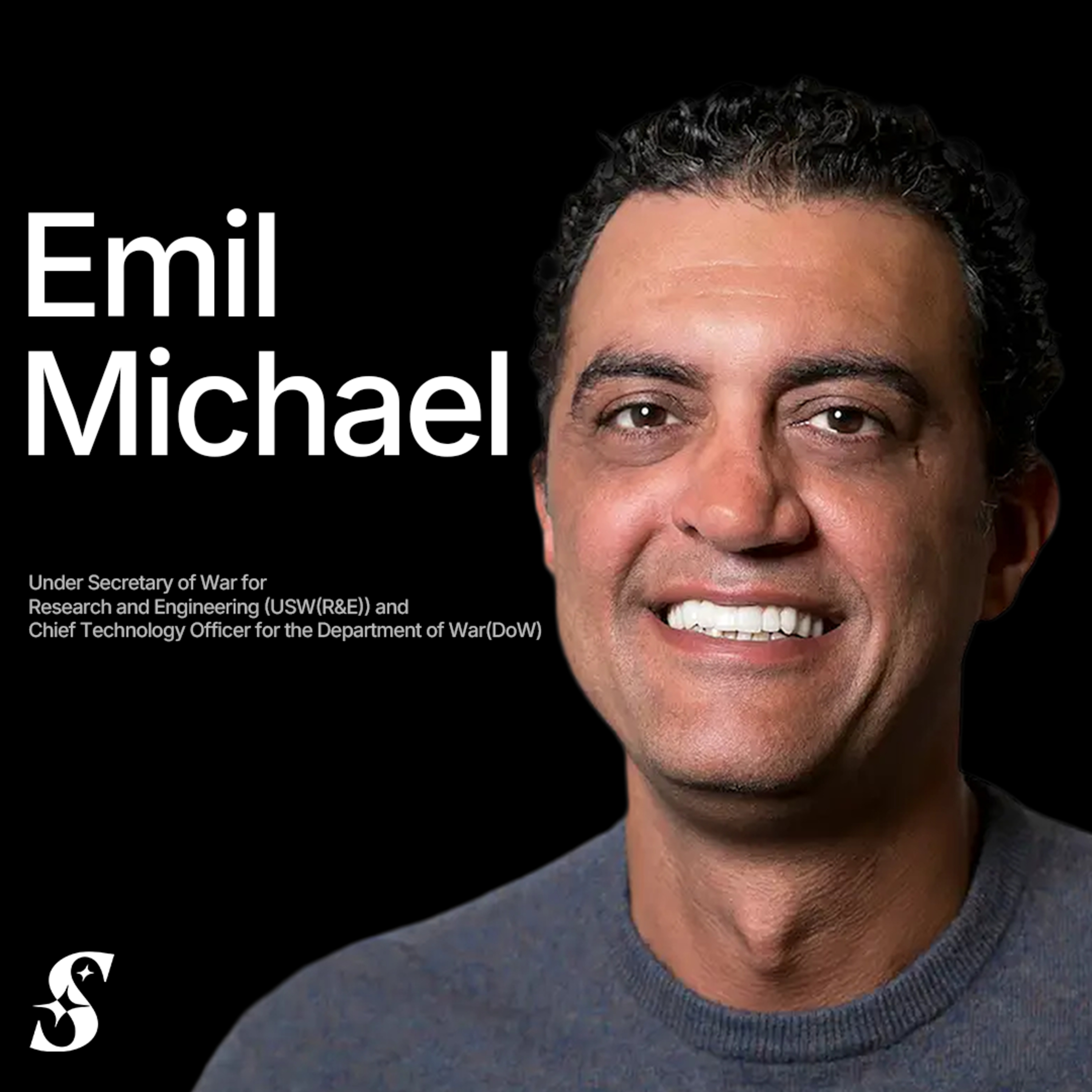
The Under Secretary of War defines the current "1938 moment" not as an imminent war, but as a critical juncture for rebuilding the domestic industrial base. The focus is on reversing decades of outsourcing critical components like minerals and pharmaceuticals, which created strategic vulnerabilities now deemed unacceptable for national security.
While VCs chase application-layer defense tech like drones, a larger, more critical opportunity lies in rebuilding the underlying domestic supply chain. The US reliance on China for rare earths, pharmaceuticals, and other components is a key vulnerability. Startups that solve this foundational problem represent the next investment frontier.

The Iran conflict highlights systemic supply chain vulnerabilities, pushing multinationals beyond optimizing for lowest cost. Companies must now build resilient "anti-fragile" supply chains that can withstand geopolitical shocks. This strategic shift requires significant capital expenditure, creating new investment opportunities.

The US faces two existential threats: strategic vulnerability to China and the socio-economic collapse of its working class. This forces a difficult but necessary policy choice to bring manufacturing home, accepting higher costs to ensure national security and domestic stability.
