Get your free personalized podcast brief
We scan new podcasts and send you the top 5 insights daily.
Placing MCP within a neutral foundation like the AAIF is a strategic move to build industry confidence. It guarantees the protocol will remain open and not be controlled or made proprietary by a single company (like Anthropic). This neutrality is critical for encouraging widespread, long-term investment and adoption.

Related Insights
The evolution of a protocol like MCP depends on a tight feedback loop with real-world implementations. Open source clients such as Goose serve as a "reference implementation" to test and demonstrate the value of new, abstract specs like MCPUI (for user interfaces), making the protocol's benefits concrete.
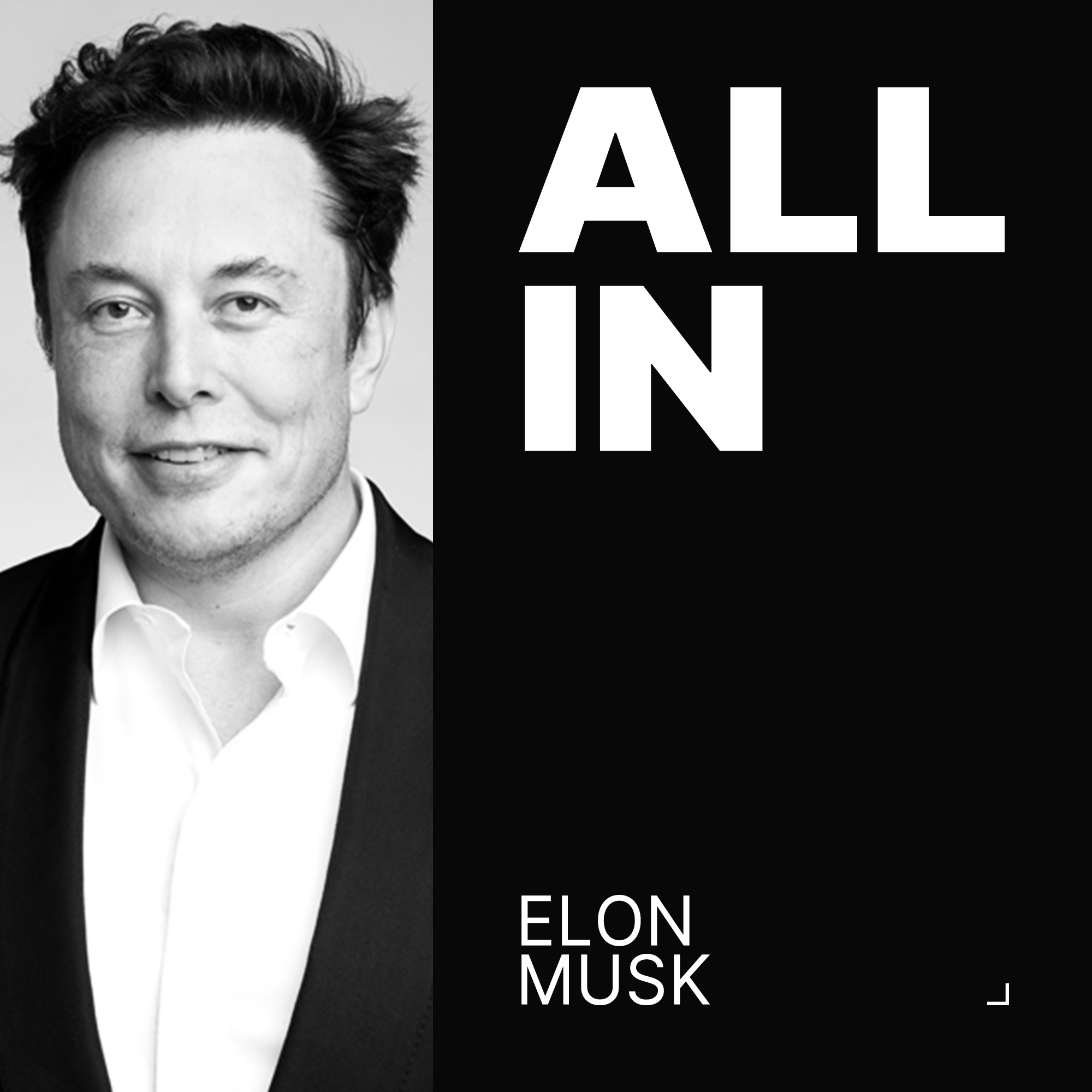
Elon Musk founded OpenAI as a nonprofit to be the philosophical opposite of Google, which he believed had a monopoly on AI and a CEO who wasn't taking AI safety seriously. The goal was to create an open-source counterweight, not a for-profit entity.
OpenAI integrated the Model-Centric Protocol (MCP) into its agentic APIs instead of building its own. The decision was driven by Anthropic treating MCP as a truly open standard, complete with a cross-company steering committee, which fostered trust and made adoption easy and pragmatic.
The MCP protocol's primitives are not directly influenced by current model limitations. Instead, it was designed with the expectation that models would improve exponentially. For example, "progressive discovery" was built-in, anticipating that models could be trained to fetch context on-demand, solving future context bloat problems.
MCP was born from the need for a central dev team to scale its impact. By creating a protocol, they empowered individual teams at Anthropic to build and deploy their own MCP servers without being a bottleneck. This decentralized model is so successful the core team doesn't know about 90% of internal servers.
The choice between open and closed-source AI is not just technical but strategic. For startups, feeding proprietary data to a closed-source provider like OpenAI, which competes across many verticals, creates long-term risk. Open-source models offer "strategic autonomy" and prevent dependency on a potential future rival.

Unlike traditional internet protocols that matured slowly, AI technologies are advancing at an exponential rate. An AI standards body must operate at a much higher velocity. The Agentic AI Foundation is structured to facilitate this rapid, "dog years" pace of development, which is essential to remain relevant.
Stripe intentionally designed its Agentic Commerce Protocol (ACP) to be provider-agnostic, working with any payments processor and any AI agent. This strategic decision to build an open standard, rather than a proprietary product, aims to grow the entire agentic commerce ecosystem instead of creating a walled garden.
Anthropic is making its models available on AWS, Azure, and Google Cloud. This multi-cloud approach is a deliberate business strategy to position itself as a neutral infrastructure provider. Unlike competitors who might build competing apps, this signals to customers that Anthropic aims to be a partner, not a competitor.
The AI space moves too quickly for slow, consensus-driven standards bodies like the IETF. MCP opted for a traditional open-source model with a small core maintainer group that makes final decisions. This hybrid of consensus and dictatorship enables the rapid iteration necessary to keep pace with AI advancements.