Get your free personalized podcast brief
We scan new podcasts and send you the top 5 insights daily.
When a decision model makes a mistake, developers can debug it by analyzing its limited choices and logic, similar to fixing an if-else statement. This contrasts with generative LLMs, where fixing errors often involves guessing different prompts. This sense of control makes development more predictable and structured.

Related Insights
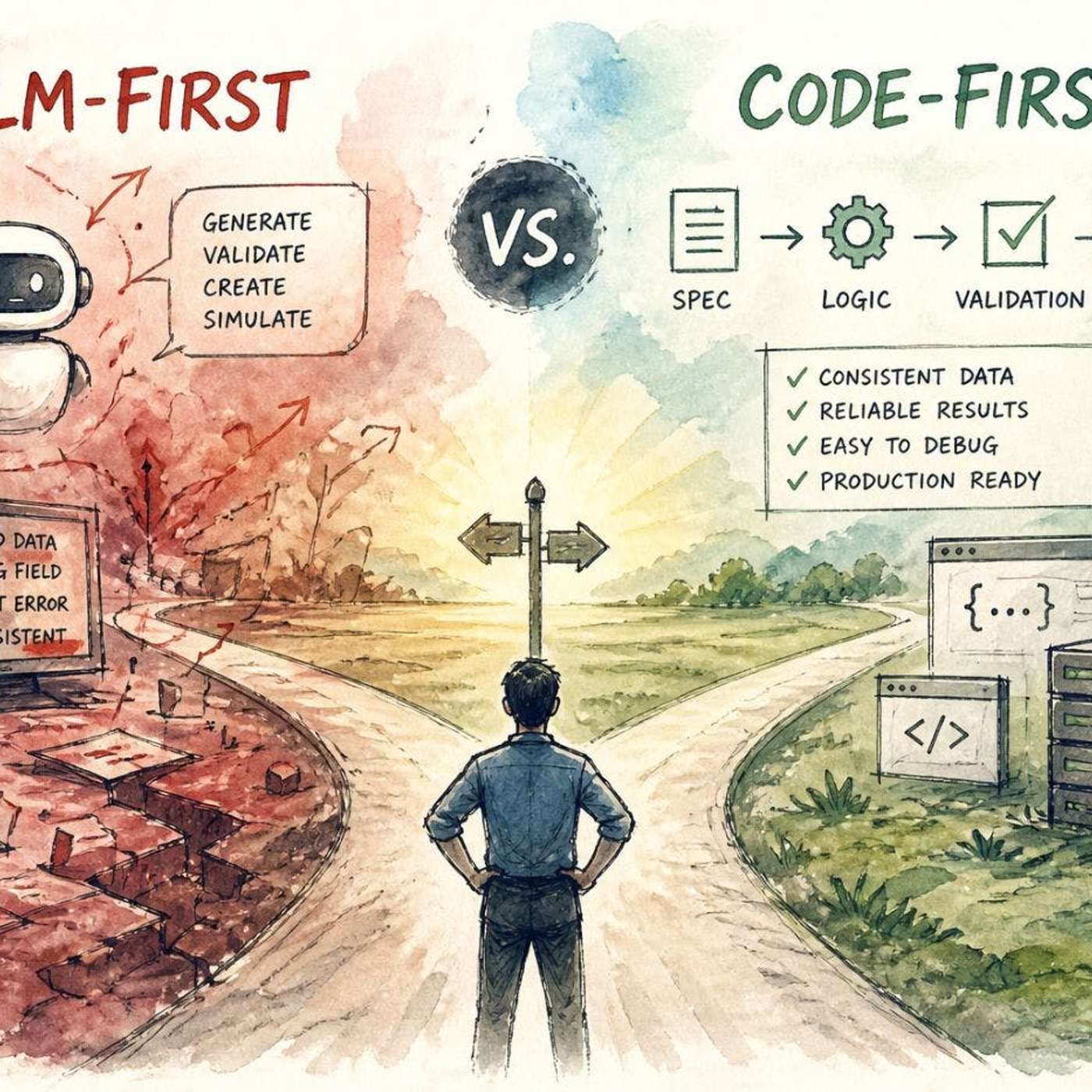
Don't give LLMs full control. Use deterministic code for core logic, validation, and enforcing rules. Delegate only tasks requiring flexibility or understanding of unstructured input to the LLM, treating it as a specialized component, not the entire system.
Unlike standard LLMs that generate text, Jev is optimized for making choices from predefined options (e.g., yes/no, 1-10 scale, pick from a list). This makes it a "System 1" model, ideal for high-speed classification, routing, and filtering tasks that serve as smart "if" statements within larger applications.
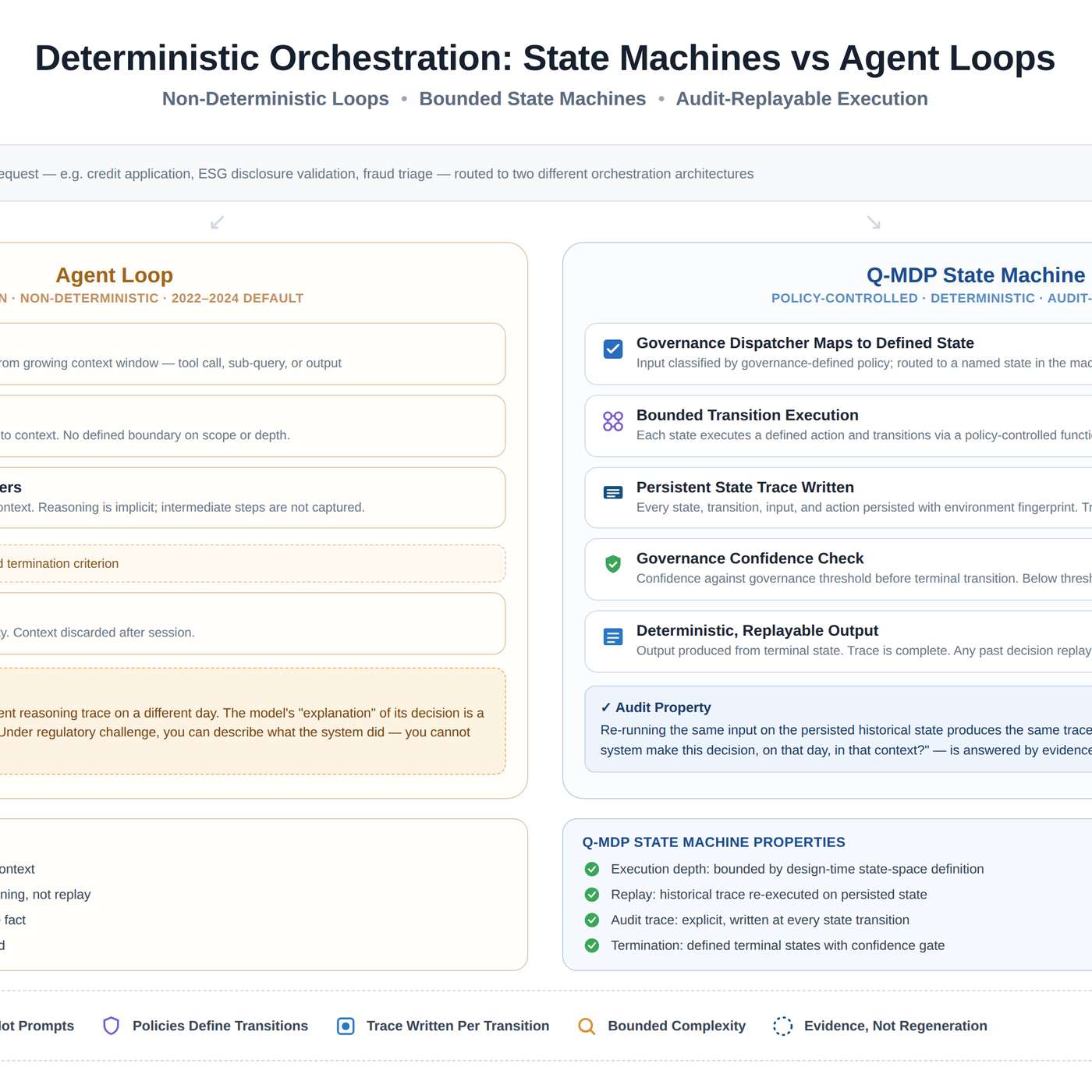
Tools like LangGraph support state machine patterns, but don't guarantee them. The critical shift is an engineering discipline where orchestration logic is explicitly designed and bounded by developers, rather than being improvised by the LLM at runtime.
When selecting foundational models, engineering teams often prioritize "taste" and predictable failure patterns over raw performance. A model that fails slightly more often but in a consistent, understandable way is more valuable and easier to build robust systems around than a top-performer with erratic, hard-to-debug errors.

Purely probabilistic LLMs are unreliable for critical business processes. GetVocal's architecture uses a deterministic "context graph" based on user intentions as the core decision-making engine. This provides traceability and reliability, while selectively calling generative models for conversational nuance.

AI development has evolved to where models can be directed using human-like language. Instead of complex prompt engineering or fine-tuning, developers can provide instructions, documentation, and context in plain English to guide the AI's behavior, democratizing access to sophisticated outcomes.

A common failure mode for AI agents is considering the correct solution path but then discarding it. Asking the agent to explicitly output "decision notes" provides a log of its reasoning, making it easier to spot and correct these logical errors.

Jev is a classifier AI that makes probabilistic decisions based on predefined choices (a schema). Unlike LLMs which generate text conversationally, Jev provides structured, type-safe output, making it an "AI decision maker" rather than a chat agent that you "ask" questions.

The benefit of discrete reasoning (like generating tokens or tool calls) over a continuous 'neuralese' is error correction, analogous to why digital computing beat analog. A slightly wrong token can be 'rounded' to the correct one, preventing the compounding errors that would plague a purely continuous process.

The optimal way to use decision models like Jev is to break large problems into many small, independent questions. This contrasts with stuffing everything into a single LLM prompt. This decomposition makes each AI-driven step verifiable, measurable, and debuggable, leading to more reliable and maintainable software.