Get your free personalized podcast brief
We scan new podcasts and send you the top 5 insights daily.
We adopt different 'personae' or social masks for various situations (e.g., authoritative professor, jovial friend). Mistaking one of these masks for your total self leads to a distorted experience. True self-knowledge involves recognizing these personae as convenient but temporary roles.

Related Insights
Many professionals mistakenly equate their job title with their identity. True identity is the deep, internal foundation of who you are. Grounding yourself in this core allows you to execute your professional role with more clarity, conviction, and consistency, helping you decide what you will and will not tolerate.

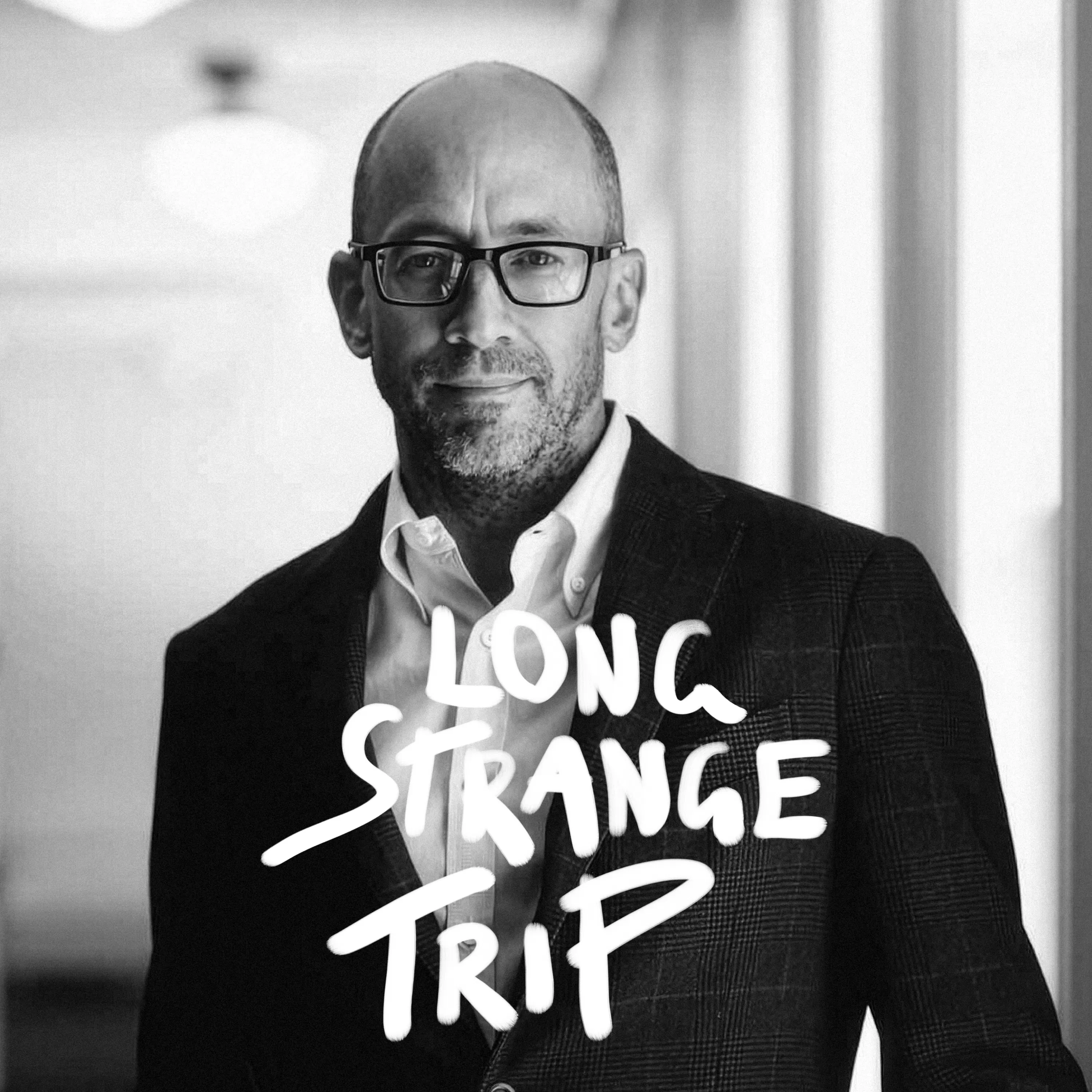
To prevent his identity from becoming enmeshed with his job title, ex-Twitter CEO Dick Costolo had a personal rule: he would only attend events where he was invited as "Dick Costolo," not as "the CEO of Twitter," to ensure his self-worth wasn't tied to the role.
The 'performer self' isn't about being fake or doing what's expected (performative). It's a strategic persona you adopt in high-stakes environments to lead with clarity and make objective decisions. It is a tool for effective leadership, not a mask to please others, which leads to burnout.

Showing up as your "full self" in every situation is ineffective. A better approach is "strategic authenticity," where you adjust your communication style to suit the context (e.g., a board meeting vs. a team lunch) without compromising your fundamental values.

The persona you consider 'you'—like being the life of the party—might be an ingrained behavior adopted in childhood to compensate for a perceived deficit. True authenticity lies beneath this constructed, and often smaller, version of yourself.

The idea of a single, unified self is a misconception. We operate by adopting multiple, distinct identities based on context—the parent, the professional, the friend. These roles don't need to cohere into one narrative. Accepting this multiplicity allows for more flexible engagement with the world.

Gary Vaynerchuk warns that when a public figure's shtick or style becomes too pronounced, it can feel inauthentic. This is a subconscious trap where repeated successful behaviors can turn a genuine personality into a one-dimensional caricature, ultimately undermining their credibility and respect.

Bestselling author Mark Manson avoids over-identifying as "an author" to prevent getting trapped. He views professional labels as temporary roles he can relinquish, enabling personal growth and change without an identity crisis. This fluidity is a key to adaptation.

Trying to define 'who you are' often traps you in a limiting persona (e.g., your job title or nationality). A more powerful path to authenticity is to strip away these labels, realizing you are not a fixed entity but a being with limitless possibilities.
Authenticity isn't a construction project. Author Anne Tashi Slater suggests your essential self already exists, like a clear sky. The path to it involves letting go of unskillful behaviors and false personas that obscure it, rather than trying to build a new identity.
