Get your free personalized podcast brief
We scan new podcasts and send you the top 5 insights daily.
The narrative of endless demand for NVIDIA's high-end GPUs is flawed. It will be cracked by two forces: the shift of AI inference to on-device flash memory, reducing cloud reliance, and Google's ability to give away its increasingly powerful Gemini AI for free, undercutting the revenue models that fuel GPU demand.

Related Insights
Despite bubble fears, Nvidia’s record earnings signal a virtuous cycle. The real long-term growth is not just from model training but from the coming explosion in inference demand required for AI agents, robotics, and multimodal AI integrated into every device and application.

The real long-term threat to NVIDIA's dominance may not be a known competitor but a black swan: Huawei. Leveraging non-public lithography and massive state investment, Huawei could surprise the market within 2-3 years by producing high-volume, low-cost, specialized AI chips, fundamentally altering the competitive landscape.
NVIDIA’s business model relies on planned obsolescence. Its AI chips become obsolete every 2-3 years as new versions are released, forcing Big Tech customers into a constant, multi-billion dollar upgrade cycle for what are effectively "perishable" assets.

As competitors like Google's Gemini close the quality gap with ChatGPT, OpenAI loses its unique product advantage. This commoditization will force them to adopt advertising sooner than planned to sustain their massive operational costs and offer a competitive free product, despite claims of pausing such efforts.

OpenAI is now reacting to Google's advancements with Gemini 3, a complete reversal from three years ago. Google's strengths in infrastructure, proprietary chips, data, and financial stability are giving it a significant competitive edge, forcing OpenAI to delay initiatives and refocus on its core ChatGPT product.
As the current low-cost producer of AI tokens via its custom TPUs, Google's rational strategy is to operate at low or even negative margins. This "sucks the economic oxygen out of the AI ecosystem," making it difficult for capital-dependent competitors to justify their high costs and raise new funding rounds.
![Gavin Baker - Nvidia v. Google, Scaling Laws, and the Economics of AI - [Invest Like the Best, EP.451] thumbnail](https://megaphone.imgix.net/podcasts/d97fee14-d4d7-11f0-8951-8324b640c1c1/image/d3a8b5ecbf3957de5b91f278a191c9ff.jpg?ixlib=rails-4.3.1&max-w=3000&max-h=3000&fit=crop&auto=format,compress)
NVIDIA's primary business risk isn't competition, but extreme customer concentration. Its top 4-5 customers represent ~80% of revenue. Each has a multi-billion dollar incentive to develop their own chips to reclaim NVIDIA's high gross margins, a threat most businesses don't face.
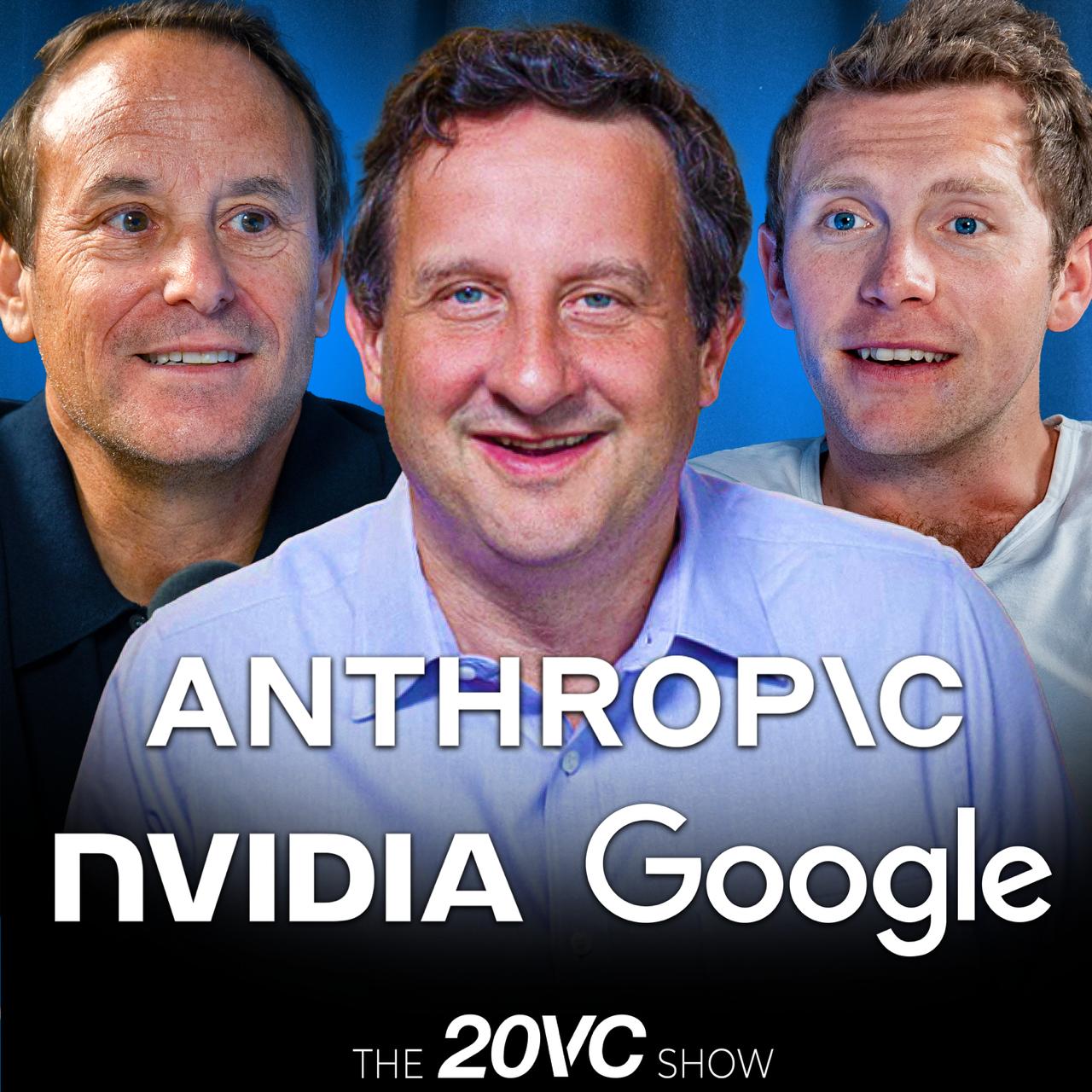
The AI value chain flows from hardware (NVIDIA) to apps, with LLM providers currently capturing most of the margin. The long-term viability of app-layer businesses depends on a competitive model layer. This competition drives down API costs, preventing model providers from having excessive pricing power and allowing apps to build sustainable businesses.

The biggest risk to the massive AI compute buildout isn't that scaling laws will break, but that consumers will be satisfied with a "115 IQ" AI running for free on their devices. If edge AI is sufficient for most tasks, it undermines the economic model for ever-larger, centralized "God models" in the cloud.
While competitors like OpenAI must buy GPUs from NVIDIA, Google trains its frontier AI models (like Gemini) on its own custom Tensor Processing Units (TPUs). This vertical integration gives Google a significant, often overlooked, strategic advantage in cost, efficiency, and long-term innovation in the AI race.
