Get your free personalized podcast brief
We scan new podcasts and send you the top 5 insights daily.
Evaluating agentic systems requires moving past LLM text benchmarking to assess entire execution pipelines under uncertainty. Aishwarya Srinivasan emphasizes that non-determinism compounds across tool calls, API logins, and loops, meaning every system integration point introduces unique failure modes that require custom, end-to-end evaluation.

Related Insights
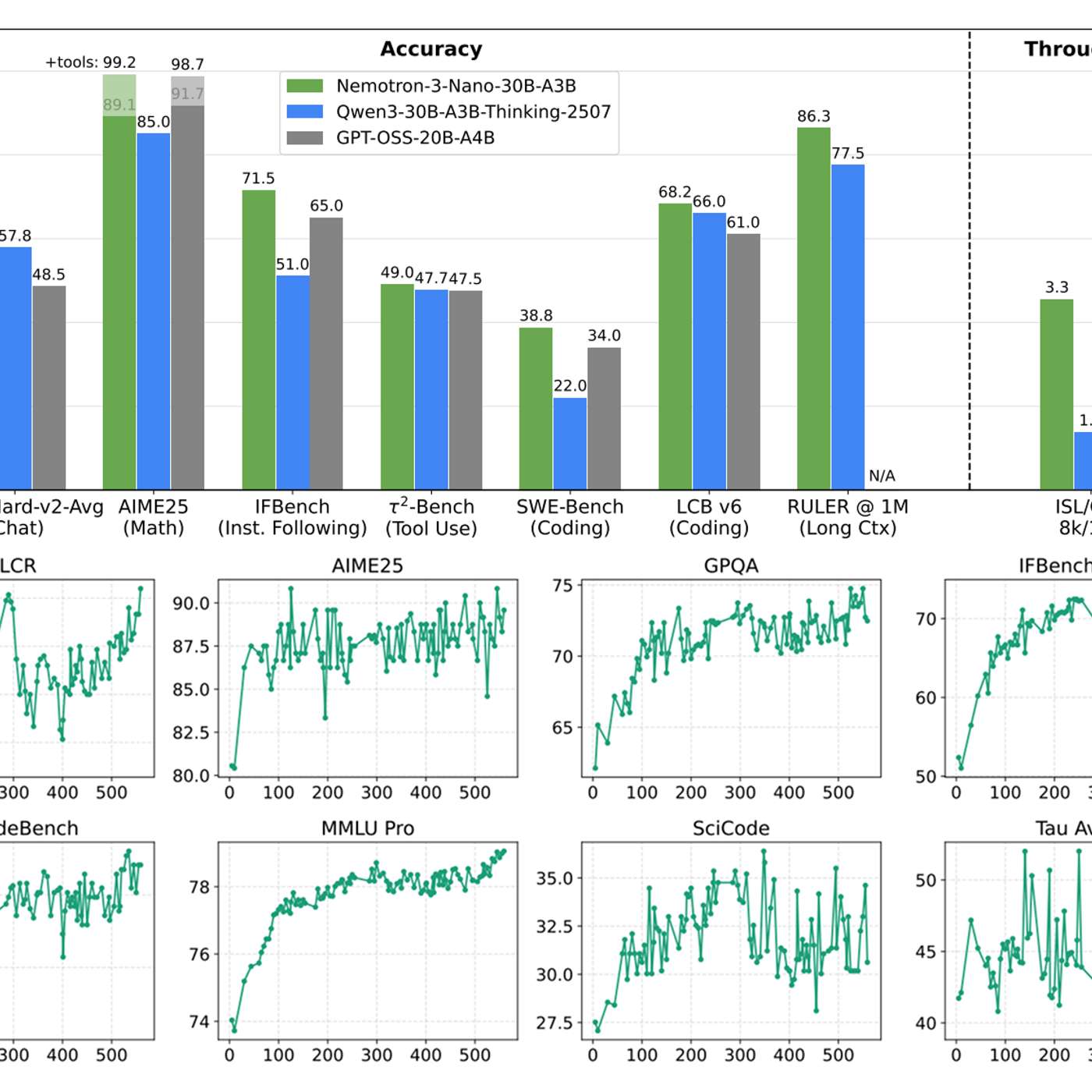
Standard benchmarks are misleading for practical use. A model that benchmarks well can fail at agentic tasks. When selecting an open-source model, prioritize its documented ability to call tools and follow multi-step instructions, as this is crucial for building useful agents.

Unlike traditional software that fails with clear errors, multi-agent systems can fail silently. A series of individually logical actions, based on slightly stale or incomplete context, can compound into a significant error that is only obvious when replaying the entire sequence of events.

Treating AI evaluation like a final exam is a mistake. For critical enterprise systems, evaluations should be embedded at every step of an agent's workflow (e.g., after planning, before action). This is akin to unit testing in classic software development and is essential for building trustworthy, production-ready agents.

Agent evaluation is complex because you can't just check the final result. You must also assess the trajectory: did the agent use the correct tools and follow the right process? A correct final answer achieved through a flawed process indicates a brittle and untrustworthy system.
A simple agent handles the ideal "happy path" workflow. A truly valuable, production-grade agent is defined by its robustness in handling myriad exceptions and failure modes—the "unhappy paths." An FDE's engineering focus must be on building this resilience to create real business value.

Evaluating agentic AI requires an end-to-end "whole system eval" that assesses every connection, tool, and potential failure point. This is crucial because the non-deterministic nature of these systems creates a compounding effect of uncertainty that can't be captured by only checking the final LLM output.
The non-deterministic nature of agentic AI makes traditional pass/fail testing insufficient. Businesses must adopt a multi-dimensional scorecard for every interaction, evaluating metrics like compliance, factual accuracy, latency, and intent recognition, not just task completion.

Evaluating complex AI agents requires inspecting the entire execution chain rather than simply grading the final output text. n8n established a dedicated AI Trust Team and proprietary evaluation software to verify that correct intermediary tools are triggered. Robust evaluations are essential to ensure agent reliability and audibility before swapping underlying LLMs for reduced latency or lower cost.

OpenAI identifies agent evaluation as a key challenge. While they can currently grade an entire task's trace, the real difficulty lies in evaluating and optimizing the individual steps within a long, complex agentic workflow. This is a work-in-progress area critical for building reliable, production-grade agents.

Building production AI agents by patching together incompatible models for speech, retrieval, and safety creates significant integration challenges. These 'Frankenstein stacks' lead to compounded latency, accuracy degradation between components, and weak, bolt-on security, which are the primary causes of failure in real-world applications, not reasoning errors.