Get your free personalized podcast brief
We scan new podcasts and send you the top 5 insights daily.
Snowflake's CRO, Chris Degnan, kept his job through multiple growth stages where he could have been replaced. His longevity wasn't due to a pre-existing "scale" playbook, but his intense coachability and ability to "morph" and adapt his strategies based on direct feedback from the board and new leadership.

Related Insights
To navigate the unpredictable AI landscape, Snowflake's CEO dismantled its specialized, multi-layered structure that had slowed down iteration. This shift prioritized accountability and shorter engineer-to-customer feedback loops, recognizing that speed and adaptability now trump carefully laid out strategies.

Processes that work at $30M are inadequate at $45M. Leaders in hyper-growth environments (30-50% YoY) must accept that their playbooks have a short shelf-life and require constant redesign. This necessitates hiring leaders who can build for the next level, not just manage the current one.

Instead of replacing leaders at each growth stage, the Uber Eats management team was built like an "organism" with complementary strengths and was kept largely intact from launch to a $20 billion run rate. This proves a cohesive team that can learn together is more valuable than constantly hiring for "scale experience."
A founder's role is constantly changing—from individual contributor to manager to culture builder. Success requires being self-aware enough to recognize you're always in a new, unfamiliar role you're not yet good at. Sticking to the old job you mastered is a primary cause of failure to scale.

Simple Mills founder Caitlin Smith's key advice is that entrepreneurship requires constant self-reinvention. She notes that if you succeed, your job will eventually outgrow you unless you are constantly learning and adapting. This makes continuous personal scaling the most critical leadership skill.

Despite immense success, Snowflake's CRO Chris Degnan operates as if he has a 90-day employment contract. This self-imposed pressure, rooted in a fear of failure, ensures he never becomes complacent and continuously adapts to the company's evolving needs, a key to his long tenure.
Snowflake's hiring philosophy for the AI era prioritizes adaptability over specific, perishable skills. Recognizing that today's tools will be obsolete tomorrow, they screen for lifelong learners by asking questions like, 'How do you advance your craft?' rather than focusing on current tool proficiency.
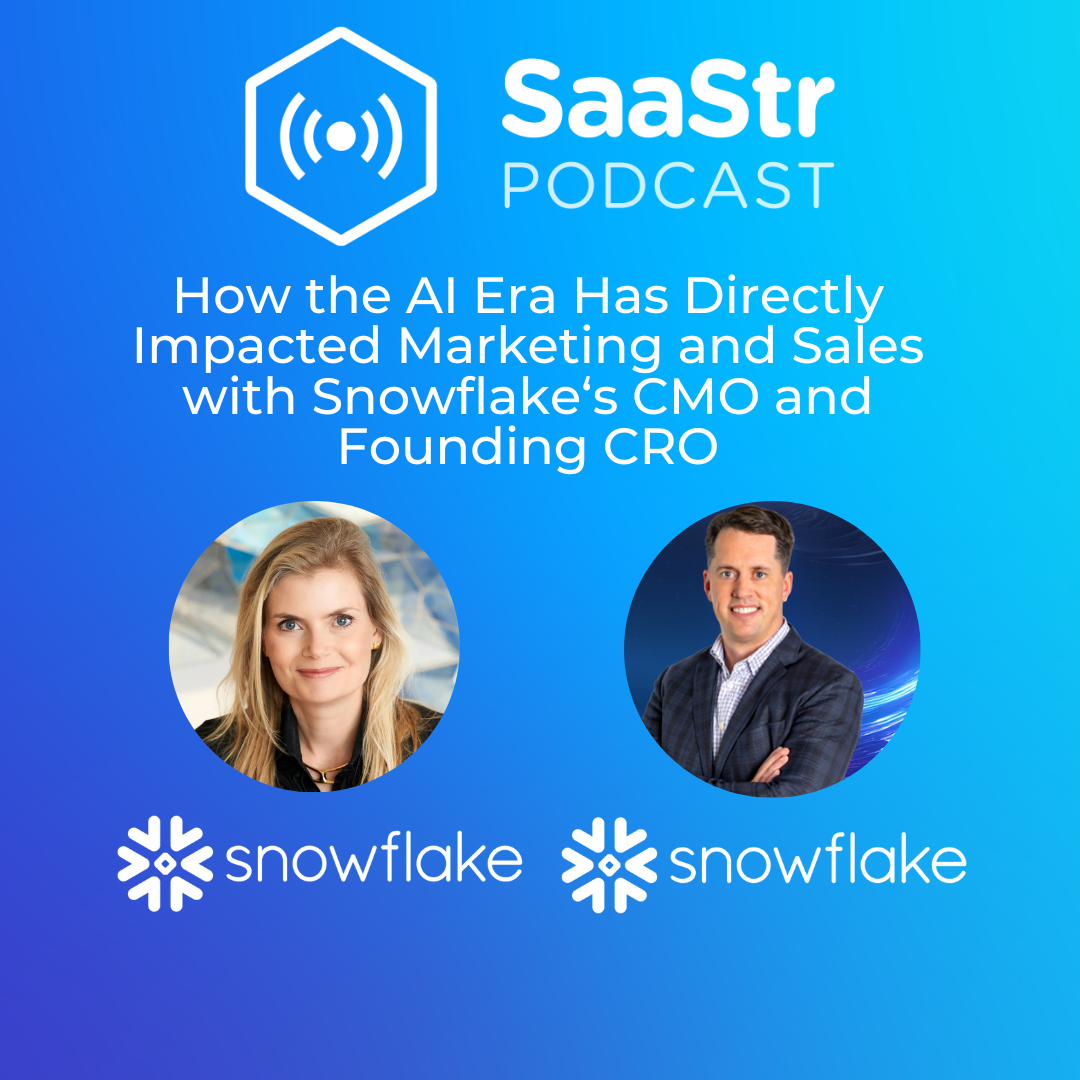
Chris Degnan reflects that financial success made him a worse leader because he lost the desire to do the "hard things" required at scale, like constant global travel and endless internal operations meetings. His passion was for selling and competing, not the operational grind of a multi-billion dollar CRO role.

The transition from 'deal jockey' to operator at a multi-billion dollar company took a visible physical and emotional toll on Snowflake's CRO. He lost his passion for the operational grind, leading to burnout. This highlights the importance of self-awareness for leaders in hyper-growth environments.

In a hypergrowth company, an early leader's domain will shrink in relative terms as the company expands. This can feel like a demotion but is a sign of success. Leaders who scale well overcome this emotional dissonance and focus on the company's increased total output.