Get your free personalized podcast brief
We scan new podcasts and send you the top 5 insights daily.
Evidence-based research showed that the vast majority (around 90%) of micro-cap stocks that experience a 60% drawdown do not recover. This highlights the danger of averaging down in this asset class, as investors are often throwing good money after bad into fundamentally broken situations.

Related Insights
The common mistake during a drawdown is selling what's working to fund bigger positions in losers. The correct approach is to cut some losers, which frees up critical mindshare and emotional energy, allowing an investor to refocus on finding new potential winners and regain confidence.
Micro-caps are fragile due to key-man, customer, and product concentration risks. Investors should view their success as a 'season of winning' rather than a permanent state. Very few of these companies warrant a buy-and-hold strategy lasting more than a few years.
The common advice to 'buy more cheaper' when a stock falls is a flawed strategy. It often leads to allocating more capital to your worst ideas and compounding mistakes. Instead of automatically adding to losers, the bar for re-investment should be exceptionally high.
Scott Barbie's value fund experienced a massive drawdown before a 91% rally. This illustrates that systems with high variability show the strongest regression to the mean. If your investment theses are sound, a period of severe underperformance can be a leading indicator of a powerful recovery.

A six-month experiment concluded with a ChatGPT-managed portfolio valued at $82.88, a significant loss. This contrasts sharply with a benchmark S&P 500 investment, which would have grown to $111.68 in the same period. The AI's strategy resulted in a -50.33% max drawdown and negative alpha, highlighting its current inability to generate returns in volatile micro-cap stocks.
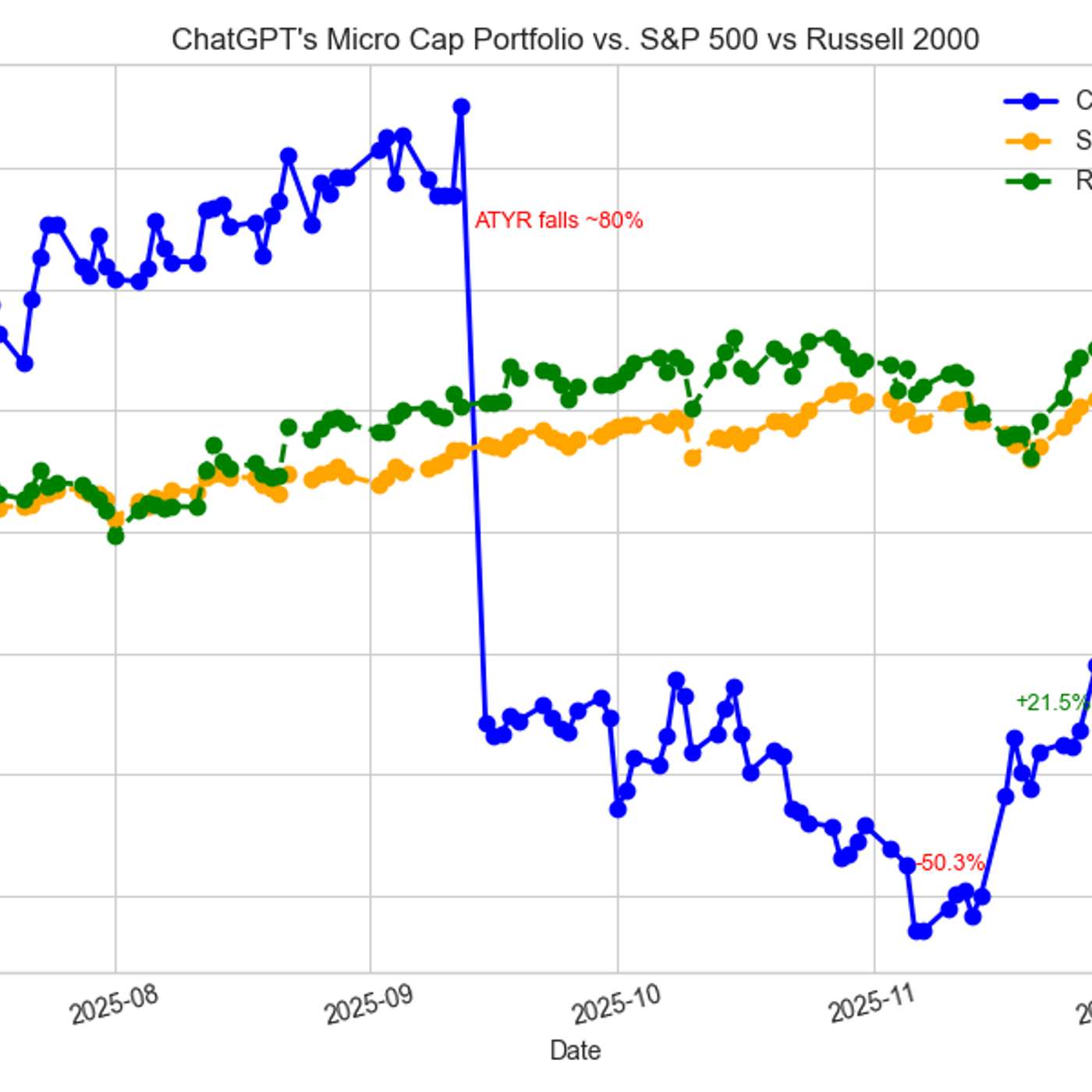
Unlike large-cap 'buy and hold' strategies, microcaps are fragile small businesses with high concentration risks (customer, management, geography). Investor Ian Cassel argues they have short 'winning seasons.' The key question isn't 'is this a good company?' but 'how long can this winning streak last?'—which is usually shorter than you think.

Contrary to the 'buy and hold forever' mantra, the fragile nature of microcap businesses means most should be 'rented,' not owned long-term. Due to risks like customer concentration, the average hold period is often around one year, as very few companies prove worthy of holding for extended periods.

By seeding new positions at ~0.5% and rarely exceeding 1% at cost, the fund mitigates the behavioral risk of averaging down too aggressively into a failing investment. This disciplined approach prevents a small mistake from becoming a large portfolio loss.
Micro-cap investor John Barr endures huge losses on individual stocks by keeping initial position sizes tiny (e.g., 70 basis points). This "lumberjack" approach allows him to withstand volatility that would cripple a concentrated portfolio, waiting for rare multi-baggers to drive returns.

A powerful risk management technique is setting a maximum percentage of your portfolio that can be invested in a single stock *at cost*. A 5% at-cost limit means once you've invested 5% of your capital, you cannot add more, even if the stock price plummets and its market value shrinks. This prevents chasing losers.