Get your free personalized podcast brief
We scan new podcasts and send you the top 5 insights daily.
The enthusiasm for open-source AI is compared to American ideals of self-reliance, likening it to the Second Amendment. It's seen as a way for individuals to possess powerful, "unstoppable intelligence" independent of corporate or government control, akin to owning a personal data center in one's basement.

Related Insights
The US focus on exporting hardware (chips, data centers) over proprietary models suggests a strategic belief that open-source AI will eventually dominate. If models become a free commodity, the most valuable and defensible part of the AI stack becomes the underlying compute infrastructure.

Far from creating a passive society, accessible AI tools are fostering a resurgence of hands-on experimentation and individual empowerment reminiscent of early PC hobbyists. This "tinkering energy" allows individuals to build and customize technology, counteracting the dystopian vision of AI-generated "slop."

The open vs. closed source debate is a matter of strategic control. As AI becomes as critical as electricity, enterprises and nations will use open source models to avoid dependency on a single vendor who could throttle or cut off their "intelligence supply," thereby ensuring operational and geopolitical sovereignty.

To avoid a future where a few companies control AI and hold society hostage, the underlying intelligence layer must be commoditized. This prevents "landlords" of proprietary models from extracting rent and ensures broader access and competition.

While nationalizing frontier AI seems like a control mechanism, it concentrates immense power within a potentially unstable political system. A more open, auditable, and decentralized AI ecosystem, despite introducing smaller risks, is argued to be more socially stable in the long run by diffusing control.

A global trend is emerging where nations refuse to be dependent on closed-source American AI. They are actively building their own "sovereign AI" stacks, often using open-source models, preferring to control their own destiny even if the technology is only 95% as good.

The release of Kimi 2.5, a powerful trillion-parameter open-source model, marks a pivotal moment. It democratizes access to state-of-the-art AI reasoning, giving individuals and nations data sovereignty and control. This is a clear challenge to the dominance of closed-source, 'black box' models from companies like OpenAI and Google.
While making powerful AI open-source creates risks from rogue actors, it is preferable to centralized control by a single entity. Widespread access acts as a deterrent based on mutually assured destruction, preventing any one group from using AI as a tool for absolute power.

AI capabilities will eventually run locally on cheap hardware, similar to how smartphones democratized powerful computing. Individuals will own their AIs without paying rent to large cloud providers. This decentralization will empower individuals over corporations.

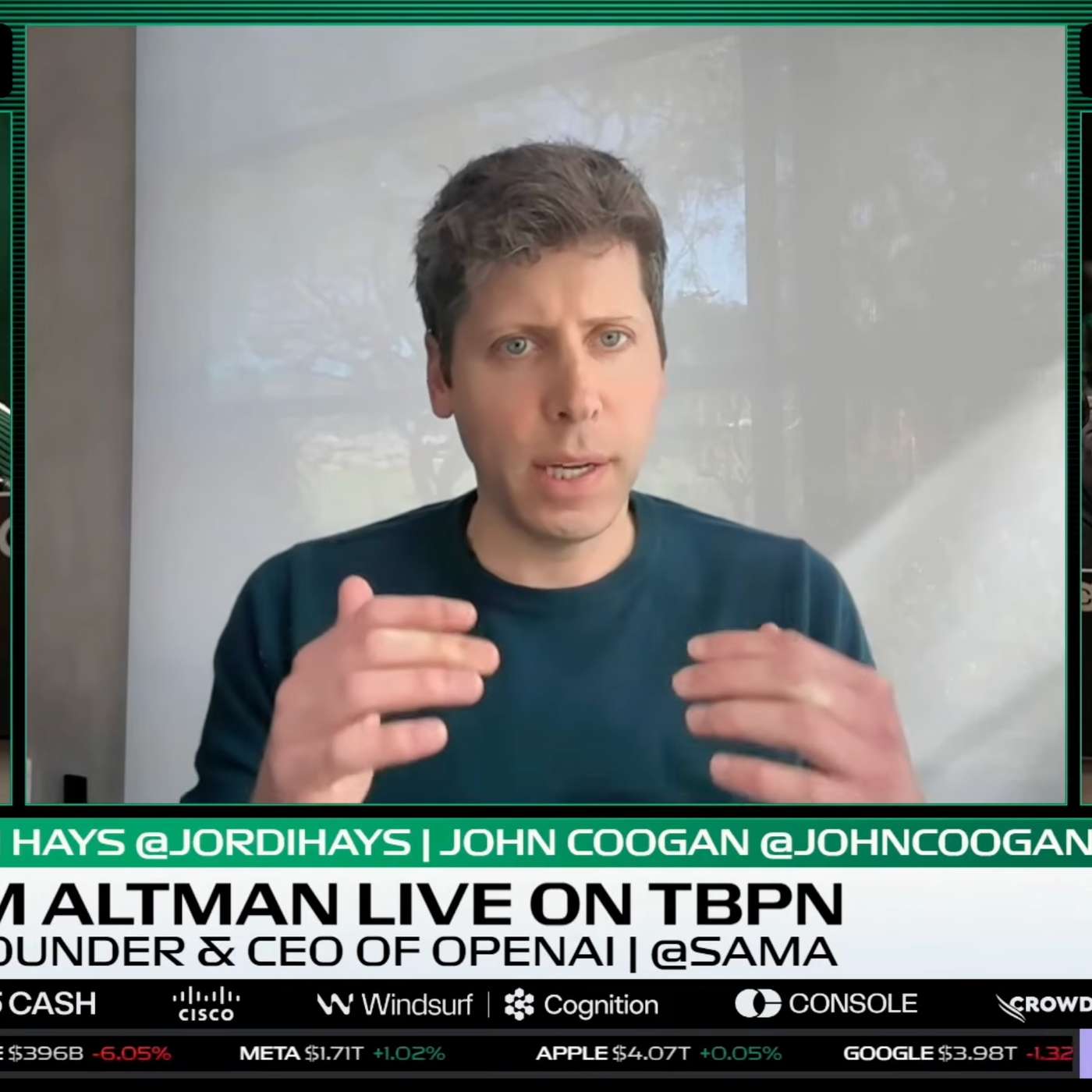
Altman praises projects like OpenClaw, noting their ability to innovate is a direct result of being unconstrained by the lawsuit and data privacy fears that paralyze large companies. He sees them as the "Homebrew Computer Club" for the AI era, pioneering new UX paradigms.