Get your free personalized podcast brief
We scan new podcasts and send you the top 5 insights daily.
Standard Next-Generation Sequencing (NGS) reports often just state "MET amplification" without a specific copy number. To make informed treatment decisions with MET inhibitors, clinicians must proactively contact the testing company's molecular pathology department to obtain this crucial, unlisted data point.

Related Insights
Relying solely on Next-Generation Sequencing (NGS) is insufficient for HER2 testing in biliary tract cancers. Data shows NGS misses up to 15% of patients with HER2 overexpression detected by immunohistochemistry (IHC). Performing both tests is essential to avoid denying patients effective targeted therapies.

There's a growing recognition that the molecular profile of a primary tumor can differ significantly from its metastases. To guide treatment more accurately, the preferred practice is to biopsy an accessible metastatic lesion when possible, as this better reflects the biology of the active disease being treated.
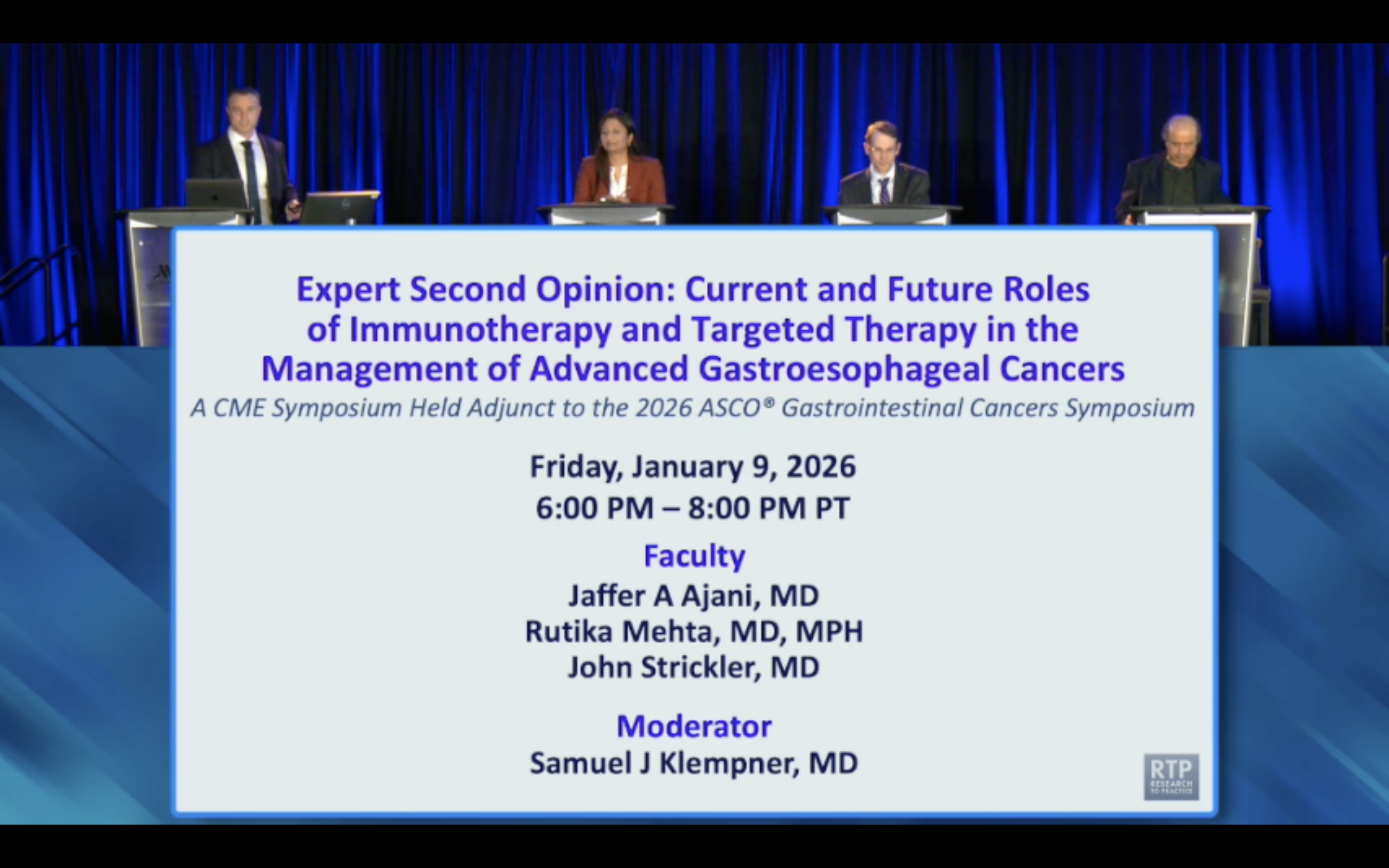
Comprehensive molecular testing (PD-L1, EGFR, ALK) is no longer reserved for advanced disease. It is now critical for all patients with stage 1B or higher resectable NSCLC *before* starting any treatment to guide neoadjuvant and adjuvant therapy decisions.

While Next-Generation Sequencing (NGS) is routinely performed for young patients with epithelioid sarcoma, experienced clinicians note it seldom uncovers additional actionable mutations. The primary consistent finding is the SMARCB1 loss. This suggests that while NGS is part of comprehensive care, the likelihood of identifying other targetable pathways is currently very low.

To reduce treatment delays, pathologists should initiate biomarker testing reflexively. Waiting for a medical oncologist to order tests at a first visit is a system failure, wasting critical time and risking the need to retrieve archived samples.
Dr. Bardia emphasizes that ESR1 is an 'acquired alteration,' meaning the mutation can develop during treatment. This necessitates a shift from one-time diagnostic testing to a dynamic, serial testing model. Repeat testing is critical to identify these actionable mutations as they arise, allowing patients to access newly approved targeted therapies.

A positive ctDNA test indicating minimal residual disease is strongly linked to recurrence. This expert argues clinicians have an obligation to act on this information, even without definitive guidelines. Framing inaction as unacceptable challenges the passive "wait-and-see" approach.

An individual tumor can have hundreds of unique mutations, making it impossible to predict treatment response from a single genetic marker. This molecular chaos necessitates functional tests that measure a drug's actual effect on the patient's cells to determine the best therapy.

Clinicians ordering "NGS for lung" often misunderstand that Next-Generation Sequencing alone does not cover all actionable biomarkers, such as PD-L1 or HER2. This requires pathologists to interpret the clinician's intent and order a more comprehensive and appropriate test panel.
For post-progression biopsies, which are often small and contain necrotic tissue, institutions may prioritize DNA-based NGS panels. This strategy is based on the rationale that most resistance mechanisms are genetic mutations detectable by DNA sequencing, reserving RNA panels primarily for identifying less common fusion events.