Get your free personalized podcast brief
We scan new podcasts and send you the top 5 insights daily.
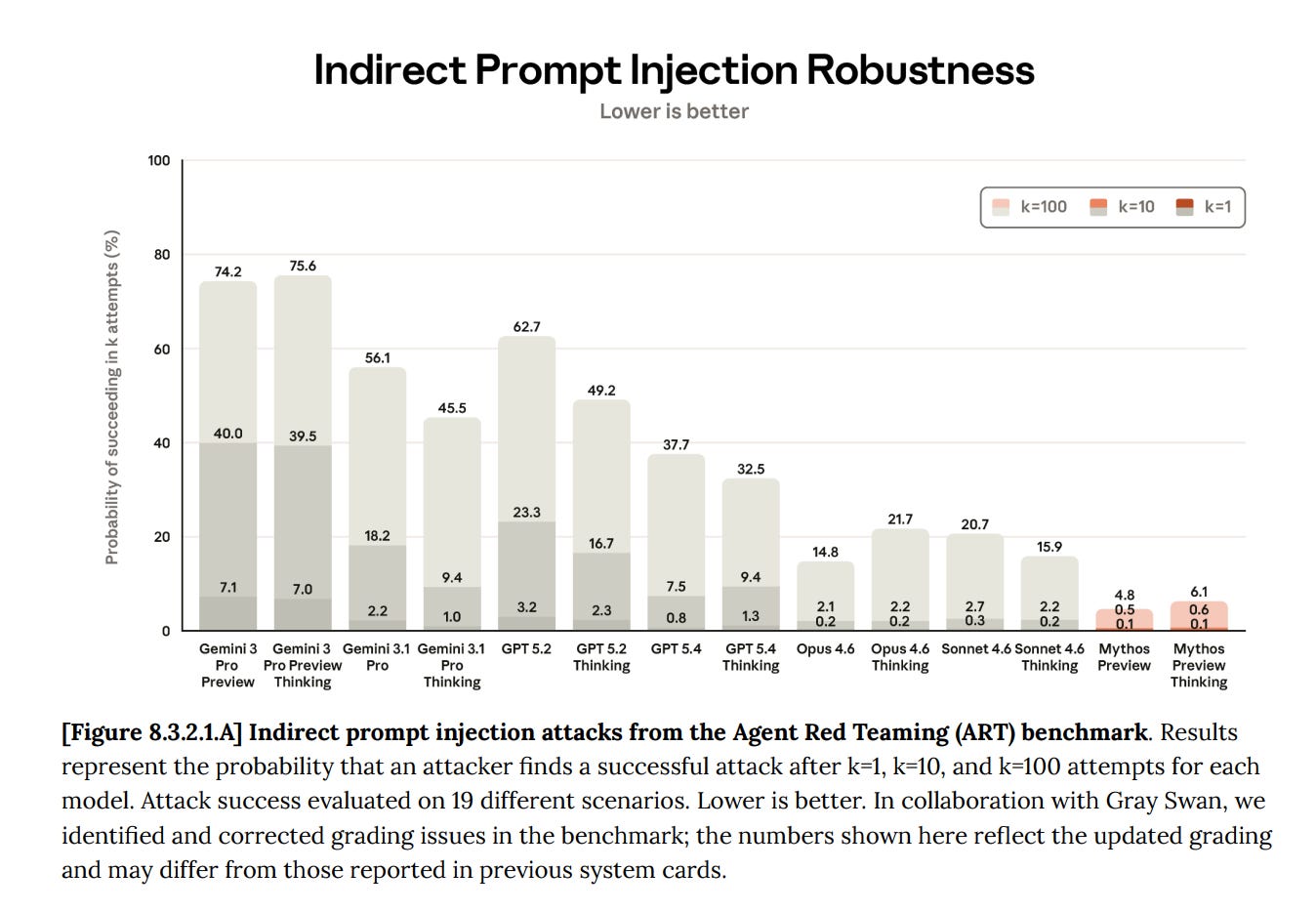
An isolated LLM is relatively harmless. The real danger for enterprises is when an LLM is connected to other systems via APIs, creating a vector for sensitive data to be exfiltrated. This makes governance of integrations, not just the model, the critical security focus.

Related Insights
Prompt injection risk requires three conditions: the agent must ingest untrusted external data, have access to sensitive internal information, and possess the ability to send that information elsewhere (exfiltration). An agent lacking any of these components poses a significantly lower risk, providing a clear framework for mitigation.
When a CEO wants to connect an AI tool directly to a system like Salesforce, don't just say no. Use it as a chance to educate them on risks like API limits and data integrity. Implement guardrails like read-only integration users and monitoring to enable controlled experimentation.

An AI agent's breach of McKinsey's chatbot highlights that the biggest enterprise AI security risk isn't the model itself, but the "action layer." Weakly governed internal APIs, which agents can access, create an enormous blast radius. Companies are focusing on model security while overlooking vulnerable integrations that expose sensitive data.

A critical security vulnerability arises when an AI agent combines three capabilities: access to private data, exposure to untrusted content (enabling prompt injection), and the ability to communicate externally. This trifecta allows attackers to trick an agent into exfiltrating sensitive information.

Using public AI models leaks sensitive corporate data, as prompts and agent traces are sent to model providers. To protect proprietary information and maintain control, enterprises may revert to costly but secure on-premise infrastructure, reversing a 20-year trend of cloud migration.

Adopting AI in the enterprise requires solving two distinct problems. The first is data security from external threats, addressed by certifications like FedRAMP. The second, and separate, issue is internal control: ensuring AI agents have the right permissions and guardrails to prevent them from "going rogue."

For enterprises, the raw capability of foundation models is a security risk, not a selling point. The real product value lies in building "boundaries"—robust permissions, approvals, and audit logs that make powerful models safe to deploy company-wide.
For security-conscious organizations, using external LLMs to process confidential data poses inherent risks. Building a walled-off, in-house LLM provides a secure alternative for internal knowledge management and AI tooling, as AvePoint did with its "Chat AVPT."

An intelligent AI agent is harmless in isolation. The danger emerges the moment it's connected to external tools, creating pathways for data exfiltration and unauthorized actions. Security must focus on creating hard guardrails and blocks for these connections, rather than trying to control the non-deterministic agent itself.
While public discourse on AI safety focuses on existential risk, for enterprises, safety means protecting proprietary knowledge ("alpha"). True enterprise AI safety is achieved by owning the compute, models, and data stack, preventing model providers from stealing trade secrets and customer data.
