Get your free personalized podcast brief
We scan new podcasts and send you the top 5 insights daily.
Contrary to widespread fears that AI chatbots would decimate Google's search dominance, the business is thriving. Search revenue grew 15% in the latest quarter, indicating that the predicted disruption has not yet materialized and its integration of AI is proving effective.

Related Insights
Contrary to popular belief, the rise of AI tools like ChatGPT isn't causing a decline in Google search volume. Instead, users are supplementing their existing search habits with new AI tools, leading to a more fragmented, but not shrinking, research landscape.

Google has caught up in AI technology, but its biggest hurdle is strategic. Integrating generative AI threatens its core search advertising model, which accounts for 80% of revenue. This creates an innovator's dilemma where they must carefully disrupt themselves without destroying their cash cow.

While competitors focus on subscription models for their AI tools, Google's primary strategy is to leverage its core advertising business. By integrating sponsored results into its AI-powered search summaries, Google is the first to turn on an ad-based revenue model for generative AI at scale, posing a significant threat to subscription-reliant players like OpenAI.
Contrary to popular narrative, Google's AI products have likely surpassed OpenAI in monthly users. By bundling AI into its existing ecosystem (2B users for AI Overviews, 650M for the Gemini app), Google leverages its massive distribution to win consumer adoption, even if user intent is less direct than visiting ChatGPT.
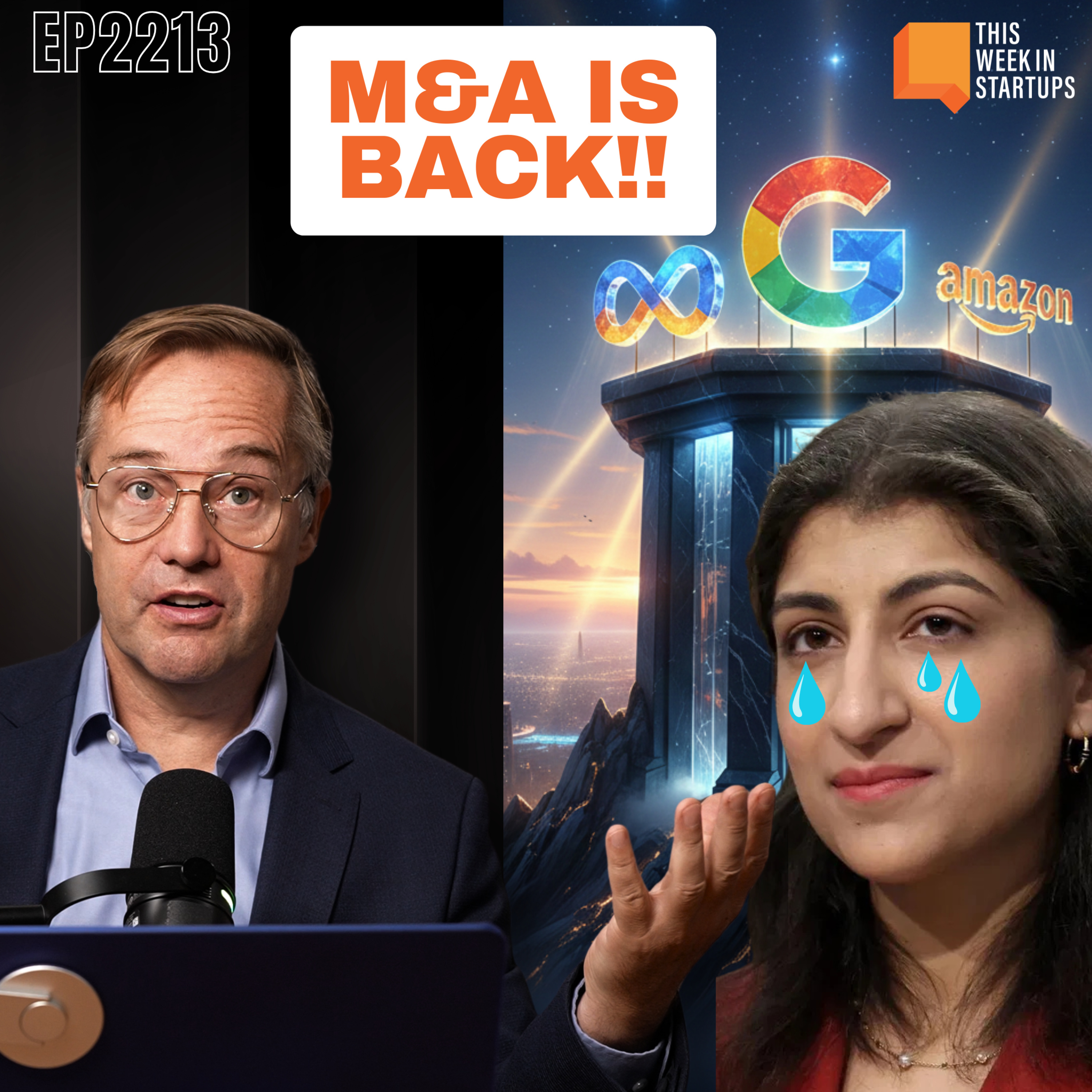
Google's search business is incredibly profitable, generating ~$400 per user annually in the US through ads. AI models, which provide direct answers instead of links, break this value capture mechanism. Current alternatives, like subscriptions, cannot yet replicate the scale and profitability of search, posing a direct threat to Google's core business model.
Contrary to the belief that AI assistants replace search, clickstream data reveals a surprising trend: users who start using tools like ChatGPT subsequently perform *more* searches on Google. This is likely due to fact-checking AI responses or researching concepts and products suggested by the AI.

Contrary to the narrative that AI will kill search, Google sees AI as an expansionary force. Features like AI overviews and Google Lens are driving a 70% YoY increase in visual searches, fulfilling new types of user curiosity and increasing the total volume of questions asked.

Despite the rise of AI, Google still handles over 94% of searches. However, marketers must focus on LLM visibility, as customers sourced from AI search engines convert at a 4.4 times higher rate. This makes it a critical, complementary channel, not a replacement for traditional SEO.

Despite hype around AI killing SEO, data shows traditional search still accounts for the vast majority of web traffic. Marketers should view AI search as a channel diversification opportunity, not a complete paradigm shift, as Google is actively defending its dominance.

While OpenAI leads in AI buzz, Google's true advantage is its established ecosystem of Chrome, Search, Android, and Cloud. Newcomers like OpenAI aspire to build this integrated powerhouse, but Google already is one, making its business far more resilient even if its own AI stumbles.
