Get your free personalized podcast brief
We scan new podcasts and send you the top 5 insights daily.
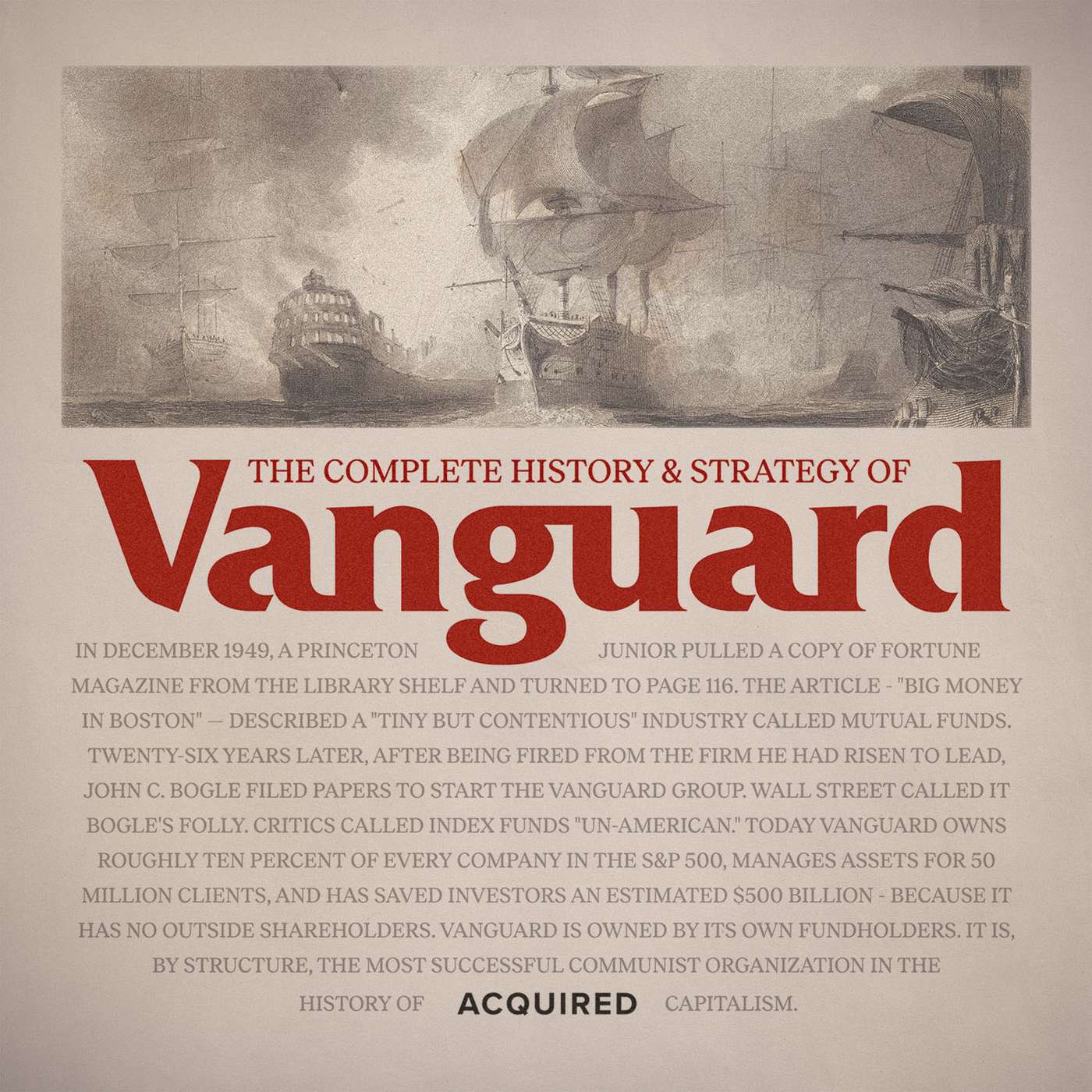
The world's first retail index fund was a commercial failure at launch. Vanguard aimed to raise $150 million but only secured $11 million. The fund was so sub-scale it couldn't even buy all the S&P 500 stocks and had to be saved by merging with another fund just to survive.
Related Insights
Vanguard founder Jack Bogle initially opposed ETFs, viewing intraday trading as speculation. Leadership overcame this by framing ETFs not as a trading product, but as an 'alternative distribution vehicle' to get their low-cost funds onto brokerage platforms and into advisors' hands, ultimately widening their market.

For nearly two decades, Vanguard's revolutionary low-cost index funds did not generate enough revenue to sustain the company. Ironically, the firm's survival depended on the profits from its traditional, actively managed funds, which performed exceptionally well and kept the lights on.
Best practice for index funds is to add IPOs within 3-5 days to capture early returns. The critical and often-missed step is to be 'float-adjusted,' meaning the fund only buys a proportion of shares available to the public, preventing index demand from artificially inflating the price of a limited supply.
Funds raising from both institutional and retail investors often trade down post-IPO because institutions instinctively sell shares to the retail market. Fundrise's VCX succeeded by being purely retail, avoiding this institutional exit pressure and subsequent price drop.

The minimum seed capital for an ETF has jumped from $5M to over $25M, not due to rising operational costs, but to convey credibility. A substantial launch amount signals to the market that the fund can sustain itself for the 3-5 years necessary to build a track record and attract investors.
Vanguard's first index fund had a ~2% expense ratio (180 bps), far from today's near-zero fees. This historical fact shows that for innovative financial products, low costs are an outcome of achieving massive scale, not a viable starting point. Early fees must be high enough to build a sustainable business.

Vanguard wasn't started purely from idealism. It was a strategic counter-attack by Jack Bogle after his partners at Wellington Management fired him. He used a legal loophole, leveraging his chairmanship of the funds' board to sever ties with the management company and create a new, mutually-owned entity.
The financial industry systematically funnels average investors into index funds not just for efficiency, but from a belief that 'mom and pop savers are considered too stupid to handle their own money.' This creates a system where the wealthy receive personalized stock advice and white-glove treatment, while smaller investors get a generic, low-effort solution that limits their potential wealth.

The 2008 crisis was Vanguard's defining moment. The widespread failure of 'smart' active managers to protect investors destroyed their credibility. In contrast, Vanguard's simple, non-profit model resonated with a distrustful public, causing its share of fund inflows to double almost overnight.
In 2007, Warren Buffett publicly bet $1 million that the Vanguard 500 Index Fund would beat a portfolio of hedge funds over ten years. He won decisively. The index fund returned 126% while the hedge funds returned just 36%, a powerful public endorsement of Bogle's philosophy.