Get your free personalized podcast brief
We scan new podcasts and send you the top 5 insights daily.
Rivian CEO RJ Scaringe argues the shift from coded, rule-based autonomous systems to foundation models is a major inflection point. He predicts progress in self-driving over the next five years will be unrecognizably faster than the last five, potentially outpacing society's ability to adapt.

Related Insights
Wave's CEO predicts that within five years, advanced AI driving features will become a consumer expectation. The necessary hardware is rapidly penetrating the market, and the experience will be so transformative that manufacturers who fail to offer it will face a catastrophic drop in demand, similar to how seatbelts or AC became standard.

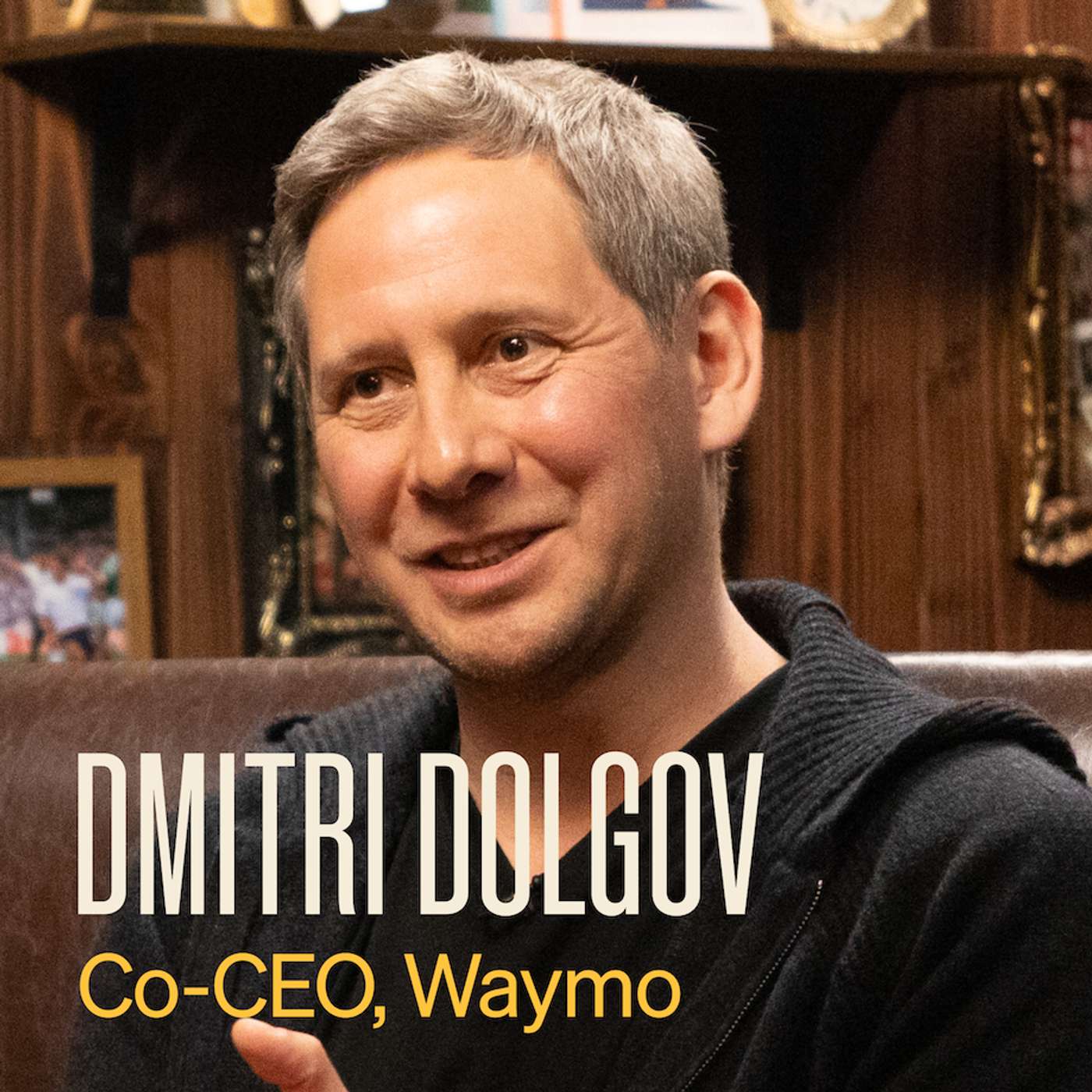
Waymo's co-CEO argues that Level 4/5 autonomy will not emerge by incrementally improving Level 2/3 driver-assist systems. The hardest challenges of operating without a human driver are entirely absent in assist systems, requiring a "qualitative jump" and a completely different approach from the outset.
RJ Scaringe argues that successful, neural net-based autonomy requires a rare combination of ingredients: full control of the perception stack, a large vehicle fleet for data collection, massive capital, and GPU access. He believes only a handful of companies, including Rivian, Tesla, and Waymo, possess all the necessary components to compete.

Waabi's CEO argues that achieving Level 4 (eyes-off) autonomy isn't a linear progression from Level 2 (driver-assist). They are entirely different safety problems. L4 requires a purpose-built technology stack from day one, as the absence of a human driver introduces challenges that cannot be solved by simply improving an L2 system.
Rivian's CEO explains that early autonomous systems, which were based on rigid rules-based "planners," have been superseded by end-to-end AI. This new approach uses a large "foundation model for driving" that can improve continuously with more data, breaking through the performance plateau of the older method.

The pace of autonomous vehicle development is so rapid that today's eight-year-olds will likely never need to get a driver's license when they turn sixteen. This bold prediction suggests a fundamental societal shift within a decade, driven by the widespread adoption of self-driving technology.

While public focus is often on expensive sensors like LiDAR, Rivian's CEO states the onboard compute for AI inference is an order of magnitude more expensive than the entire perception stack. This cost reality drove Rivian to design its own chip in-house, enabling it to deploy high-level autonomy capabilities across all its vehicles affordably.
Initially criticized for forgoing expensive LIDAR, Tesla's vision-based self-driving system compelled it to solve the harder, more scalable problem of AI-based reasoning. This long-term bet on foundation models for driving is now converging with the direction competitors are also taking.

Wave's CEO asserts that the core scientific challenges of self-driving are solved. The remaining hurdles are engineering execution, product integration, and economic scaling. This marks a maturation point where the problem moves from a question of 'if' to 'how'—a predictable, albeit difficult, path of scaling data, compute, and validation.
Despite just launching its first-generation autonomy system, Rivian completely reset it, throwing away all the code and hardware. CEO RJ Scaringe said the decision was easy because it was obvious that the old rules-based architecture had a 0% chance of being competitive against modern neural net-based approaches.