Get your free personalized podcast brief
We scan new podcasts and send you the top 5 insights daily.
Despite just launching its first-generation autonomy system, Rivian completely reset it, throwing away all the code and hardware. CEO RJ Scaringe said the decision was easy because it was obvious that the old rules-based architecture had a 0% chance of being competitive against modern neural net-based approaches.

Related Insights
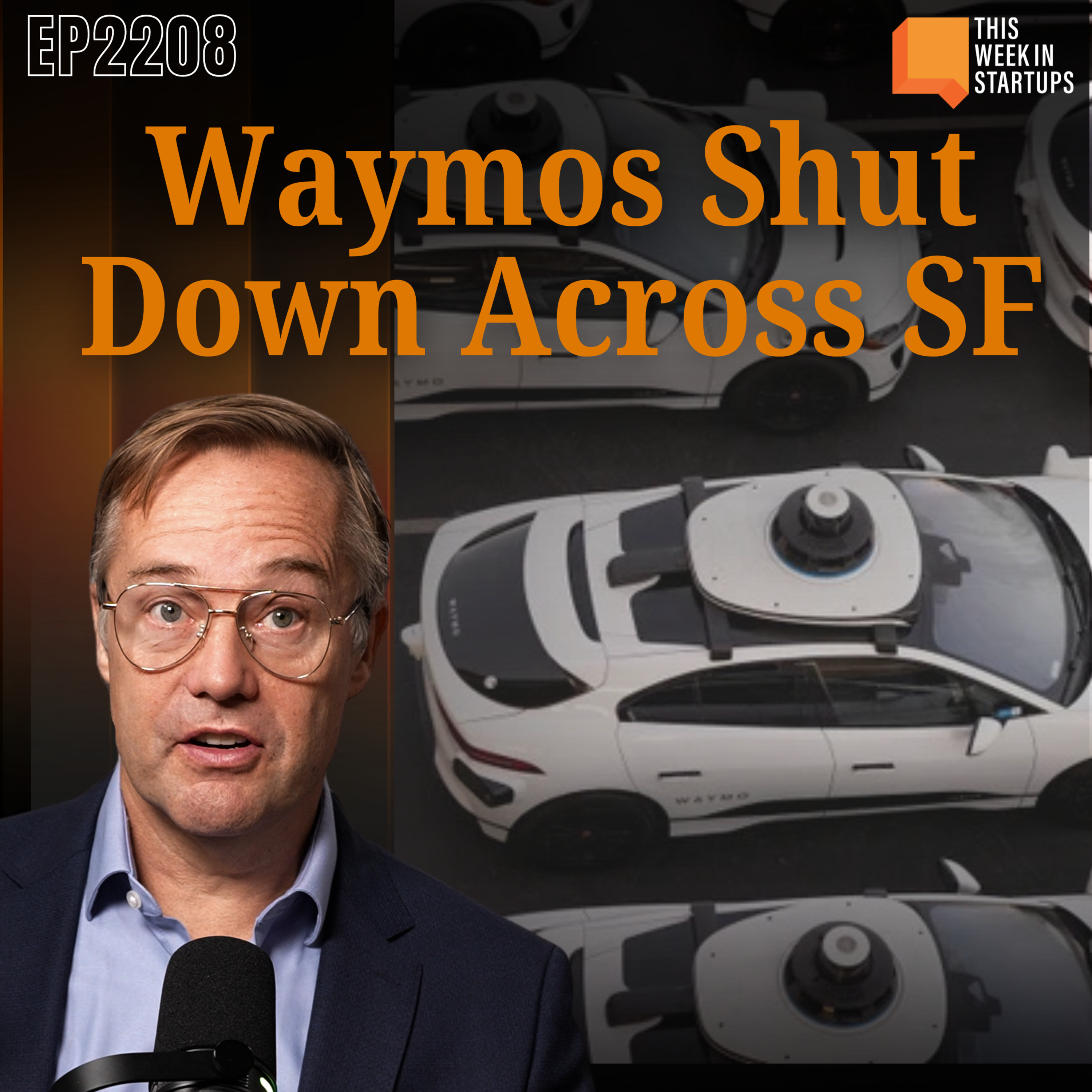
During a San Francisco power outage, Waymo's map-based cars failed while Teslas were reportedly unaffected. This suggests that end-to-end AI systems are less brittle and better at handling novel "edge cases" than more rigid, heuristic-based autonomous driving models.
Rivian's decision to forgo CarPlay is a long-term strategic bet on AI. The company believes that to deliver advanced, integrated AI features, it must control the entire digital experience, connecting vehicle state, driver history, and various apps—a task it argues is impossible when ceding control to an overlay like CarPlay.

Incumbent automakers evolved with 100+ separate computer modules, creating a complex system. Newcomers like Rivian and Tesla start with a centralized, "zonal" architecture. This clean-sheet design dramatically simplifies over-the-air updates, reduces costs, and enables more advanced, integrated AI features.

RJ Scaringe argues that successful, neural net-based autonomy requires a rare combination of ingredients: full control of the perception stack, a large vehicle fleet for data collection, massive capital, and GPU access. He believes only a handful of companies, including Rivian, Tesla, and Waymo, possess all the necessary components to compete.
Traditional cars use a domain-based architecture with up to 150 separate control units (ECUs) from different suppliers, making software updates nearly impossible. This fragmented system, which evolved haphazardly from early fuel-injection computers, is a primary barrier for legacy automakers trying to compete with the software-defined, OTA-updatable vehicles from companies like Rivian.
The latest Full Self-Driving version likely eliminates traditional `if-then` coding for a pure neural network. This leap in performance comes at the cost of human auditability, as no one can truly understand *how* the AI makes its life-or-death decisions, marking a profound shift in software.
Rivian's CEO explains that early autonomous systems, which were based on rigid rules-based "planners," have been superseded by end-to-end AI. This new approach uses a large "foundation model for driving" that can improve continuously with more data, breaking through the performance plateau of the older method.
Rivian's CEO argues that foregoing CarPlay allows for a more seamless, AI-driven experience where the car's OS has full knowledge of vehicle state. This is a strategic bet on creating a superior, proprietary ecosystem over offering third-party integration.
The key difference between AV 1.0 and AV 2.0 isn't just using deep learning. Many legacy systems use DL for individual components like perception. The revolutionary AV 2.0 approach replaces the entire modular stack and its hand-coded interfaces with one unified, data-driven neural network.

While public focus is often on expensive sensors like LiDAR, Rivian's CEO states the onboard compute for AI inference is an order of magnitude more expensive than the entire perception stack. This cost reality drove Rivian to design its own chip in-house, enabling it to deploy high-level autonomy capabilities across all its vehicles affordably.