Get your free personalized podcast brief
We scan new podcasts and send you the top 5 insights daily.
Enterprise buyers are drawn to the vision of full automation ("the sizzle"), but their immediate need is improving existing human workflows ("the steak"). A startup must offer both. The visionary product gets them in the door, while the practical agent-assist tool delivers immediate value and gathers necessary data for future automation.

Related Insights
Contrary to the vision of free-wheeling autonomous agents, most business automation relies on strict Standard Operating Procedures (SOPs). Products like OpenAI's Agent Builder succeed by providing deterministic, node-based workflows that enforce business logic, which is more valuable than pure autonomy.

Before launch, product leaders must ask if their AI offering is a true product or just a feature. Slapping an AI label on a tool that automates a minor part of a larger workflow is a gimmick. It will fail unless it solves a core, high-friction problem for the customer in its entirety.

Customers are hesitant to trust a black-box AI with critical operations. The winning business model is to sell a complete outcome or service, using AI internally for a massive efficiency advantage while keeping humans in the loop for quality and trust.

To discover high-value AI use cases, reframe the problem. Instead of thinking about features, ask, "If my user had a human assistant for this workflow, what tasks would they delegate?" This simple question uncovers powerful opportunities where agents can perform valuable jobs, shifting focus from technology to user value.
Investor Stacy Brown-Philpot advises that to win large enterprise deals, an AI startup must create a solution so compelling it beats the customer's internal team vying for the same budget. The goal is to access the core 15% budget pool, not the 1% 'play money' budget.
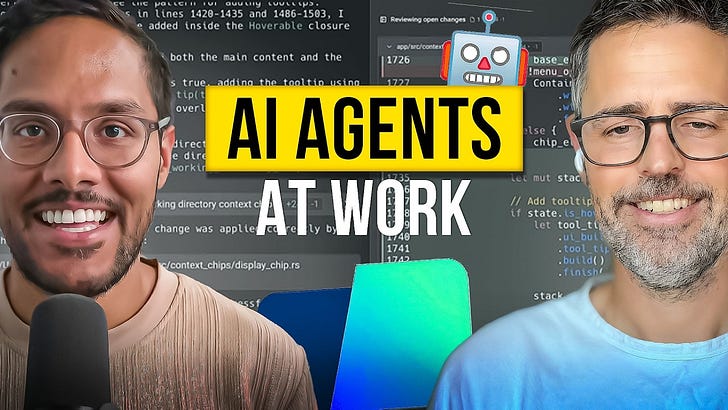
Instead of focusing on foundational models, software engineers should target the creation of AI "agents." These are automated workflows designed to handle specific, repetitive business chores within departments like customer support, sales, or HR. This is where companies see immediate value and are willing to invest.

To get mainstream users to adopt AI, you can't ask them to learn a new workflow. The key is to integrate AI capabilities directly into the tools and processes they already use. AI should augment their current job, not feel like a separate, new task they have to perform.

The transition from AI as a productivity tool (co-pilot) to an autonomous agent integrated into team workflows represents a quantum leap in value creation. This shift from efficiency enhancement to completing material tasks independently is where massive revenue opportunities lie.

Many engineers at large companies are cynical about AI's hype, hindering internal product development. This forces enterprises to seek external startups that can deliver functional AI solutions, creating an unprecedented opportunity for new ventures to win large customers.

The paradigm shift with AI agents is from "tools to click buttons in" (like CRMs) to autonomous systems that work for you in the background. This is a new form of productivity, akin to delegating tasks to a team member rather than just using a better tool yourself.