Get your free personalized podcast brief
We scan new podcasts and send you the top 5 insights daily.
A novel pilot study, the TRIMM trial, is investigating if a GLP-1 agonist can eliminate minimal residual disease (MRD), as measured by ctDNA, in breast cancer patients with obesity. This frames a metabolic intervention as a potential anti-cancer therapeutic, moving beyond its role in supportive care.

Related Insights
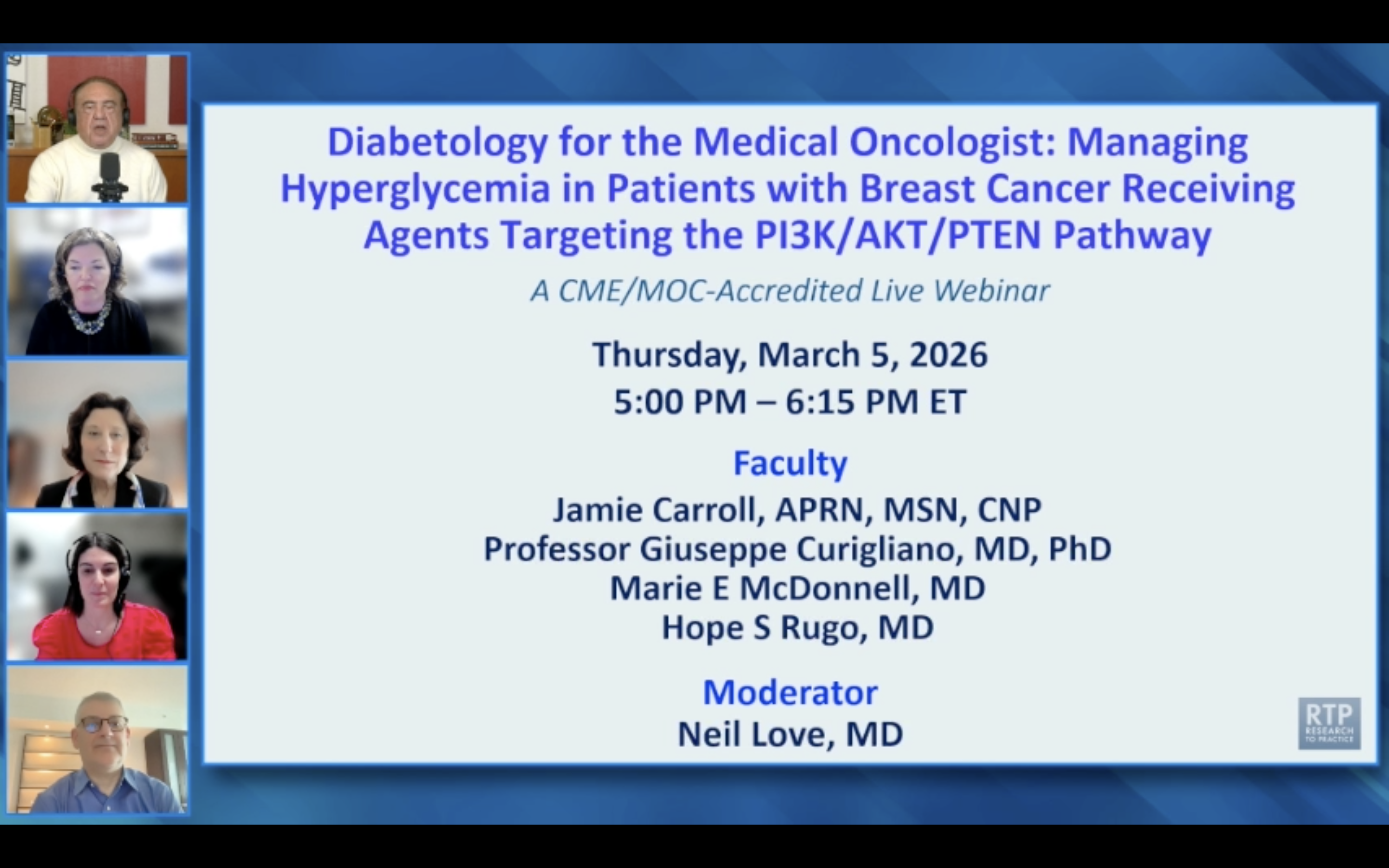
While known for weight loss, GLP-1 agonists are also highly effective for managing hyperglycemia from both steroids and PI3K inhibitors. Using low or "micro" doses can be very helpful in cancer patients, providing glucose control while minimizing GI side effects like nausea.
To prevent rebound weight gain and associated inflammation—which is particularly detrimental for cancer survivors—patients should not stop GLP-1s abruptly. Instead, a slow, methodical 20-week taper is recommended, with close monitoring to ensure weight stability before full discontinuation.
Peter Diamandis frames GLP-1s not just as weight-loss drugs but as the "very first longevity drug." By addressing metabolic unhealthiness and excess visceral fat—known life-shortening factors—these drugs represent a major step towards extending human healthspan, with more advanced versions already in development.

Early retrospective data from major cancer centers suggests patients on hormone therapy experience less weight loss with GLP-1 agonists. This indicates a potential drug interaction that may require clinicians to more closely monitor weight trends and consider dose adjustments for this patient population.
Beyond weight management, preliminary evidence suggests GLP-1 agonists may help with vasomotor symptoms (hot flashes) and arthralgia (joint pain). The proposed mechanism is indirect, likely through reduced inflammation from fat loss and less mechanical load on joints, representing a novel potential benefit for patients.
The next wave of ctDNA research focuses on de-escalation. Trials like SIGNAL ER101 and an Alliance cooperative group study will test withholding intensive adjuvant treatments (like CDK4/6 inhibitors) in high-risk, ctDNA-negative patients, initiating therapy only if they turn positive later. This could spare many from toxicity and cost.

Unpublished data from a UT Southwestern group indicates that using GLP-1 agonists during a specific neoadjuvant chemo-immunotherapy regimen (Keynote 522) may significantly reduce pathologic complete response rates. This critical safety concern is prompting forthcoming ESMO guidelines recommending against their concurrent use.
As the obesity market matures, the key differentiator may shift from maximum weight loss to tolerability. High discontinuation rates for GLP-1s due to GI side effects create an opportunity for drugs with slightly lower efficacy but a stellar safety profile, which could capture a large and underserved patient segment.

Current GLP-1 drugs cause significant loss of metabolically crucial muscle tissue along with fat. The next breakthrough will be combining these fat-loss agents with myostatin inhibitors—biologics specifically designed to block muscle breakdown. This allows for true body recomposition, selectively targeting fat while preserving muscle mass during a caloric deficit.

Unlike most drugs with targeted effects, GLP-1s are remarkable for their broad-based impact. They concurrently improve metabolism, mitochondrial creation, cellular cleanup (autophagy), and inflammation, explaining their profound and varied benefits.
